Jamal Musiala's Epileptic Seizures: Impact on His Career
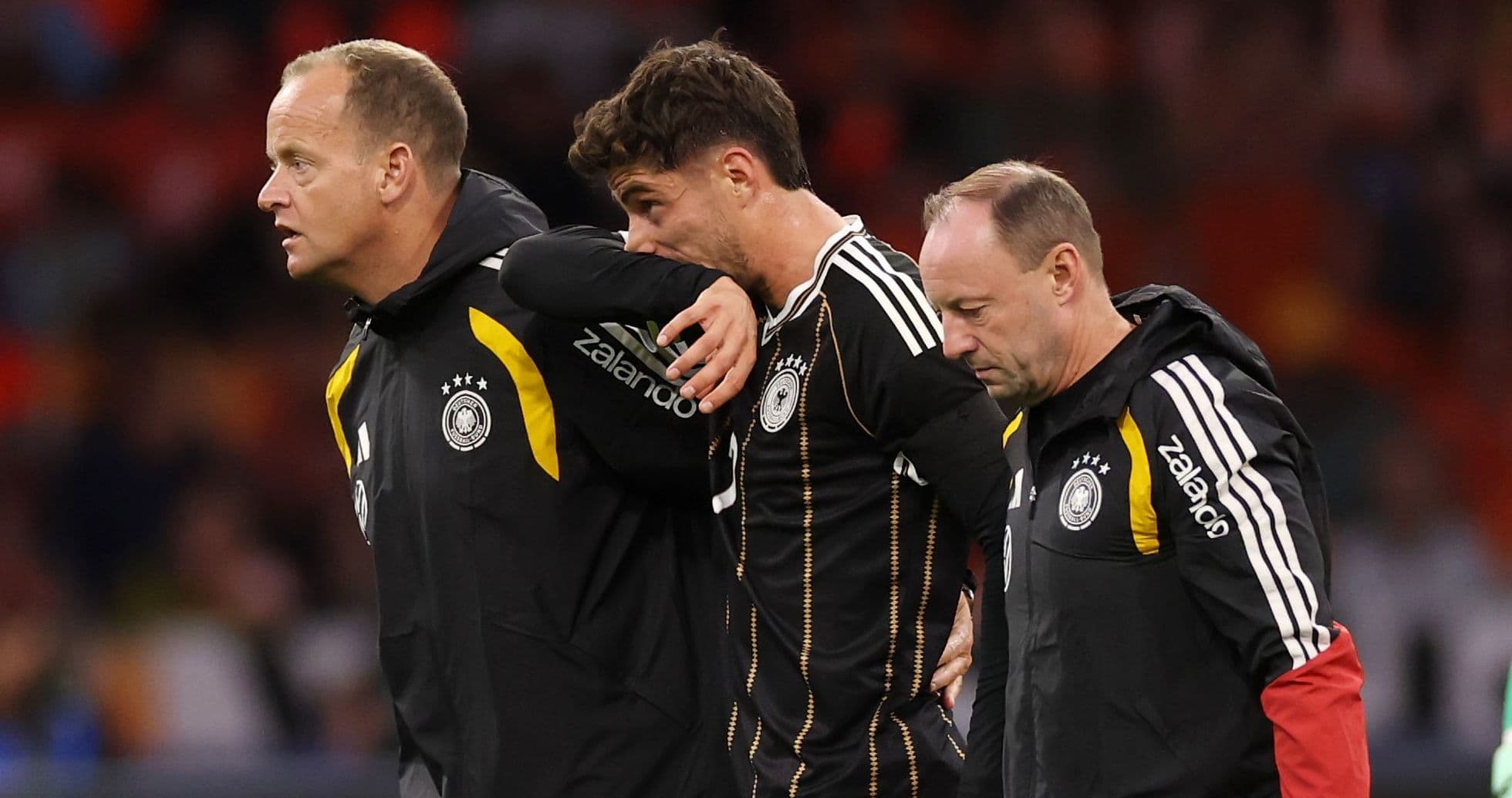
Jamal Musiala’s two sudden collapses in the space of four days have shaken German football – and pushed a specialist topic from neurology into the heart of the sporting debate.
For Dr Regina Becker, though, the pictures told a familiar story.
“I immediately thought of an epileptic seizure”
Becker, who previously worked at the neurology clinic at the University Hospital of Munich’s Ludwig Maximilian University and now runs the “Munich Schwabing Neuro Centre”, watched the footage of Musiala going down in the friendly against RB Leipzig on Saturday.
Because it happened without warning and he recovered so quickly, her first thought was clear: absence epilepsy.
When Musiala went to ground again on Tuesday in the game against 1. FC Heidenheim, the suspicion hardened. In his public statement, the 23-year-old spoke of “temporary brief absences caused by a neurological dysfunction”. For Becker, that description fits a specific pattern.
Absence epilepsy, she explains, originates in the thalamus – the part of the diencephalon that regulates consciousness. When it malfunctions, the brain slips into an exceptional state. Neurons fire uncontrollably, the communication between the thalamus and the cerebral cortex – where conscious perception happens – is abruptly cut.
The result can look deceptively simple: the person stares blankly into space, seems frozen, or, as in Musiala’s case, suddenly collapses. To those watching, it can be terrifying. Inside the patient’s brain, it is chaos.
No warning, no chance to react
Most sufferers, Becker says, get no advance warning.
The seizure hits. There is no time to brace, no moment to grab a teammate or sit down. Some patients do not even register the seizure itself. Once it passes, they often just carry on as if nothing had happened.
That brutal unpredictability leads to uncomfortable questions. Could Musiala, for instance, step up to take a penalty and simply go down in mid-run-up?
“Yes,” Becker says. “That is conceivable.”
Why he must come off – even if he feels fine
In both matches, Musiala was substituted immediately after collapsing. From a purely physical standpoint, Becker explains, his cardiovascular system and organs are not the problem. They function normally.
But professional sport is not a normal environment. Clubs have a duty of care and legal responsibilities. Heat, intense exertion, hyperventilation – all standard ingredients in elite football – can increase the risk of another seizure, even if the player feels fit again within minutes.
Letting him continue is simply not an option.
Late diagnosis – but not unheard of
Musiala is 23. For many, that sounds late for such a condition to appear. Becker confirms that in most cases, absence epilepsy develops between the ages of four and 10.
There are, however, variants such as juvenile absence epilepsy, where the illness only surfaces later. A diagnosis at 23 is unusual, but not impossible. And nobody outside his medical circle knows whether brief, unnoticed episodes may have occurred in the past and only now become more frequent – and visible – on the pitch.
What can cause that sudden increase?
If there is a genetic predisposition, environmental factors come into play: high temperatures, dehydration, stress. All of them can push the brain towards more frequent seizures or even trigger the first one.
One thing, though, Becker rules out. Musiala’s serious fibula fracture a year ago? That, she says, “has nothing to do with it.”
“Very promising medications” – and a clear plan
In his statement, Musiala described his condition as “treatable”. Becker backs that up without hesitation.
There are, she says, very promising medications for absence epilepsy. The majority of patients become completely seizure-free.
Treatment works with seizure-suppressing drugs that prevent uncontrolled neuronal firing and are designed to block epileptic episodes. The medication is taken daily as a preventive measure. Over two to three weeks, it builds up to a stable level in the blood.
During that phase, doctors monitor the values closely and adjust the dose if needed. Once the target level is reached, patients are normally well protected against further seizures.
The standard first-choice treatment, Becker explains, is ethosuximide. It is generally well tolerated, though it can cause headaches and tiredness. Valproic acid is another highly effective option, but with a tougher side-effect profile: weight gain, hair loss, drowsiness.
Which route a patient takes depends on individual tolerance. Most, she says, cope well with both.
Months, years – or lifelong
How long will Musiala have to take these drugs?
There is no one-size-fits-all answer. Even if seizures stop quickly, medication is usually continued for months or years. In children, there is a realistic chance they will eventually remain seizure-free in adulthood without drugs.
If the condition first appears later in life, lifelong therapy may be necessary. For Musiala’s age group, every case is judged individually.
No red flag for his career
The key question for fans and club alike is obvious: does this diagnosis threaten his professional future?
Becker is clear. With this form of epilepsy, she has “no concerns” about his career.
In the coming weeks, though, there will be a transition. As the medication is introduced and adjusted, Musiala will need to ease off slightly, giving his body time to adapt. That means careful management rather than reckless acceleration.
One aspect of his preparation suddenly looks very prescient. In recent years, Musiala has repeatedly highlighted his neuro-athletics training and spoken about it in glowing terms. Whether that was linked to any earlier suspicions about his neurological state is not known.
What is known: he now faces a new kind of challenge – not with a ball at his feet, but with a tiny pill dictating how safely his brain can keep pace with his extraordinary talent.