Jay-Z's Roc Nation Sports Revolutionizes Football Transfers
Jay-Z has spent a career bending culture to his will. This summer, he’s doing the same to football’s transfer market.
Barely a day after his first recorded verse in four years surfaced on Beyoncé’s extended remix pack of Morning Dew (Donk), another victory landed in his column – this one not on a track, but on a balance sheet. Roc Nation Sports, the sporting arm of his entertainment empire, has muscled its way to the centre of the window’s biggest deals and fiercest arguments.
This is no side hustle. It’s a takeover.
From courts and diamonds to the Bernabéu
Roc Nation Sports was born in 2013 out of a partnership with Creative Artists Agency, initially built on American powerhouses from the NBA, NFL and MLB. Kevin Durant came on board. So did a string of high-profile names across US sports. Football, for a while, was an afterthought.
That changed in 2015 when Bayern Munich defender Jérôme Boateng became the first footballer to sign. Four years later, Roc Nation Sports International (RNSI) was launched in London, with a clear mandate: target elite European clubs and the players who define them.
They’ve done exactly that. The client list has swelled beyond 100, headlined by Vinícius Júnior, who this week signed a lucrative new deal at Real Madrid believed to be worth around €25m a year. Arsenal had circled, sensing a chance to pull off a generational coup, but Roc Nation’s strategy was bolder – and riskier.
Vinícius, Mbappé money and a gamble that paid
For two years, RNSI pushed Real to treat Vinícius like the asset he is. The ask: €30m a year, Mbappé territory. The tactic: let his contract tick into its final 12 months and let Europe’s elite start dreaming.
Arsenal did more than dream. They were prepared to pay a huge fee, but privately, the London club believed a free transfer in 2025 was the more realistic route. While they weighed the numbers, RNSI kept the pressure on Madrid.
The Spanish giants blinked first. Real upped their offer, Vinícius stayed, and the saga ended with a fresh six-year deal for one of the club’s crown jewels. It was a win for Roc Nation and for the player, but it came at a cost. The financial stretch now looks likely to shut the door on a move for Manchester City midfielder Rodri, with Barcelona stealing a march in that particular race.
The message, though, was clear: if you want to keep your stars, you will pay superstar money. And you’ll probably be dealing with Roc Nation.
Diomande: a €115m statement
If the Vinícius deal underlined RNSI’s influence, Yan Diomande’s transfer screamed it.
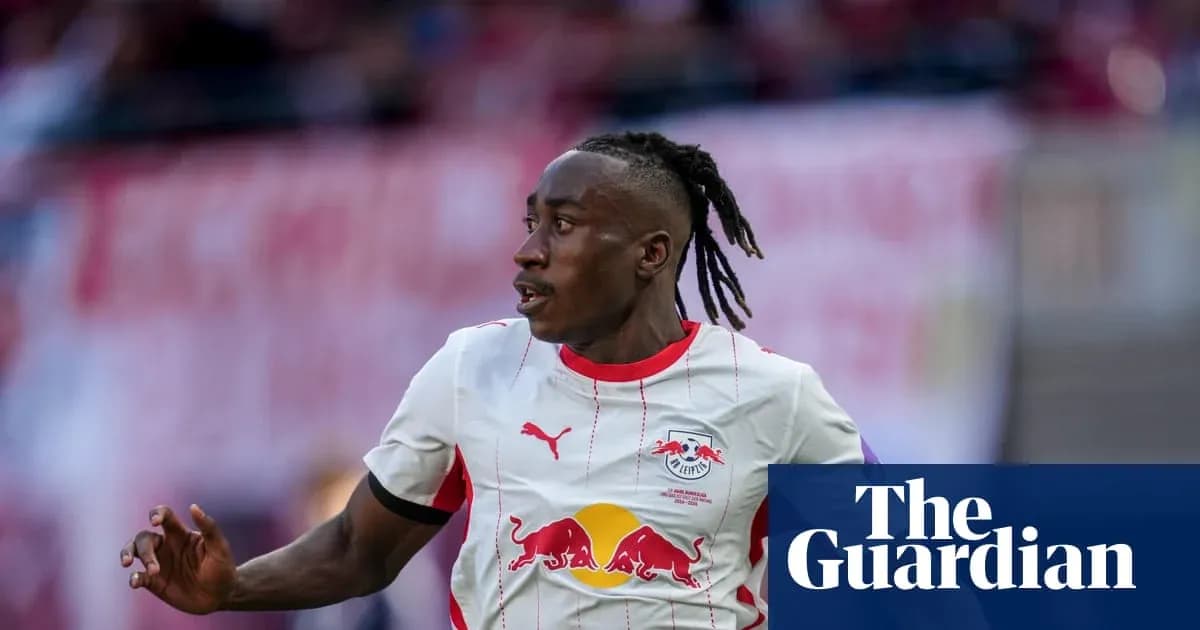
On the same day Real confirmed Vinícius’s new contract, a 19-year-old with just 46 senior appearances for RB Leipzig and Leganés flew into Madrid to complete a record-breaking £115m move. In one stroke, Diomande became the most expensive African player in history.
The images told their own story. Diomande on a private jet, flanked by his agents Nathan Campbell and Kareem Gbaja, heading to the Bernabéu. Reports suggest RNSI could receive up to £17m in commission and fees from the deal.
This was a transfer that dragged on for months. Liverpool had a £70m bid rejected in June. Leipzig held firm. The price soared past £100m. Paris Saint-Germain walked away at the end of July, issuing a pointed statement insisting the European champions “will not engage in the inflationary and manipulative games of certain player agents”.
Real did engage. They paid. And Roc Nation walked away with one of the most lucrative deals an agency has ever brokered.
Lawyers, complaints and the cost of doing business
The Diomande saga has not been smooth. It has been a crash course in the brutal politics of modern representation.
RNSI has already had to deal with two separate legal challenges. One comes from Max Gradel, the former Bournemouth winger, whose agency Maxidel Management claims it had an existing agreement with Diomande. Gradel has taken his complaint to Fifa, though world football’s governing body did not stand in the way of the winger’s move to Real.
Dez Bamba, president of Diomande’s first club AFI Sud Comoé in Côte d’Ivoire, has said the youngster joined RNSI after receiving a call from Vinícius himself. Roc Nation has kept its counsel, declining to comment on the case.
The second dispute is even more tangled. Rainbow World Group has launched proceedings in the high court in London and in the British Virgin Islands, seeking to enforce what it describes as binding image rights and intellectual property agreements tied to Diomande’s early development. Rainbow says it invested heavily in the player, taking him on trials at Chelsea, Bournemouth, Crystal Palace and Newcastle before Leganés eventually signed him.
Again, RNSI has not commented. The move went through. The court battles will play out in the shadows of the biggest transfer of Diomande’s young career.
Africa, pipelines and the next wave
Strip away the noise and one truth remains: Diomande’s rise is not a one-off. It is a signpost.
Clubs and agencies have seen what a raw, explosive talent from an African academy can become in the space of a few seasons. They are responding with chequebooks and infrastructure.
Jeff Luhnow, the former general manager of the Astros and St Louis Cardinals and now owner of Leganés through his Blue Crow network, laid out the vision last year. After setting up recruitment and development programmes in several African countries, including Ghana and Zambia, he said Diomande was simply the first of many. “We’ve got more players like that in our pipeline,” he said.
Roc Nation clearly agrees. In July 2023, RNSI took over Brazilian agency TFM – whose stable already included Vinícius, Gabriel Martinelli and Endrick – and rebranded it Roc Nation Sports Brazil. The focus sharpened: South America’s finest, linked to a growing African footprint.
By November, RNSI announced the signing of eight young African prospects, among them Ghana Under-17 midfielder Joseph Narbi and Francis Gomez, a Gambian winger at AC Horsens in Denmark. Campbell framed it bluntly: Africa is “a hotbed of untapped footballing potential” and expanding there is a “natural progression” of Roc Nation’s global vision.
The strategy is obvious. Control the pathways. Get in early. Own the future.
Jay-Z’s new power base
Jay-Z built his legacy by spotting shifts before anyone else and moving faster when they came. From Tidal to champagne, cognac to streetwear, he has rarely been a passive investor. Roc Nation Sports is no different.
What began as an offshoot of an entertainment company has become one of the most aggressive players in football’s most ruthless arena. They have the superstar in Vinícius, the record-breaker in Diomande, the Brazilian pipeline, the African academies, and the legal battles that inevitably follow serious money.
In the dog-eat-dog world of football agents, Roc Nation are no longer the new kids on the block. They’re the ones rewriting the rules – and forcing Europe’s biggest clubs to decide how much they are willing to pay to keep up.