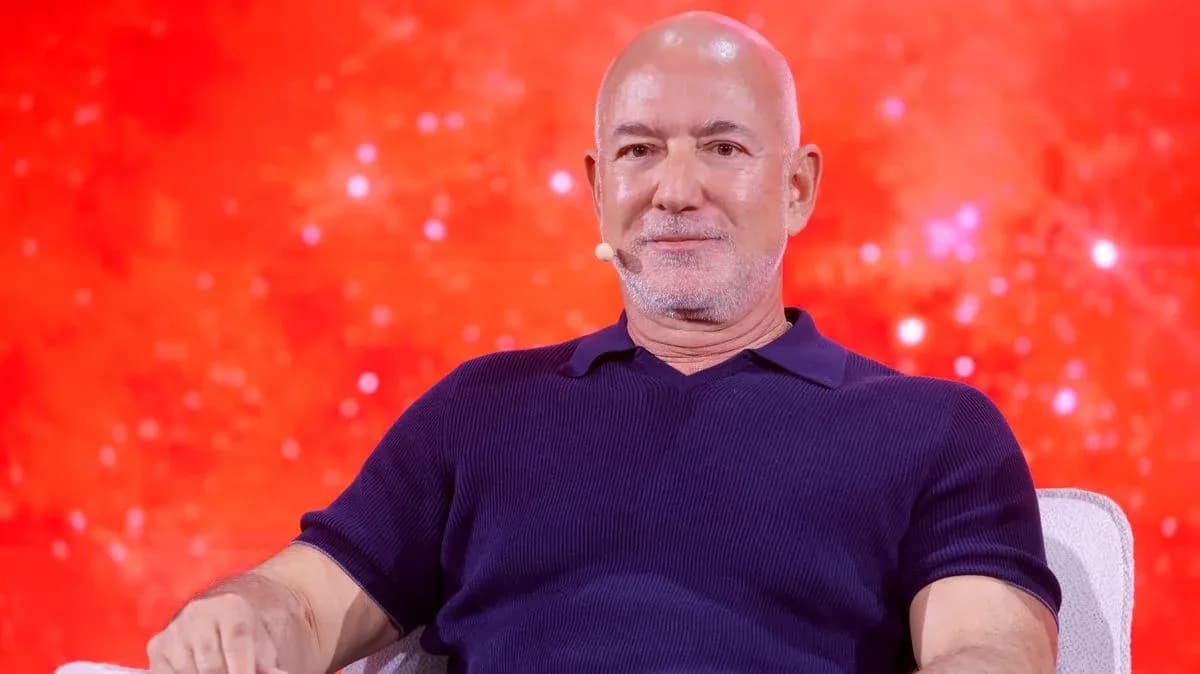
Jeff Bezos in Talks to Buy Stake in Liverpool FC
Jeff Bezos is closing in on Liverpool.
The Amazon founder is in advanced talks to buy a major minority stake in the club as part of a heavyweight consortium fronted by businessman Amit Bhatia, with an announcement expected as early as this week.
Bezos, Bhatia and Saverin move on Anfield
Fenway Sports Group (FSG), Liverpool’s controlling shareholder since 2010, has confirmed that a group led by Bhatia has formally approached them over a strategic minority investment.
“An investment consortium led, managed, and represented by Amit Bhatia has expressed interest in making a strategic minority investment in Liverpool Football Club,” FSG said in a statement.
Behind Bhatia stands extraordinary financial firepower. According to Sky News, Bezos would join forces with Eduardo Saverin, the Facebook co‑founder, in a syndicate headed by Bhatia, the son‑in‑law of steel tycoon Lakshmi Mittal and, until recently, a shareholder in Championship club Queens Park Rangers.
The talks centre on a stake of roughly one third in Liverpool. That level of investment would reportedly value the club at around $6bn (£4bn), one of the richest deals in football history and a figure that would propel Liverpool towards the very top of the global club valuation table.
FSG is said to be preparing to announce a transaction “as soon as this week”, though the process could spill into next week if final details drag.
A new era of American money
If the deal crosses the line, Liverpool would be part‑owned by three of the world’s wealthiest men. Forbes estimates Bezos’ fortune at more than $280bn (£207bn), with Saverin’s net worth put at over $32bn (£23bn). Add Bhatia’s own resources and contacts and Liverpool would suddenly sit at the crossroads of tech wealth, global finance and traditional industry.
It would also deepen the American imprint on the Premier League. Half of the 20 top‑flight clubs are now predominantly owned by US‑based investors, a shift that has redrawn English football’s power map over the past decade.
FSG themselves are central to that story. They took control of Liverpool in 2010, rescuing the club from the brink of administration under former American owners Tom Hicks and George Gillett, and have since overseen a modernisation of Anfield and a return to the game’s elite.
This time, though, FSG are not selling up. The proposed move is a strategic cash injection, not a full exit, designed to bring in fresh capital and heavyweight partners while they retain overall control.
Bezos and Saverin step up their sporting push
For Bezos, Liverpool would be the most significant sporting move of his career. He has previously explored buying into the NFL, sounding out potential bids for the Seattle Seahawks and Washington Commanders, but chose not to follow through. Anfield, not the gridiron, now looks like the stage for his first major ownership play.
Saverin also knows the sharp end of elite‑club bidding. He was part of a consortium that tried, and failed, to buy Chelsea during the 2022 auction triggered by sanctions on Roman Abramovich after Russia’s invasion of Ukraine. Liverpool offers another shot at a Premier League giant – this time as part of a group targeting a minority stake rather than an outright takeover.
Bhatia, meanwhile, brings direct football boardroom experience from his years at QPR and deep links to global industry through the Mittal family. He is the public face of the bid, the man tasked with knitting together tech billionaires, financiers and the demands of one of the most scrutinised clubs in world sport.
Turbulence on the pitch, upheaval off it
All of this lands at a moment of real change at Liverpool.
On the pitch, the club is heading into a season of transition. The Reds last lifted the Premier League title in 2024/25 but now have to navigate life after the sacking of head coach Arne Slot and the departure of talisman Mohamed Salah.
Recruitment has started, but not yet transformed the mood. Jeremy Jacquet, Victor Munoz and Ronald Araujo have arrived on loan, pieces of a new puzzle rather than marquee statements. Bradley Barcola has been identified as a priority attacking target, with Paris Saint‑Germain open to a sale, yet talks have so far stalled short of a breakthrough.
The contrast is stark. Uncertainty in the dugout, flux in the forward line – and, above it all, the prospect of one of the most powerful investor groups in sport buying into the club.
Anfield’s next chapter
FSG’s tenure has already delivered a Champions League crown, a long‑awaited league title and a rebuilt Anfield. Now they stand on the brink of a fresh financial era, one that could see Bezos, Saverin and Bhatia seated at the same table in the Anfield boardroom.
The money, if and when it lands, will be vast. The question is simple and unforgiving: can Liverpool turn that capital into sustained dominance at a time when the Premier League has never been richer, never more ruthless, and never more crowded at the top?