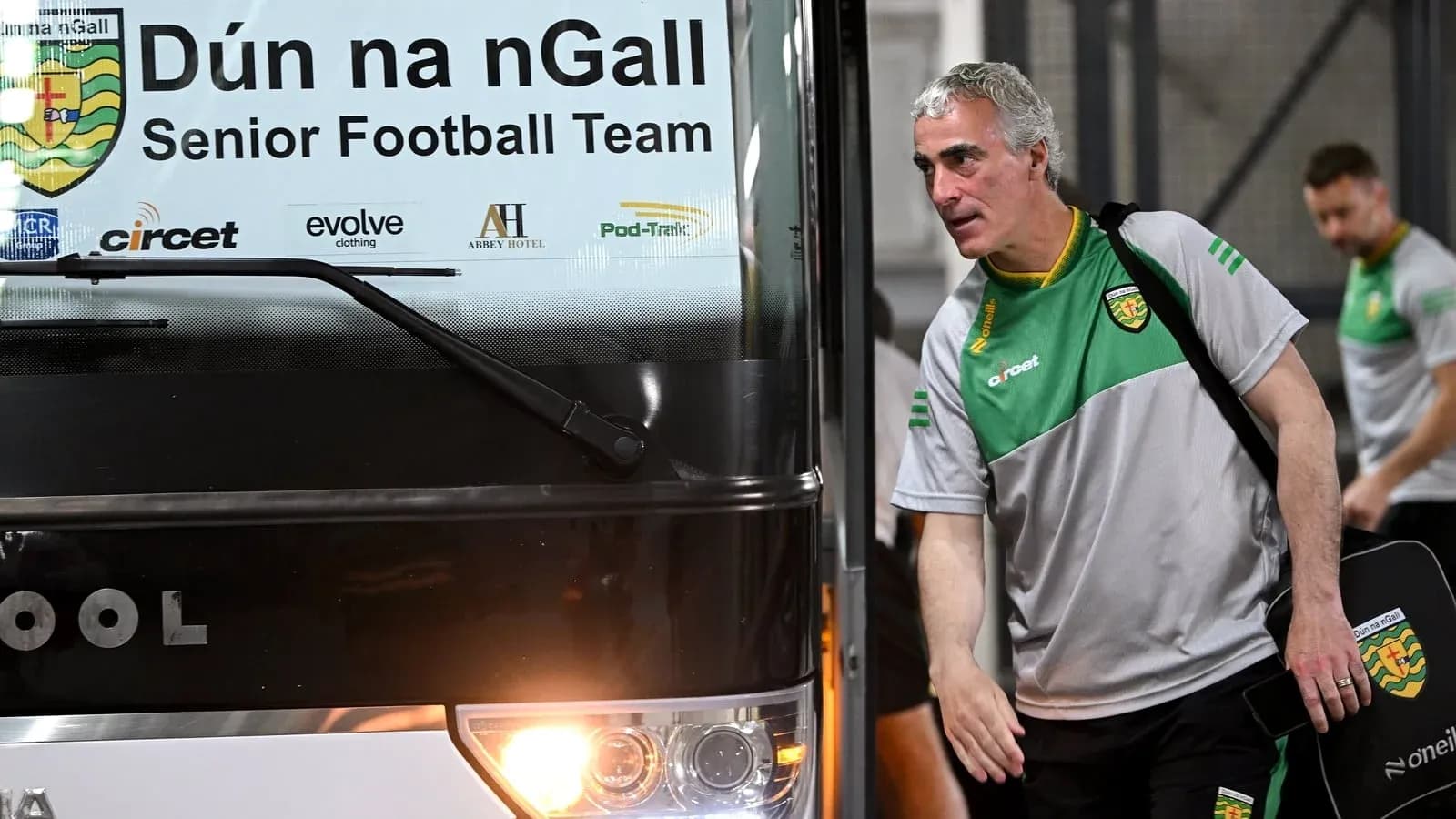
Jim McGuinness Stays On With Unfinished Business
Would he go? Would he walk away with the questions still hanging in the Croke Park air? No. Jim McGuinness is staying put.
Donegal’s talismanic manager has taken up the option of a fourth year in charge of the county’s senior footballers, extending this second coming on the Tír Chonaill line for at least one more campaign. Given how 2026 ended, it feels less like a surprise and more like unfinished business.
A bizarre exit on the longest day
Donegal’s championship end still jars. On the year’s longest day, under a high summer sun at Croke Park, they took Dublin to extra-time yet looked strangely drained from early on. The light was bright, the legs were heavy.
They somehow clung on long enough to force extra-time, Michael Murphy nailing a late two-pointer that briefly jolted life into them. It felt heroic in the moment, but also like a stay of execution. Dublin pulled clear with something to spare once the extra periods began. The inevitable arrived on schedule.
The cameras cut to Murphy. The 37-year-old standing on the Jones’s Road turf, a man who has carried Donegal’s story for so long. The question has lingered ever since: will he be back in green and gold next year? For now, silence.
Given what Donegal had produced over the previous six months, that exit bordered on the surreal. This was a team many had marked down as the closest thing to a sure bet behind Dublin. Instead, they were gone before the real heat of summer.
From Ulster stumble to All-Ireland swagger
You can almost file the Ulster loss to Down under “one of those days”. In Letterkenny, the Mourne men arrived with a chip on the shoulder and a sense of history, intent on reminding everyone of their own tradition. Donegal’s defeat spared them a few tricky provincial hurdles, and supporters could rationalise it as a detour rather than a derailment. The real test, everyone said, would come later.
By then, Donegal had built a serious case for themselves. A Division 1 league title was pocketed in March, and not in timid fashion. At Croke Park, Kerry – missing a few regulars, yes, but still Kerry – were toyed with. David Clifford was restricted to just two scores, his late goal arriving after Donegal had already pulled the ladder up behind them.
This was not just a trophy; it was a statement. A new template. A response to the previous year’s All-Ireland final, where Donegal had looked like confused extras while Paudie Clifford conducted the Kerry orchestra and dictated the tempo. That day had prompted uncomfortable questions about McGuinness’s tactical sharpness.
He did not duck them. At the start of the year, he pushed back, saying only “an All-Ireland winning manager or a top coach” had the right to question his coaching ability. It was a clear message. Jimmy wasn’t for backing down.
Killarney needle and a new favourite
Killarney in May brought the rematch and the edge. Donegal not only beat Kerry, they imposed themselves. The game bristled: McGuinness appeared to shove Diarmuid O’Connor on the sideline, Micheál Burns saw red, and a hefty shoulder from David Clifford helped light the fuse.
The football almost became the subplot. Donegal’s emphatic victory was overshadowed by McGuinness’s spiky post-match interview with Newstalk’s Tommy Rooney and the looming possibility of a suspension. The CCCC eventually decided the referee had dealt with matters on the day. Unlike Ger Brennan, McGuinness avoided a spell in the “room of non-involvement”.
By Whit weekend, Donegal had assumed the All-Ireland favourites’ tag in some quarters. The form, the swagger, the defensive solidity, the big-game scalps – all of it pointed one way. There was little argument. They looked ready.
Then June arrived and ripped up the script.
June collapse and a mystery of energy
Across two weekends, expectation was shredded. Nobody saw it coming in that fashion. To call Donegal the flops of the year feels severe, but the contrast was stark.
Cork came to Ballybofey with intent and, crucially, with reserves of energy that Donegal could not match. The verve that had blown Kerry away in Killarney vanished. The Rebels were slow to ignite, but once they did, Donegal looked flat and listless, a shadow of the league champions.
Lose to Down? Misfortune, maybe. Lose again on home soil in the round-robin? That smacks of something deeper. By the time Donegal reached Croke Park again, the spark that had marked their spring had gone. They arrived without the drive required to climb the next step.
“Our players were running out of gas and looking on from the outside it is just a mystery,” said Brian McEniff, the man synonymous with Donegal football, as he tried to make sense of the campaign post-league final. If Mr Donegal football was baffled, he was far from alone.
Questions piled up. Had they poured too much emotional and physical energy into keeping Kerry down in May? Did that fractious day in Killarney drain the adrenaline tank that should have been saved for July? The draw that paired them with Kerry so early suddenly looked like a curse.
Since the 2025 All-Ireland, the ledger shows more on the debit side than McGuinness would like. The Division 1 title and the Killarney performance stand out, but the fall-off elsewhere was alarming. In a championship widely praised for its quality and drama, Donegal faded into the background, their impact fleeting.
One more push – and a clock ticking
So McGuinness goes again. Another year. Another tilt at Sam. And this time, with something to prove.
In 2027, his gaze will surely be fixed on what happens after the end of May. The league? He has that medal. Ulster? There are already a few of those in the drawer. The early months will still matter – they will bring players like Shea Malone, Max Campbell, Turlough Carr and Conor MacCahill further along the road. But the real judgement will be reserved for high summer.
The Michael Murphy question will answer itself in time. For now, the bookmakers have spoken: Donegal sit as second favourites for Sam Maguire next July. The talent is there, the system is there, the manager is there. Mayo showed this year that timing the run is everything. It’s one thing to down a heavyweight in spring; it’s another to still be throwing punches when the cup is on the line.
This could be McGuinness’s last year as an inter-county boss. If it is, he will want the balance sheet to read differently: fewer drop-offs, more big days when it truly counts, a team that finishes with the same energy it starts with.
The pressure will be fierce. The scrutiny will be relentless. But Jimmy McGuinness has lived in that glare before. The only question now is whether he can bend one more season to his will.