Jordi Alba: A Career Beyond Titles and Tears
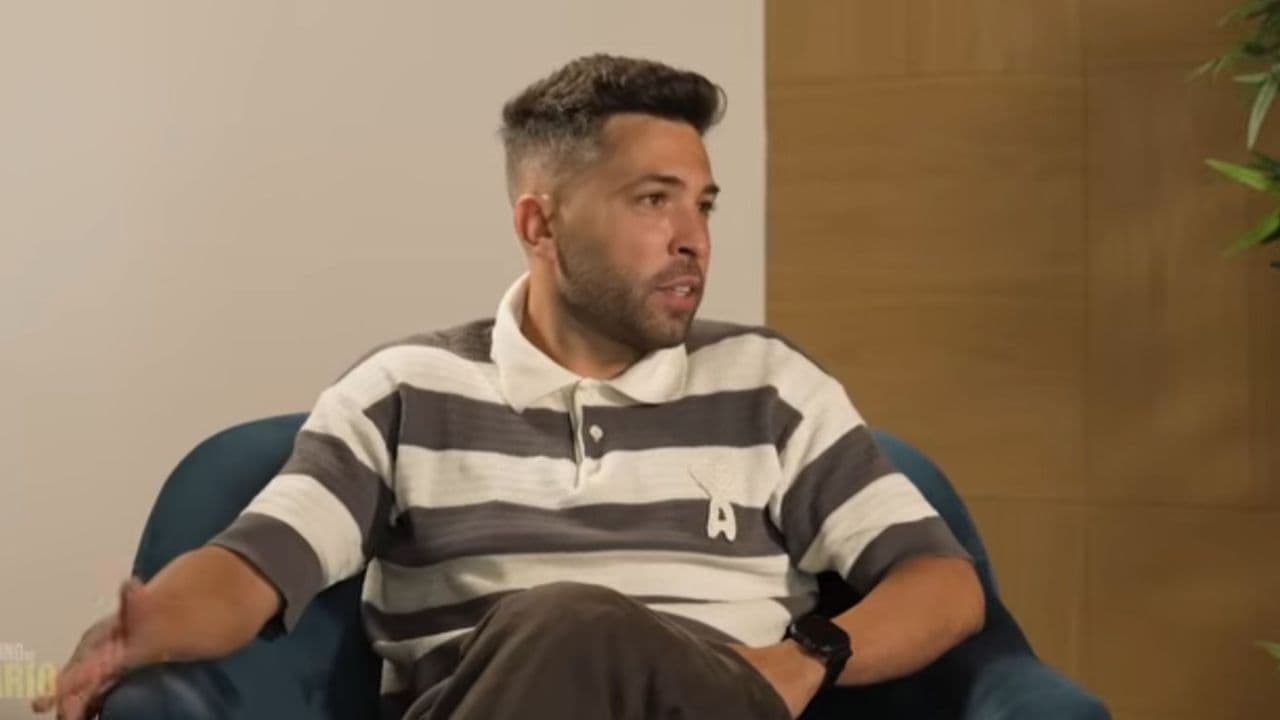
Jordi Alba has lived the full spectrum of elite football – titles, tears, and the kind of dressing-room politics that never make the highlight reels. On Mario Suárez’s podcast, El Camino de Mario, the former Barcelona left-back peeled back the curtain on a career that has rarely been as simple as the medals suggest.
Emery, the conversion and a career-defining switch
Alba did not grow up dreaming of being a full-back. He was pushed there.
"I owe my career to Unai Emery. I was playing as a winger until Unai converted me," he recalled. It was not love at first sight. The positional shift felt awkward, almost unnatural. But Emery, then at Valencia, saw something Alba did not yet see in himself.
"Initially, I didn't take to the full-back role particularly well, but Emery is world-class. He has a knack for extracting the absolute best from his players at every club he leads."
That decision reshaped Alba’s life. The winger who might have drifted into anonymity became one of the defining attacking full-backs of his generation, a permanent fixture for Barcelona and Spain, and a key cog in some of the most dominant sides of the modern era.
“It was stolen”: the title that still stings
For all the trophies, some wounds still feel fresh. The 2013-14 La Liga season ended with Atlético Madrid lifting the title at Camp Nou, a direct duel on the final day that left Barcelona empty-handed and seething.
Reflecting on that afternoon, Alba did not bother with diplomacy.
"It was stolen! Mateu Lahoz was the official that day, wasn't he? My word..." he said, still incredulous years later.
It was a line that summed up the frustration of a squad that watched the trophy slip away in their own stadium, feeling the decisive calls had gone against them on the biggest day.
Luis Enrique, the architect of a juggernaut
If Emery reinvented Alba, Luis Enrique unleashed him.
"For me, Luis Enrique is the standout," Alba said, his admiration unmistakable. "He ensures every player is pulling in the same direction, even those on the fringes. You feel a genuine sense of joy for your teammates and the collective. Not many managers can foster that environment; in that sense, he's a genius."
Under Luis Enrique, Barcelona became a machine. Alba’s overlapping runs, his understanding with Neymar and Lionel Messi, and the relentless attacking structure turned the 2014-15 side into something close to unstoppable.
"2015, when we secured the Champions League under Luis Enrique, was the only year I felt we were truly untouchable," he remembered. Before the final, he told his agents: "Relax, we're going to win." It was not bravado.
"It wasn't arrogance; it was pure conviction. We were invincible."
Xavi and the rescue job in turbulent times
The tone shifts when Alba speaks about Xavi Hernández. The romance of the treble years had long faded by the time Xavi walked back into Camp Nou as head coach. The club was bruised, financially strained, and drifting.
"Xavi Hernandez inherited the reins during a very turbulent period," Alba said. "He stepped up to the plate and did a fantastic job. We secured La Liga and the Supercopa against Real Madrid, and he managed the dressing room expertly during my time there."
Those trophies did not carry the same aura as the Luis Enrique era, but they mattered. They were proof that, amid chaos, Barça could still impose themselves on Spain, still beat Real Madrid in a final, still feel like Barcelona.
Anfield, regret and a night that won’t go away
No conversation about Alba’s Barcelona story can avoid Anfield.
The 2019 Champions League semi-final second leg remains one of the club’s darkest nights. Barcelona arrived with a 3-0 first-leg lead and left with a 4-0 defeat, stunned and broken.
Alba did not hide from his role in the collapse.
"I made a mistake with a header back for the opening goal," he admitted. One misjudged moment, one invitation to Liverpool to believe. "It was a golden opportunity to reach the final, and I'm certain we would have won it."
Rumours swirled afterwards that he had broken down at half-time, overwhelmed by the unfolding disaster.
"People claimed I was in tears at half-time, but that wasn't the case. I just felt physically sick," he clarified.
The distinction matters to him. Not because the pain was any less, but because it speaks to a player who knew exactly what was slipping away in real time.
The bitter end at Barcelona
Alba’s exit from the club he grew up in and helped define did not come with a farewell tour. It came with a shock.
"With only 24 hours left in the transfer window, they informed me I had to go on loan to Inter Miami," he revealed. No gradual build-up, no months of negotiation. Just a sudden demand.
"Without any prior warning, and with my children already settled in school... it was a deeply difficult moment."
He refused to be pushed into a move on those terms. Instead, he made a drastic call.
"I eventually terminated my Barcelona contract without having another move lined up."
For a player of his stature, that kind of leap is rare. He walked away from the comfort of the only football home he had really known at club level, without a safety net.
The next chapter came almost by accident. Alba went on holiday with Sergio Busquets, who had already committed to Inter Miami. On the island of Ibiza, away from the noise of Barcelona, the future found him.
"In Ibiza, I met with Jorge Mas, the club's owner, and he quickly sold me on the project. At that stage, we still had no idea Messi was joining too," he said.
The reunion that would later define Inter Miami – Messi, Busquets, Alba – began not in a boardroom, but on a holiday, with a conversation that turned into a new project.
The pandemic, pay cuts and a fight for reputation
Alba also lifted the lid on a chapter that still irritates many inside the old Barcelona dressing room: the salary deferrals during the COVID-19 crisis.
"The captains deferred our salaries and waived earnings of our own volition," he said. They believed they were helping the club survive an unprecedented financial hit. What followed left a sour taste.
"A campaign of misinformation was leaked to tarnish our reputations. It felt as though the captains were being scapegoated for the club's financial troubles."
Those words cut to the heart of the disconnect between the players and the boardroom during those years. On one side, a group of senior figures convinced they were sacrificing for the badge. On the other, a narrative that painted them as obstacles to recovery.
For Alba, that sense of betrayal sits alongside the medals and the glory. Emery’s gamble, Luis Enrique’s invincibles, Xavi’s salvage job, Anfield’s nightmare, the abrupt goodbye, and the Miami rebirth – it all forms part of a career that has rarely been simple, never boring, and still sparks debate every time his name is mentioned around Camp Nou.