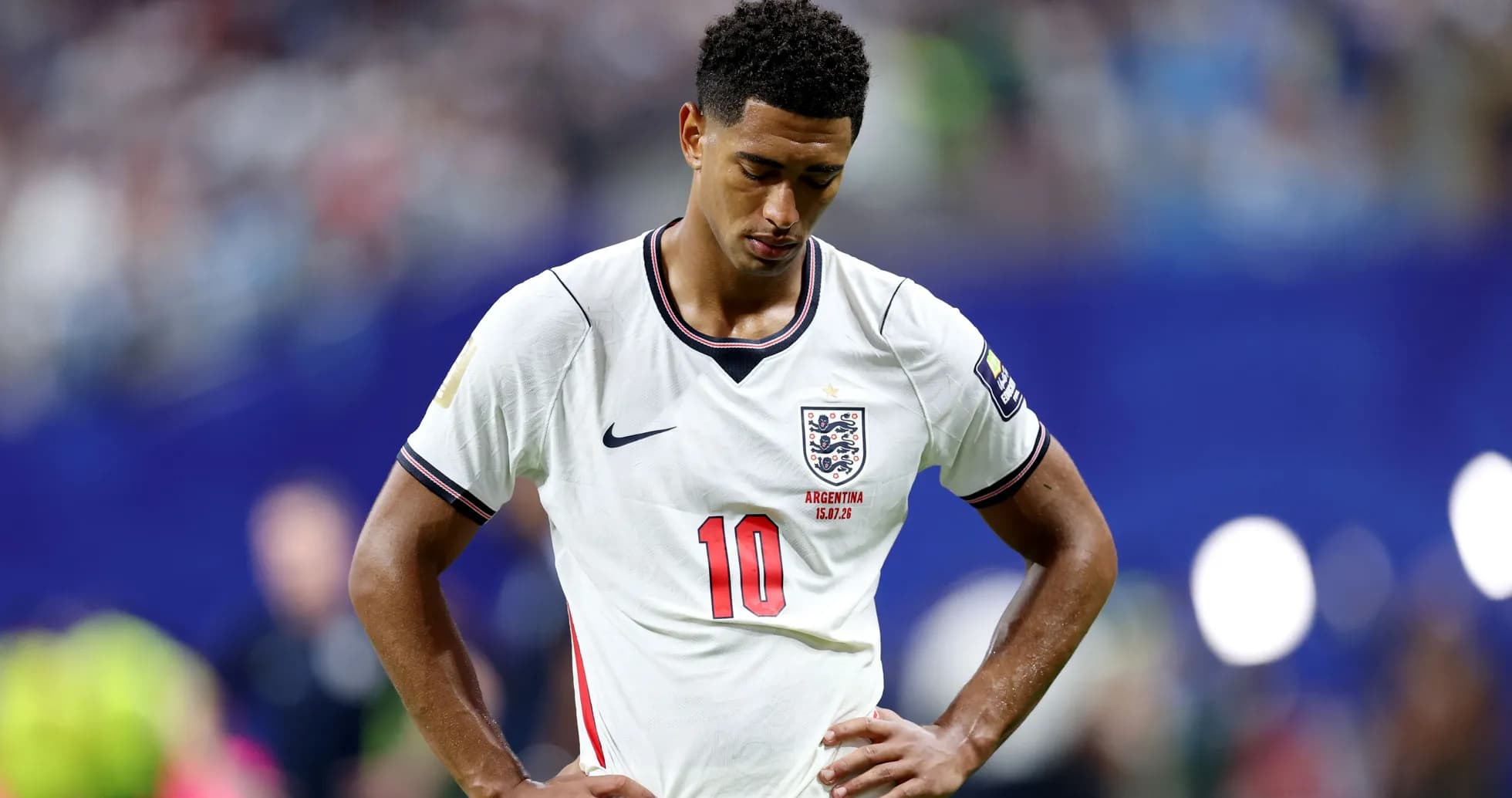
Jude Bellingham Reflects on England's Heartbreaking World Cup Semi-Final Loss
Jude Bellingham stood in front of the cameras looking shattered, the World Cup dream ripped away in the final moments by Argentina’s late 2-1 winner. This was supposed to be the tournament that carried England to their first final since 1966. Instead, it ended in another familiar, brutal chapter.
The 23-year-old had been England’s driving force all summer, finishing with seven goal contributions and a statement brace against Norway in the quarter-final. But under the harsh lights after the semi-final, numbers meant nothing. His voice cracked, his eyes told the rest.
“I think we can take a lot of experience from this, but it is so gutting,” he said, laying bare the weight of another near-miss. “I wanted to be a part of an England squad that finally done it and got it over the line. To be here, telling the fans the same things they've heard for years, it's really gutting.”
This was not just about one night. Bellingham has dragged himself through a bruising club season with Real Madrid and the agony of losing the Euro 2024 final. This defeat felt like the moment it all came crashing down. The midfielder searched for words, then simply apologised.
“I wish I could give one more win or two more wins, but at the moment, my head is a bit fuzzy with disappointment, so I'm sorry.”
On the pitch, England had held the advantage. Anthony Gordon’s goal put them in front, the kind of strike that usually turns into a platform for control. Instead, it became a turning point for all the wrong reasons.
Thomas Tuchel blinked first.
Sensing Argentina’s growing threat, the England manager shifted to a back five, trying to close the gaps and lock the game down. The move backfired. Argentina, chasing the game, surged forward with nothing to protect and everything to chase. England, suddenly deeper and more cautious, retreated into themselves.
“We decided to go to a back five because the gaps were far too open,” Tuchel explained afterwards. “Argentina played with more risk, played with more rhythm and played with the feeling maybe that they had nothing to lose any more, which freed them up and pulled us back.
“Because we obviously played suddenly with a feeling that we had a lot to lose. Of course the responsibility is on the coach and if it doesn’t go well it’s easy to say it was wrong.”
The shift in psychology was as stark as the tactical one. Argentina swarmed forward, liberated. England sank, burdened. The late turnaround felt inevitable once the momentum had swung.
Tuchel did not dodge the blame. He took it squarely, even as criticism of his substitutions and system change began to swirl. Yet behind the anger and disappointment, his position remains strong.
FA chief executive Mark Bullingham has thrown his support behind the former Chelsea and Bayern Munich coach, with the plan unchanged: Tuchel is expected to lead England into the home European Championships in 2028. The German made his own stance clear.
“We keep on going with the contract until the home Euros,” he said, shutting down any notion of a resignation.
So England must now pick themselves up for a third-place play-off against France on Saturday. On paper, a bronze medal would be their best World Cup finish in 60 years. In reality, it will feel like a consolation prize nobody really wanted.
For Bellingham and his teammates, the wounds are too fresh, the sense of another golden chance slipping away too raw. The semi-final will linger long after the final whistle of the play-off.
The next chapter comes at home in 2028. The question is whether this heartbreak hardens England into champions, or becomes just another scar on a generation that keeps getting close without quite touching the trophy.