Juventus and AC Milan Draw 1–1: Tactical Insights and Key Matchups
The Allianz Stadium under lights, Serie A in full voice, and two giants already moving in sync near the top of the table. Following this 1–1 draw in Turin, Juventus and AC Milan walk away level on the night and level in tone: both sides confirmed what the early numbers had suggested, that this is a season where their identities are sharply defined.
Heading into this game, Juventus had collected 7 points from 3 matches, sitting 6th with a goal difference of 3, built on 4 goals scored and just 1 conceded overall. At home they had been pragmatic but efficient, with 3 goals for and 1 against in 2 outings, averaging 1.5 goals scored and 0.5 conceded at the Allianz Stadium. Milan arrived a place above them in 5th, also on 7 points and the same overall goal difference of 3, with 5 goals scored and 2 conceded in total. On their travels, Milan’s attack had been slightly more expansive, with 3 goals scored and 2 conceded in 2 away matches, an away average of 1.5 goals for and 1.0 against.
I. The Big Picture – Systems and Seasonal DNA
Luciano Spalletti doubled down on Juventus’s emerging template by sending out a 4-2-3-1. Guglielmo Vicario was shielded by a back four of Zeki Celik, Jhon Lucumi, Bremer and Pierre Kalulu, a line built for aggression in the duels and front-foot defending. Ahead of them, Manuel Locatelli and Douglas Luiz formed a double pivot designed to control tempo and screen transitions, while the line of three – K. Alajbegovic, N. Gonzalez and F. Conceicao – worked to feed lone forward Randal Kolo Muani.
Across from them, Ruben Amorim’s Milan stayed loyal to their 3-4-2-1, a system that has underpinned their early-season balance. Mike Maignan sat behind a back three of Strahinja Pavlovic, Koni De Winter and Mario Gila, with Pervis Estupinan and D. Moreira providing the width. In the middle, Luka Modric and Yunus Musah were tasked with guiding the ball through Juventus’s press, while Alexis Saelemaekers and Adrien Rabiot floated behind Goncalo Ramos.
Overall, this was a clash between Juventus’s defensive parsimony – just 1 goal conceded in 3 matches overall before tonight – and a Milan side that had been quietly efficient in the final third, with 1.7 goals scored per match overall.
II. Tactical Voids – Absences and Discipline
Juventus arrived with a sizeable injury list that subtly reshaped their options. J. Cabal, A. Cambiaso, J. Ekhator, Weston McKennie, A. Milik, P. M. Sarr, K. Thuram and K. Yildiz were all missing, stripping Spalletti of rotation at full-back, in the box-to-box lanes, and in pure striking depth. The absence of Cambiaso and Cabal pushed Celik and Kalulu into heavy responsibility in wide defensive areas, while the lack of McKennie and Thuram limited the ability to tilt the midfield towards raw physicality and late box entries.
Milan’s list was shorter but not insignificant. Matteo Gabbia’s ankle injury reduced Amorim’s flexibility in the back three, increasing the load on Pavlovic, De Winter and Gila to stay disciplined for the full 90.
Disciplinary trends from the season framed the emotional undercurrent. Juventus’s yellow cards had been scattered, but with a notable 40.00% of their bookings coming between minutes 46–60 and another 20.00% between 76–90, they tend to boil over in the second half. Milan, by contrast, had seen 20.00% of their yellows in each of the 46–60, 61–75 and 76–90 windows, but a striking 40.00% in the 91–105 range, suggesting late-game tension and risk once legs tire and game states become desperate. Neither side had seen a red card in league play heading into this fixture, though Ruben Loftus-Cheek’s presence atop both the yellow and red card charts for Milan underlined the latent volatility on their bench.
III. Key Matchups – Hunter vs Shield, Engine Room Battles
The “Hunter vs Shield” narrative was more collective than individual. Juventus’s back line, which had helped limit opponents to an overall average of 0.3 goals conceded per match, was confronted by a Milan attack that had produced 5 goals in 3 matches overall and had failed to score neither at home nor away. Bremer and Lucumi were central to denying Ramos the pockets he thrives in, with Kalulu and Celik tasked with tracking the wide surges of Estupinan and Moreira while still closing the half-spaces where Rabiot and Saelemaekers drifted.
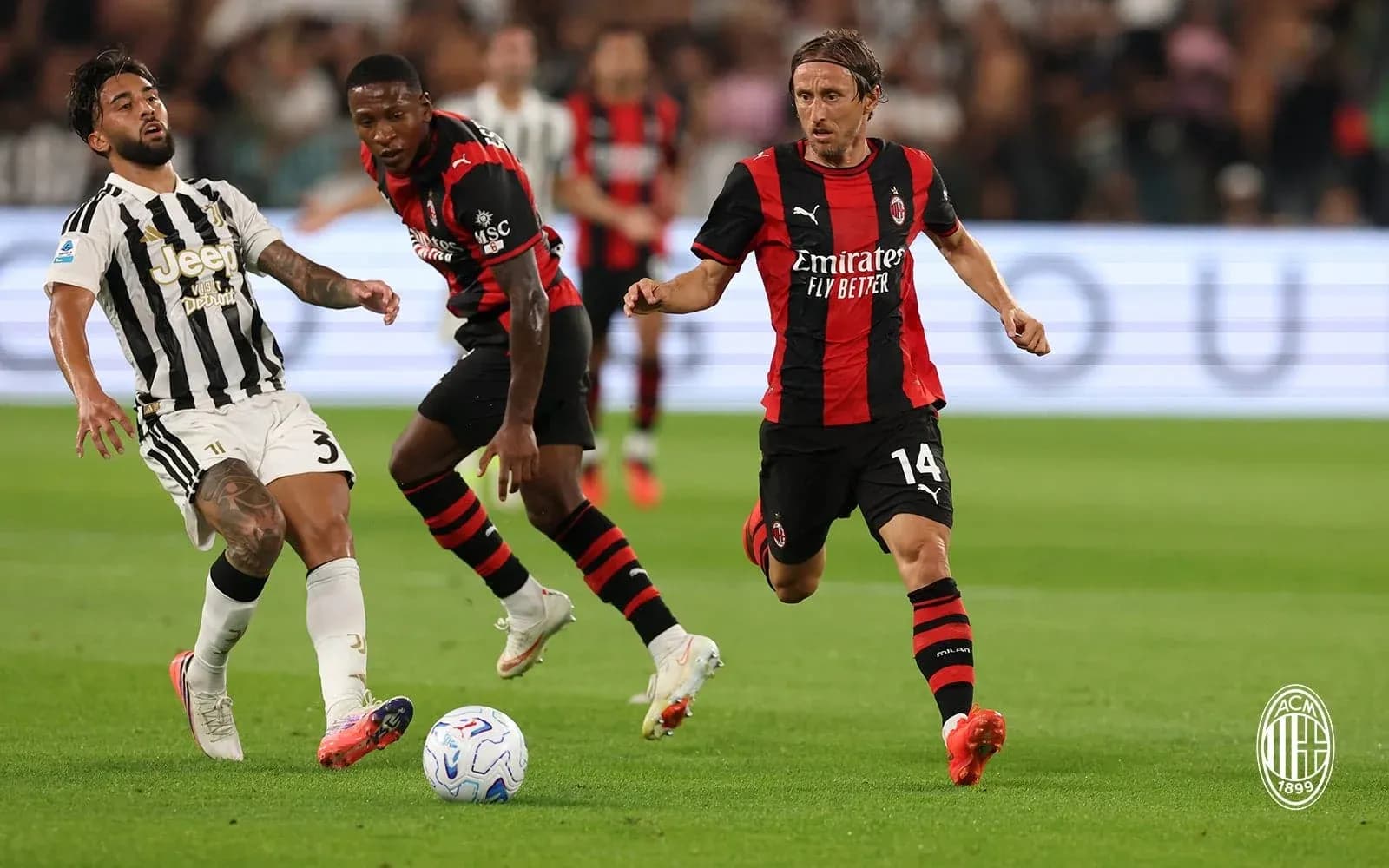
In the “Engine Room,” the duel between Locatelli–Douglas Luiz and Modric–Musah shaped the game’s rhythm. Locatelli’s role as metronome and first outlet from the back had to function under the pressing arcs of Ramos and Rabiot, while Douglas Luiz was the hinge between Juventus’s buildup and their three attacking midfielders. On the other side, Modric’s passing range and Musah’s carrying ability were Milan’s tools to bypass Juventus’s first line and exploit any spaces left when Conceicao and Gonzalez pushed high.
From the bench, there were two clear swing pieces. For Juventus, Teun Koopmeiners – already with 1 goal and 1 assist in just 46 league minutes – offered late-game shooting from distance and set-piece quality, a weapon against a Milan side that had conceded 2 goals overall but had not yet been truly stretched by sustained dead-ball pressure. For Milan, Samuel Chukwueze, the league’s early assist leader with 2, represented a direct threat against tiring full-backs, his 8 key passes and willingness to drive at defenders a ready-made antidote to any Juventus attempt to sit deep.
IV. Statistical Prognosis – What This Draw Tells Us
Following this result, both sides remain unbeaten in Serie A, and the numbers still point to a tight margin between them. Juventus continue to profile as a low-concession unit, with their overall defensive record of 1 goal against in 3 matches before tonight backed up by a compact structure and strong central defenders. Milan, with their overall attacking average of 1.7 goals per match and a spread of contributors – from Rabiot’s 1 goal and 1 assist to A. Cisse’s 2 goals – look like a side that can hurt opponents in different ways.
In xG terms, the underlying trends suggest that future meetings between these sides will be decided on fine details: set-piece execution, the timing of substitutions like Koopmeiners and Chukwueze, and which engine room wins control of the middle third. Juventus’s home solidity, Milan’s away scoring consistency, and the absence of penalty reliance from either team – with no penalties taken or missed overall so far – all point towards open-play craft being the decisive factor.
This 1–1 at the Allianz Stadium felt less like a conclusion and more like a first chapter: two well-drilled squads, clear tactical identities, and a season-long duel that will likely hinge on who finds the extra gear in precisely these balanced, high-level encounters.