Juventus 4–1 Parma: Bremer's Brace Leads to Dominant Victory
At Stadio Ennio Tardini on Saturday night, Juventus produced a clinical 4–1 victory over Parma in Serie A’s Round 23, tightening their grip on a Champions League place while deepening the home side’s relegation worries. Luciano Spalletti’s team, fourth at kick-off, showcased their attacking efficiency and defensive set-piece threat, while Carlos Cuesta’s Parma briefly threatened a comeback before being overpowered. The result leaves Juventus on 45 points with a healthy +21 goal difference, while Parma remain 16th on 23 points and a worrying -15 goal differential.
First-Half Analysis
Juventus imposed themselves early and were rewarded from a set-piece on 15'. Centre-back Bremer opened the scoring, finishing after Francisco Conceição was involved in the build-up, underlining Juve’s aerial and dead-ball strength. The visitors’ aggression without the ball then drew the referee’s attention: Francisco Conceição (17'), Bremer (24') and Weston McKennie (26') all went into Francesco Fourneau’s book for fouls, reflecting an intense, combative midfield battle.
Despite those cautions, Juventus continued to look the sharper side in the final third. On 37', McKennie doubled the advantage, converting after a delivery from right-back Pierre Kalulu. That 0–2 scoreline at half-time accurately reflected a period in which Juve were more incisive in both boxes, while Parma struggled to translate their possession phases into clear danger and went into the interval with a mountain to climb.
Second Half and Tactical Shifts
Cuesta reacted immediately at the break, withdrawing Gaetano Oristanio and introducing defender Sascha Britschgi on 46'. The change hinted at a reshuffle, perhaps seeking more balance and solidity after Juve’s first-half threat between the lines. Spalletti also adjusted, taking off Kenan Yıldız for midfielder Fabio Miretti at 46', a move that suggested a desire for more control in central areas with a two-goal cushion.
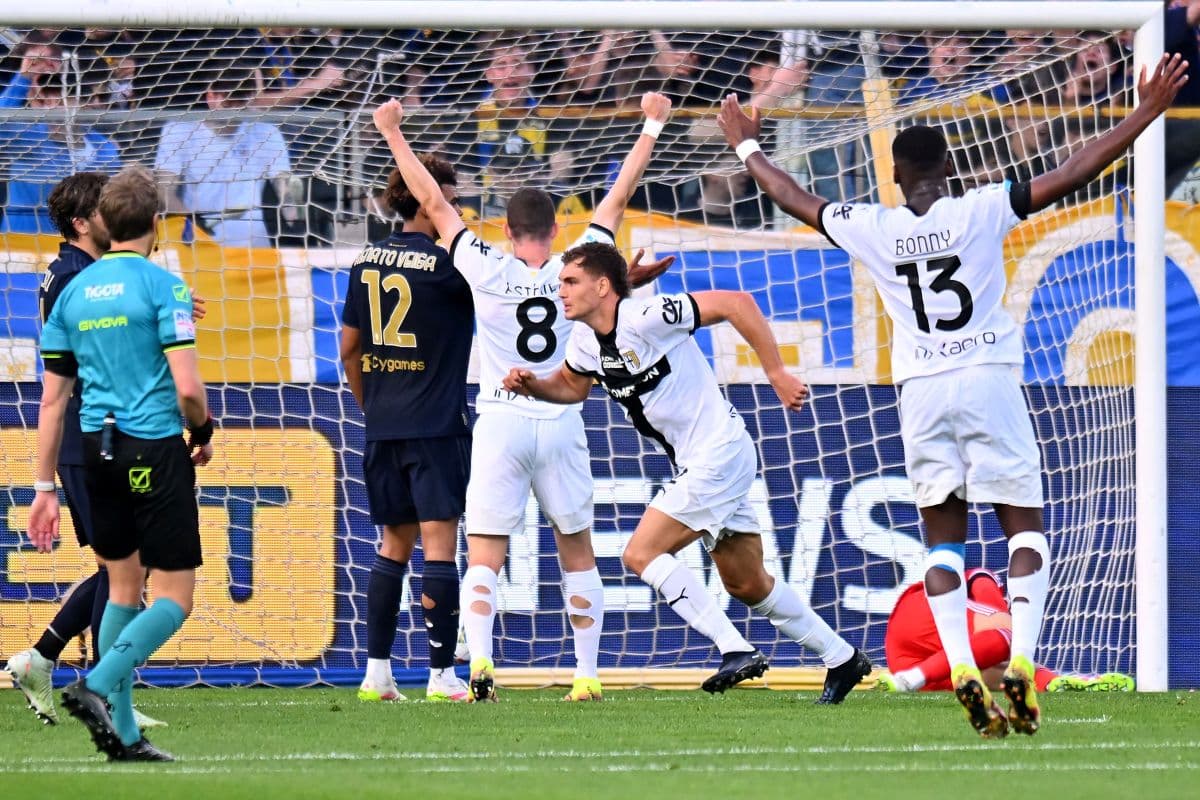
Parma were handed a lifeline on 51' in chaotic fashion. Andrea Cambiaso put through his own net, credited as a goal for Parma, to make it 1–2 and briefly tilt the momentum. Any hopes of a full comeback, however, were quickly extinguished. Just three minutes later on 54', Bremer struck again, this time from open play after being set up by striker Jonathan David, restoring Juve’s two-goal advantage at 1–3 and underlining the defender’s dominance in both penalty areas.
Spalletti’s side then killed the contest on 64'. David, already with an assist to his name, got his own goal to make it 1–4, capping a ruthless attacking performance. Cuesta turned to his bench again on 65', replacing Hans Nicolussi Caviglia with midfielder Oliver Sørensen in search of fresh energy, while Spalletti swapped the booked Francisco Conceição for Filip Kostić the same minute, a like-for-like change on the flank to preserve intensity without risking a second yellow.
On 66', Bremer’s night ended with his withdrawal for Federico Gatti, a logical move to protect a key defender already on a booking and to manage minutes with the game seemingly decided. Parma later introduced Nahuel Estévez for Adrián Bernabé on 74' and Nesta Elphege for Jacob Ondrejka on 75', attempting to inject creativity and attacking impetus. Juventus, for their part, replaced McKennie with defender Juan Cabal on 74', subtly shifting towards game management.
Jonathan David made way for Loïs Openda on 81', giving the Belgian forward a late cameo. Parma’s frustration surfaced when Alessandro Circati was booked for a foul on 86'. In stoppage time, Openda thought he had added a fifth, but a VAR review on 90+2' led to the goal being cancelled, keeping the final score at 1–4.
Statistical Deep Dive
Across the 90 minutes, Juventus controlled 60% of the ball, with Parma conceding possession and often forced to play without sustained territory. Spalletti’s side also edged pass accuracy, completing 488 of 565 passes at 86%, compared to Parma’s 303 of 362 at 84%. That technical edge in circulation helped Juve dictate tempo once ahead.
Juventus produced 15 total shots to Parma’s 11, but crucially registered 8 shots on goal versus Parma’s 4. The expected goals (xG) figures underline the gulf in chance quality: Juventus generated 4.03 xG, closely matching their four goals, while Parma’s 0.58 xG highlights how few clear-cut openings they created despite some forays forward. Both goalkeepers recorded the same number of saves (three for Parma’s Edoardo Corvi, four for Michele Di Gregorio), but Juve consistently worked higher-value positions, especially inside the box where they attempted 13 shots to Parma’s 5.
Discipline reflected a competitive but controlled encounter. Juventus committed 13 fouls to Parma’s 10 and collected three yellow cards, all in the first half, indicating their aggressive approach to breaking up play early on. Parma received just one booking, Circati’s late caution, suggesting they were more reactive than disruptive as the visitors managed the game from a position of strength.
Standings and Implications
The win consolidates Juventus’ position in fourth on 45 points, with a strong +21 goal difference and a record of 13 wins from 23 matches. With 39 goals scored and only 18 conceded, Spalletti’s side look well on course for Champions League qualification, maintaining momentum with a “WWLWW” recent form line. For Parma, the defeat keeps them 16th on 23 points, with just five wins and a worrying tally of 15 goals for and 30 against. Their -15 goal difference and “LLDDW” form underscore a team still firmly in the relegation conversation, needing points quickly to avoid being dragged deeper into trouble.