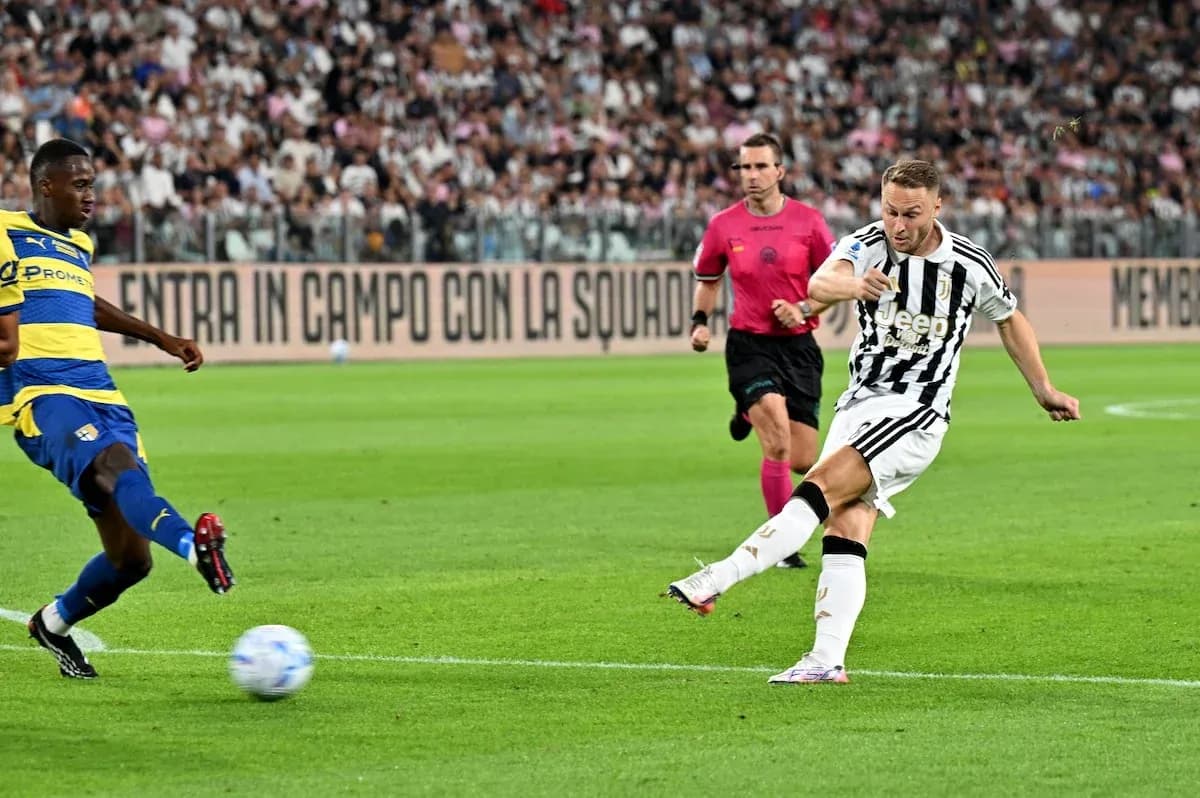
Juventus vs Parma: A Statement of Intent in Serie A
Under the lights of the Allianz Stadium, this felt less like Matchday 2 and more like a statement of intent. Juventus, already carrying the swagger of a side with Champions League ambitions, methodically dismantled Parma 2–0 and, in doing so, revealed a squad architecture that looks both deep and clearly defined. For Carlos Cuesta’s newly promoted visitors, the night underlined the gap they must bridge to turn survival from an aspiration into a probability.
I. The Big Picture – Structures and Seasonal DNA
Luciano Spalletti rolled out a classic 4-4-2, but the personnel turned it into something far more fluid. Guglielmo Vicario, protected by a back four of Zeki Çelik, Jhon Lucumí, Bremer and Pierre Kalulu, operated behind a midfield that blended control and incision: Francisco Conceição wide right, Jeremie Boga wide left, Manuel Locatelli and Douglas Luiz in the central lane. Up front, Randal Kolo Muani and Jonathan David offered verticality and penalty-box menace.
Heading into this game, Juventus had taken 6 points from 2 league matches, with 3 goals scored and none conceded overall. At home, they had already scored 2 and conceded 0; away, they had added 1 goal and again kept a clean sheet. The goal difference of 3 (3 scored, 0 conceded) is the statistical shorthand for a start that matches the eye test: compact, ruthless, and efficient.
Parma arrived in Turin in the same 4-4-2 shape but with a very different energy. Enrico Delprato, Mariano Troilo, Dardan Drobnic and Enrico Valeri formed a back line in front of young goalkeeper Edoardo Corvi. The midfield band of S. Britschgi, Cristian Ordoñez, Adrián Bernabé and M. Keita was asked to both screen and spring counters, leaving S. Lontani and E. B. Touré to chase lost causes against an organised Juventus block.
The standings framed the narrative starkly. Juventus sat 3rd, perfect from 2 games. Parma, 16th, had 0 points, 0 goals scored and 3 conceded overall. At home, Parma had lost 1–0; away, they had already suffered a 2–0 defeat. The away goal difference of -2 (0 scored, 2 conceded) mirrored the pattern that unfolded again in Turin.
II. Tactical Voids – Absences and Discipline
Spalletti’s squad depth was tested but not strained. Weston McKennie (muscle injury), Khéphren Thuram (knee injury), Kenan Yildiz (foot injury) and Edon Zhegrova (muscle injury) were all ruled out. On paper, that removes energy, ball-carrying and rotation options between the lines. In practice, Juventus compensated with structure: Douglas Luiz’s positional intelligence and Locatelli’s metronomic passing (159 passes in the league so far with 90% accuracy) gave the side a stable platform.
For Parma, the absence of Hans Nicolussi Caviglia through a groin injury was more than a sentimental note against his former club. In a team still learning the rhythms of Serie A, losing a midfielder capable of linking phases and calming possession removed a potential pressure valve.
Disciplinary trends told their own story. Juventus, across the season, have shown a clear yellow-card pattern: 25.00% of their cautions in the opening 15 minutes, 50.00% between 46–60 minutes, and another 25.00% from 76–90. It speaks to an aggressive start to each half and a willingness to foul to kill transitions late on. Andrea Cambiaso and Çelik have already been booked once each, and both again walked the line of controlled aggression here.
Parma’s bookings are more reactive than proactive. With 33.33% of their yellows coming between 46–60 minutes, another 33.33% from 76–90, and 33.33% in stoppage time (91–105), they tend to collect cards when chasing games and arriving late into duels. Troilo, Delprato and Abdou Konate all carry early-season yellows, and their need to defend deep for long stretches in Turin only amplified that risk.
III. Key Matchups – Hunter vs Shield, Engine Room Battles
The “Hunter vs Shield” duel was clearest on Juventus’s right flank. Francisco Conceição, already one of Serie A’s leading assist providers with 1 assist and 6 key passes so far, squared up against Valeri and Troilo. Conceição’s 12 dribble attempts and 6 successes this season underline his role: destabilise the block, drag defenders out, and open corridors for Kolo Muani and David. Parma’s defensive record away from home – 2 goals conceded on their travels and none scored – left little margin for error. Every time Conceição isolated his man, Parma’s back line had to collapse, leaving the far-side full-back exposed to Boga’s surges.
In the engine room, Locatelli versus Bernabé framed the tactical argument. Locatelli’s 7 interceptions and 2 tackles in the league highlight his dual role as regista and destroyer. Bernabé, nominally Parma’s creative hub, was forced deeper and wider to find touches, often receiving with his back to goal under the shadow of Douglas Luiz. The result was that Parma struggled to progress centrally, instead funnelling possession into wide areas where Juventus’s full-backs and wingers could trap and counter.
At the back, Bremer and Lucumí quietly underpinned Juventus’s perfection. With the team yet to concede a goal overall, their dominance in duels and control of depth meant Lontani and E. B. Touré rarely received clean service. Troilo, on the other side, showed why he features prominently in Parma’s defensive metrics – 2 blocks and 1 interception in the league so far – but his interventions often felt like last-ditch resistance rather than the foundation of a solid block.
IV. Statistical Prognosis – What This Win Says Going Forward
Following this result, Juventus’s season profile hardens into something formidable. They have 2 wins from 2, 3 goals for and 0 against overall, and have kept clean sheets both at home and on their travels. The average of 1.5 goals scored per game overall, combined with 0.0 conceded, paints a picture of a side that does not need to overwhelm opponents with volume; they simply suffocate them, then strike.
Parma’s outlook is more precarious. With 0 goals scored and 3 conceded overall across 2 matches, an average of 0.0 goals for and 1.5 against, they are living on the wrong side of every margin. They have yet to keep a clean sheet, have failed to score both at home and away, and their best defeats – 0–1 at home, 2–0 away – suggest a team that can hang in games without ever quite threatening to tilt them.
From a predictive standpoint, Juventus’s blend of defensive solidity, disciplined aggression and a growing cast of difference-makers – from Conceição’s creativity to Locatelli’s control and the lurking threat of Teun Koopmeiners off the bench – makes them clear favourites in most domestic matchups. Their penalty record, with no spot-kicks taken or missed so far, leaves one offensive layer untested, but their open-play structure is already carrying the load.
Parma, by contrast, must quickly convert Troilo’s composure, Konate’s bite and Bernabé’s technical quality into a coherent attacking plan. Until they do, nights like this in Turin will feel less like learning experiences and more like warnings.