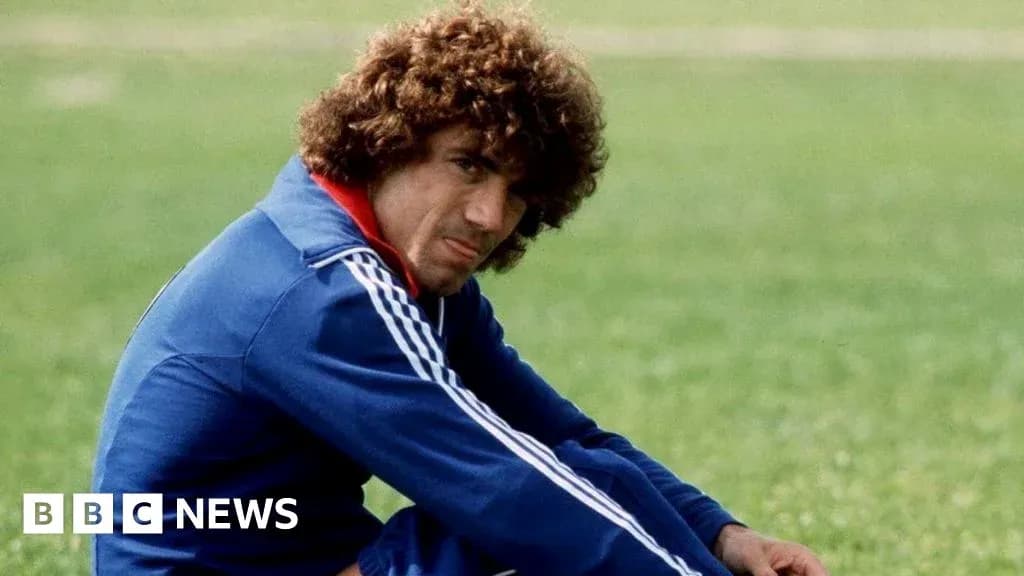
Kevin Keegan: A Bridge Between Two Great Football Cities
Kevin Keegan’s death at 75 has triggered tributes from across the football world, but in one corner of northern Europe his legacy runs deeper than medals and memories. It runs along the Mersey and the Elbe.
In a letter to Hamburg’s mayor, Liverpool City Region Mayor Steve Rotheram described Keegan as “a bridge between two great cities” – a line that feels less like political polish and more like a simple statement of fact.
From Anfield idol to Hamburg hero
Keegan left Liverpool FC in 1977, stepping away from a team he had just led to their first European Cup on his final appearance. Seven major honours, two Ballon d’Or awards, and a place in Liverpool folklore already secured, he chose a bold move: Hamburg SV.
At the time it was a record transfer. It was also a cultural jolt. An English superstar crossing the Channel to test himself in the Bundesliga, swapping the Kop for the Volksparkstadion and the Mersey for the docks of Hamburg.
Rotheram’s letter, seen by the Local Democracy Reporting Service, makes clear that in Liverpool the emotions around Keegan were never simple, but always intense.
“For one half of our football-mad city, Kevin was a footballing hero,” he wrote. “For the other, a well-respected irritant on derby day.”
That line captures him perfectly. Adored by Liverpool supporters. Respected – and resented – by Evertonians who saw him torment their team often enough.
A player claimed by two ports
Keegan’s impact in Germany went far beyond curiosity value. His success at Hamburg, where he was “admired and loved”, as Rotheram put it, meant both cities could claim him as their own.
“When Kevin left our shores for Germany in 1977, he did more than make a then-record transfer between two football clubs,” Rotheram wrote. “He built a bridge between two great cities.”
He became a symbol of shared identity between two working, football-obsessed ports, a link that has since been celebrated in exhibitions charting the relationship between Liverpool and Hamburg. His career sits at the heart of that story.
To Rotheram, Keegan represented something even more fundamental. “He embodied better than anyone else that famous maxim: football is the people’s game.”
A final message that never made the trip
Keegan had been due to travel with Rotheram to Hamburg for its annual Harbour festival, the Hafengeburtstag. The plan was for the old No.7 to return once more to the city that had embraced him after Liverpool.
Cancer changed everything. The diagnosis meant he could not travel. He was “devastated” to miss the celebrations, Rotheram revealed, but he refused to let the connection fade quietly.
Instead, he sent a personal note for Rotheram to read on the Liverpool stage by the Elbe. It was a simple, heartfelt message to a city that had never forgotten him.
“As you may remember, Kevin wrote some words for me to convey to the large audience at the Liverpool City Region pavilion back in May,” Rotheram said in his letter.
Despite what he called his “pidgin German and broad Scouse accent”, the crowd responded warmly. Keegan wasn’t there in person. His presence still filled the space.
“Kevin may have left both cities many years ago,” Rotheram wrote, “but he never truly left our hearts.”
‘Forgive my Plattdeutsch, but I love Hamburg’
Rotheram chose to share Keegan’s own words with Hamburg’s mayor, Dr Peter Tschentscher, one more time. The message was brief, affectionate and unmistakably Keegan.
“In Kevin’s words, once again: Forgive my Plattdeutsch, but I love Hamburg.”
There was no grand speech, no sweeping farewell. Just a line that cut through language and politics and geography, the way Keegan’s football once cut through defences.
Rotheram closed by widening the tribute beyond the player to the communities that claimed him.
“On behalf of the people of Liverpool, we send our deepest condolences to Kevin’s friends, the HSV family and the people of Hamburg. Thank you for loving him as we did. You’ll Never Walk Alone.”
A boy from Doncaster became a legend at Anfield and a star in Hamburg. In the end, his greatest legacy might not be the trophies or the awards, but the unlikely, enduring bond he forged between two cities that still sing his name.