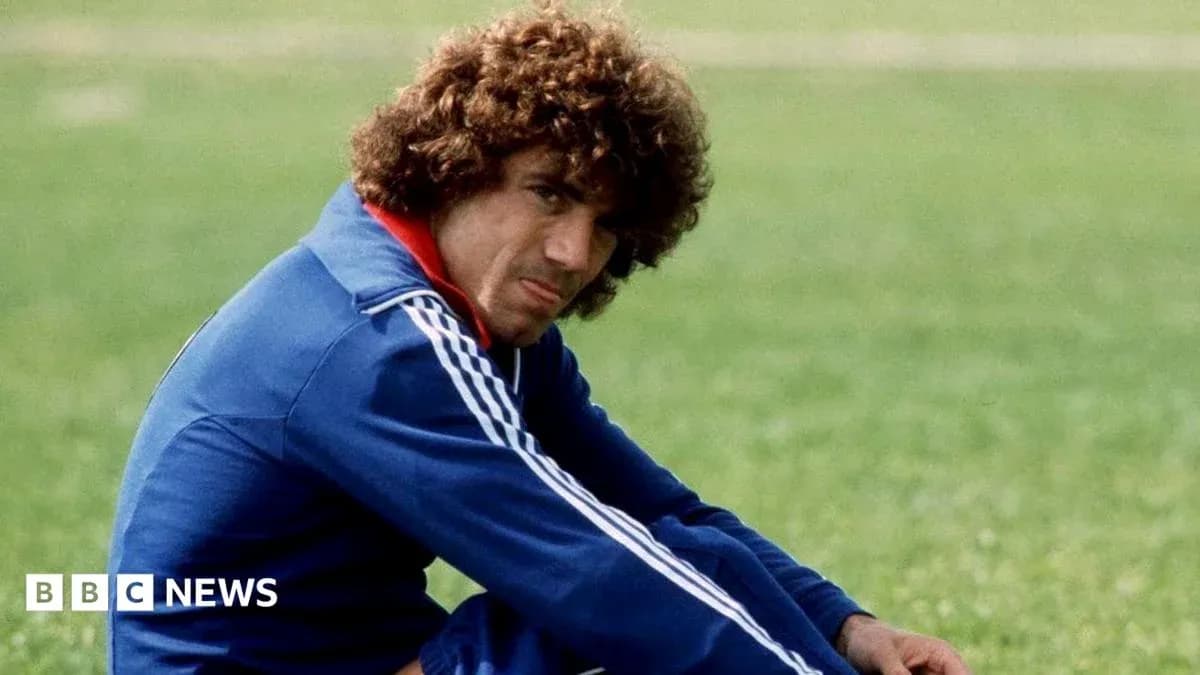
Kevin Keegan: The Man Who United Liverpool and Hamburg
Kevin Keegan spent a career stitching himself into football history. In death, it turns out, he also stitched two cities together.
In a letter to the mayor of Hamburg, Liverpool City Region Mayor Steve Rotheram described Keegan as a “bridge between two great cities” – a line that lands perfectly for a player who never did anything by halves. Keegan, who died on Monday aged 75, had been due to travel with Rotheram to Hamburg’s annual Harbour festival, a kind of homecoming for a man adored on both sides of the North Sea. Cancer stopped him making that final journey.
Keegan’s story is usually told in medals and milestones. One of the most decorated English players of all time. Two Ballon d'Ors. Seven major honours with Liverpool. The club’s first European Cup, lifted in his final appearance before he walked away from Anfield in 1977 and straight into a new life with Hamburg SV.
But Rotheram’s letter, seen by the Local Democracy Reporting Service, paints a more human picture. “For one half of our football-mad city, Kevin was a footballing hero,” he wrote. “For the other, a well-respected irritant on derby day.” That line will raise a wry smile on Merseyside. Evertonians might have groaned at his goals, but they recognised the force of nature in red.
Keegan arrived at Liverpool as a tenacious forward and left as a phenomenon. By the time he walked up those European Cup steps for the final time in 1977, he had helped drag the club into a new era of European dominance. Then he did something English stars simply didn’t do at the time: he left, at the peak of his powers, for Germany.
Rotheram framed that decision as more than a football transfer. “When Kevin left our shores for Germany in 1977, he did more than make a then-record transfer between two football clubs. He built a bridge between two great cities.” Keegan didn’t just export his goals. He exported a piece of Liverpool’s footballing soul and found it welcomed, loudly, in Hamburg.
In Germany, he became as much a symbol as a signing. The same relentless work-rate, the same courage in tight spaces, the same refusal to treat any game as routine. Rotheram wrote that Keegan’s success “belonged equally to Liverpool and Hamburg”, where he was both “admired and loved”. That dual ownership is rare. Players usually belong to one city, one fanbase, one mythology. Keegan managed two.
The mayor’s final tribute cut to the heart of it. “To me, he embodied better than anyone else that famous maxim: football is the people’s game.” Keegan played like that from the first whistle to the last – sleeves metaphorically rolled up, talent wrapped in graft, glory earned the hard way.
The medals and awards tell you he was great. The way two cities now mourn him tells you he was theirs.