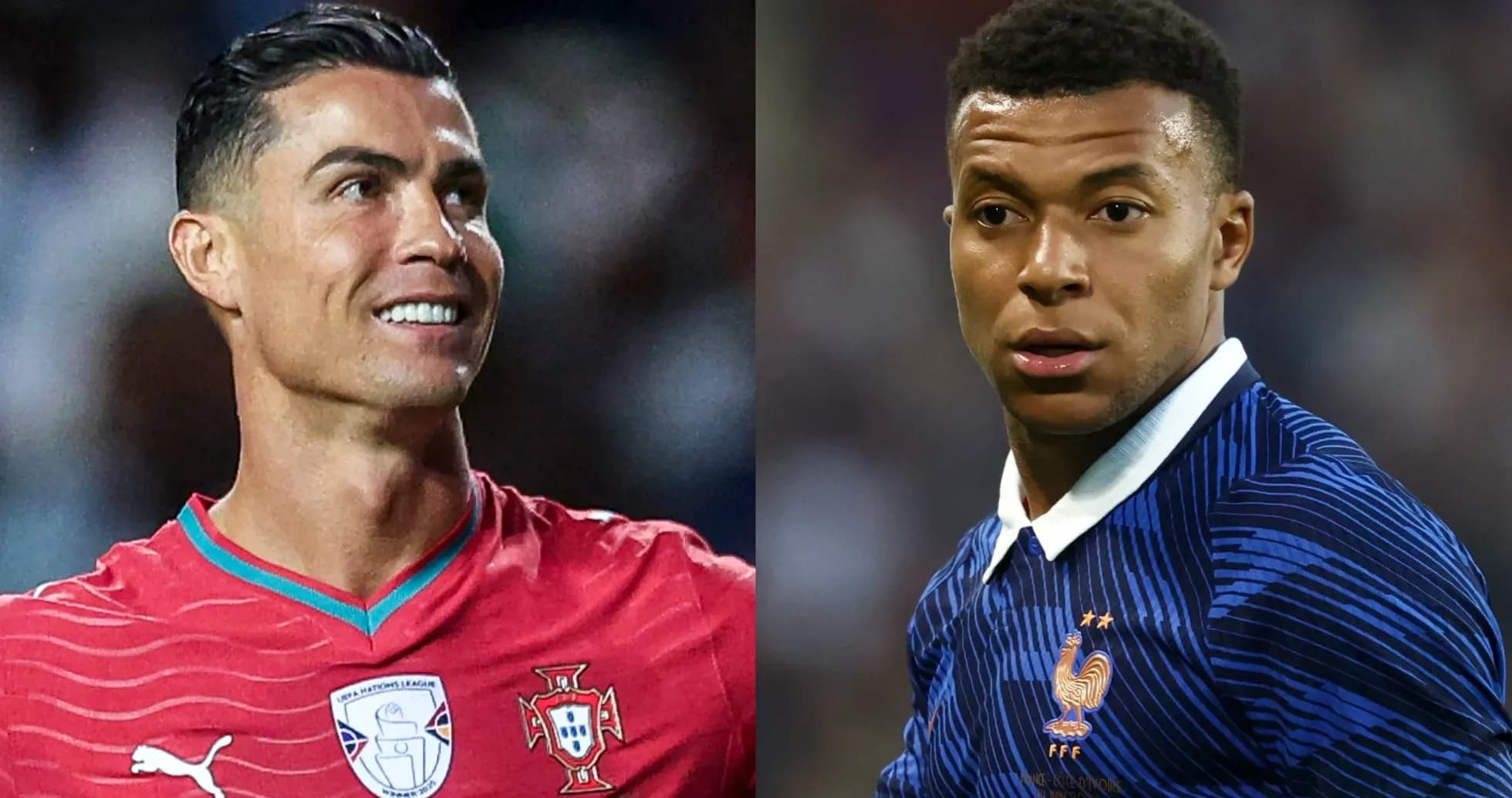
Kylian Mbappé: A Star Built for Spotlight, Not Teamwork
Kylian Mbappé has spent most of his life being told he was born to be the star. At eight years old, the path was already laid out for him: the world’s next great forward, the heir to Messi and Ronaldo, the man around whom everything revolves.
Frank Leboeuf thinks that might be exactly the problem.
The former France and Chelsea defender, speaking to GOAL, painted a stark picture of a football culture that has built Mbappé for the spotlight but not necessarily for the grind of collective sacrifice.
“He's been created to be the main man,” Leboeuf said. “Since he's eight years old the world has promised him to be one of the best because he was incredible when he was very young and he kept on doing the right thing to become one of the best.”
No one can argue with the numbers. At 27, Mbappé has plundered 86 goals in 103 appearances for Real Madrid and hit 56 for France. The output is relentless. The stage never seems too big. Under the brightest lights, he delivers.
Yet Leboeuf’s concern lies elsewhere. In his eyes, the modern game keeps proving that the true star is the team.
“He doesn’t have that in his computer”
Leboeuf pointed to the recent era of Champions League winners to make his case. Liverpool under Jürgen Klopp. Real Madrid’s serial survivors in Europe. Sides built not around one man, but around an unshakeable collective.
“Football is the collective game and in fact the team is a star,” he said. “With all the big teams that we saw winning titles like the Champions League – Liverpool for example and now Paris Saint-Germain – it's all about playing together.”
He went back to Real Madrid’s improbable run in Europe, when Carlo Ancelotti’s side repeatedly escaped against superior performances from Chelsea, Paris Saint-Germain and Manchester City.
“When Real Madrid played awfully and they shouldn't have gone to the final against Liverpool… no way they should have won those games but they managed to because of the collective spirit,” Leboeuf argued. “And that's why I think Kylian doesn't have that in his computer and when you don't have it it's hard to put it in.”
The phrase is telling. For Leboeuf, this is not a question of talent, but of wiring. A player conditioned from childhood to be the centrepiece now operating in an era he describes as a “dictator of emergency”, where instant stardom and individual branding dominate the landscape.
The Ballon d’Or, once a trophy briefly admired then forgotten, has become a season-long obsession. Leboeuf doesn’t pin that solely on Mbappé. He sees a sport that has elevated the wrong things.
“It's a different world and it's not only Kylian Mbappe guilty for that,” he said. “We create importance on some spots where it shouldn't be and we are absolutely wrong because football showed us every game that if you don't play together it doesn't work.”
Neymar, Messi, Mbappé… and the missing glue
Leboeuf’s criticism cuts through some of the glamour around superstar front lines. He namechecks Neymar, Messi and Mbappé at PSG, then looks at Vinícius Jr and Mbappé now at Real Madrid. The individual quality is outrageous. The chemistry, in his view, is not.
“It doesn't work because they don't fit into a collective spirit and that's what it is,” he said.
To explain what he loves about the game, he goes back to Liverpool’s peak. Not just Mohamed Salah, but Virgil van Dijk. Not just the headline scorers, but Alisson, Andy Robertson, Trent Alexander-Arnold. A team of stars, not a star with supporting actors.
“They were crossing to each other to score goals. That was insane,” Leboeuf recalled. That, for him, is the essence of football.
So when he looks at Mbappé slaloming past four players, he doesn’t swoon.
“I don't care about Mbappe dribbling four players. It doesn't impress me because he doesn't see the game,” he said. The names he lights up for instead are Rodri and Kevin De Bruyne – players who appear to know the next pass before the ball even reaches them.
“Why do we love Rodri? Why did we love Kevin De Bruyne? Because they saw where they were going to give the ball before receiving it. That's the spirit that I love.”
He even admits he was “not a big fan” of Diego Maradona’s style, despite calling him a genius. For Leboeuf, the purest art lies in the one-touch pass, the anticipation, the invisible work that knits a team together.
“Anticipation is the special skill for me,” he said. And that is where he feels Mbappé still has a gap.
A restless star and the Premier League question
Mbappé’s numbers at Real Madrid remain extraordinary, yet his body language in recent months has often told another story. Frustration. Arms outstretched. Glances to the bench. Whenever that happens, speculation follows.
Would he seek another challenge? Would he ever test himself in the Premier League?
Leboeuf believes the English game has evolved to the point where Mbappé could thrive.
“If it was the Premier League from when I played, I would have said no he's not ready for that,” he admitted. “But with the pace that he has and the possibility that you can find in England when you play in the Premier League, yes I think Kylian Mbappe can play in any league in the world and that would be nice to see him in the Premier League fighting with Erling Haaland as a top scorer.”
The image is tantalising: Mbappé and Haaland trading goals, dragging defences to pieces, turning title races into shootouts.
Leboeuf doesn’t see it happening any time soon.
“With the price that it would cost, nobody can buy him right now,” he said. “I don't think so. I don't think, and nobody who we think can be a contender for next season.”
Even if someone found the money, the fit would have to be perfect. Arsenal, for instance, need a striker on paper. On the pitch, their system is another story.
“Arsenal will need a striker but they don't use strikers,” Leboeuf pointed out. “They go around the strikers so Mbappe would be very upset to have Gyokeres’ role where you wait for crosses, wait for passes and it never comes.”
He then drew a sharp contrast with Haaland, who has accepted long spells of isolation in Pep Guardiola’s intricate structure.
“What Haaland has been capable of accepting with Pep Guardiola's system, touching one or two balls per period, I'm not sure Kylian Mbappe will accept that,” Leboeuf said.
In his mind, Mbappé would drift. He would drop into the No.10 space, hunt touches, search for influence, and in doing so, risk tearing up the tactical plan.
“So he will go back down as number 10, will try to touch the ball and maybe create a mess on the coach’s tactic,” Leboeuf warned.
The numbers say Mbappé belongs in the same breath as the greatest forwards of his generation. The medals, goals and moments back that up. Yet Leboeuf’s challenge is pointed: in a game increasingly defined by structure, pressing and collective intelligence, how long can a born soloist resist fully surrendering to the orchestra?