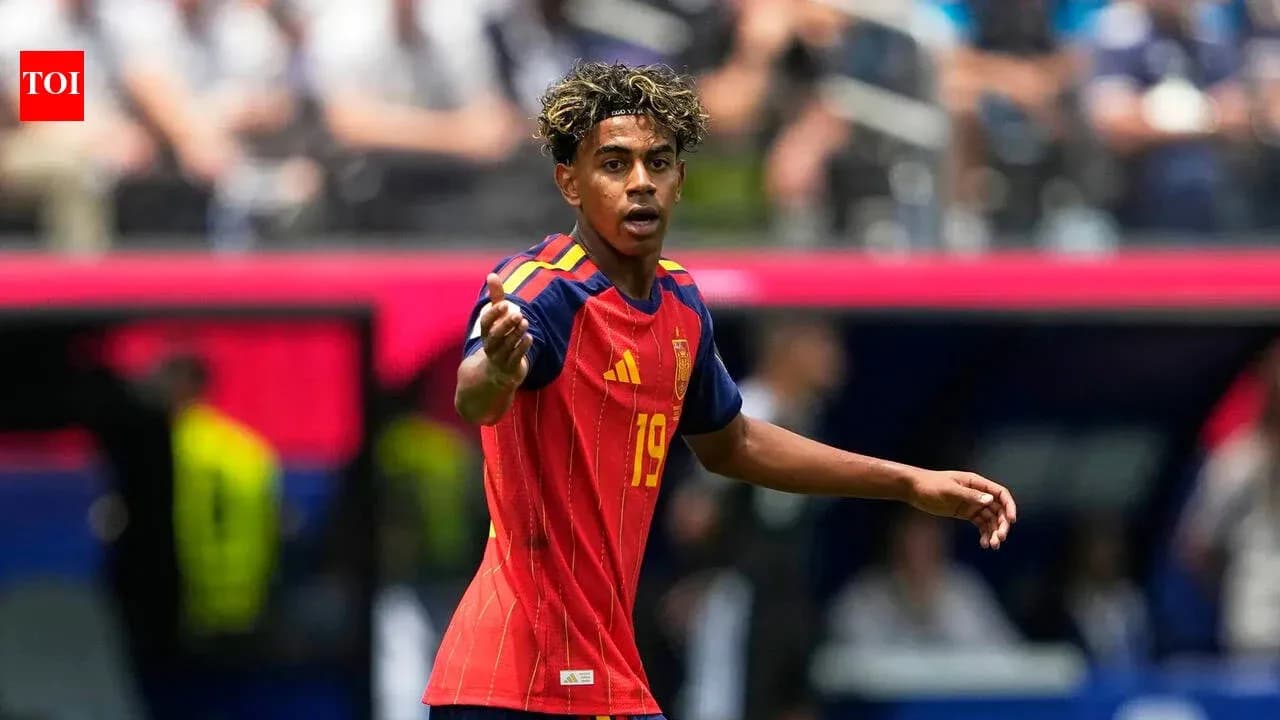
Lamine Yamal Leads Spain to World Cup Final
Lamine Yamal was still in his kit when he reached for his phone. The noise from the dressing room in Arlington leaked into the corridor, but his message cut through the chaos with the clarity of a finish into the top corner.
“nuevayol vamos por ti.”
New York, we’re coming for you.
No time for reflection. No pause to soak in the moment. Minutes after Spain had taken apart France 2-0 at AT&T Stadium to book their place in the 2026 World Cup final, the teenager who has come to define this new La Roja made it clear: this is not the destination. This is a stopover.
A teenager who owns the stage
At 19, Lamine Yamal is already rewriting World Cup history. Against France, he did it before a ball was even kicked.
Luis de la Fuente named two teenagers in his starting XI for a World Cup semifinal – Yamal and Pau Cubarsí – something no side had ever done at this stage of the tournament. It sounded like a risk. On the pitch, it looked like a statement.
Yamal didn’t hide. He hunted.
In the 22nd minute, he pressed Lucas Digne with the sharpness of a veteran winger who has seen this duel a hundred times before. One quick read, one decisive challenge, and he had the ball where he wanted it – in the French penalty area, with defenders suddenly scrambling. Digne clipped him, Yamal went down, and Spain had the moment they’d been probing for.
Mikel Oyarzabal took the responsibility from 12 yards. One breath, one smooth strike, and the net rippled. Spain led, and the game’s rhythm shifted decisively their way.
From there, La Roja did what the great Spanish sides always do when they smell control: they suffocated. Pass after pass, angle after angle, they turned France’s midfield into a chasing pack. Kylian Mbappé and Aurélien Tchouaméni tried to drag their team up the pitch, but the ball kept coming back in red waves.
A complete Spain, not just a pretty one
Earlier in the tournament, Spain dazzled with attacking fireworks. This was different. This was mature, measured, ruthless.
The second goal told the story.
After the break, with France trying to step higher, Pedro Porro surged forward from deep, exchanged passes with Dani Olmo, and suddenly the French back line was exposed. Porro didn’t snatch at it. He passed the ball into the bottom corner with the calm of a striker who has spent a career in that position. 2-0, and the semifinal felt almost done.
Yamal thought he had his own reward soon after. He arrived, finished, celebrated – only to see the flag. A marginal offside, a thin line on a screen, and the goal vanished. The disappointment lasted seconds. The performance stayed.
France kept coming, as they had to. Mbappé ran at defenders, Tchouaméni drove through midfield, blue shirts flooded the final third. Spain didn’t blink. De la Fuente’s back line, so often questioned before this tournament, locked in again to protect yet another clean sheet. Six shutouts in seven matches at this World Cup is not an accident. It’s an identity.
Dancing now, eyes on New York
Inside the Spain dressing room, the mood was pure release. Music up, shirts off, players dancing on tired legs that suddenly didn’t feel so heavy. The official national team account pushed out the scenes: singing, shouting, the kind of unfiltered joy that only comes with a return to football’s biggest stage.
“Shouts rang out, dances took place, celebrations happened... Come to the Spanish National Team's locker room and unleash the forbidden moves!” the team wrote, inviting fans into the party.
Behind the noise, something else was clear: this is not the fragile, one-dimensional Spain of recent tournaments. This is a side that can grind as well as glide.
Oyarzabal, so often the quiet finisher, continued his astonishing run. His penalty was his 18th goal in his last 20 games for Spain, and it carried him into rare company – only the sixth player ever to reach 30 international goals for La Roja. Numbers that usually belong to legends, not supporting characters.
But this team doesn’t orbit just one star. It is built on balance: Yamal’s fearlessness, Olmo’s intelligence, Porro’s timing, Cubarsí’s composure, a collective defensive discipline that has hardened with every round.
Chasing a second star
Spain know this stage. They have been here once before, in 2010, when Andrés Iniesta’s extra-time strike against the Netherlands delivered their first and only World Cup crown. That night in Johannesburg felt like the culmination of an era.
This one feels like the start of something else.
On Sunday, at the New York-New Jersey Stadium, Spain will walk out again with the world watching. Their opponent will be either defending champions Argentina or England, who collide in Atlanta for the right to join them.
Whoever emerges, they will face a Spain that has grown from bright promise into a complete, hardened contender over the course of this tournament.
Yamal has already sent his message across the Atlantic. The celebrations in Arlington are over. The dancing can wait.
New York is calling. And Spain, led by a teenager who refuses to act his age, are already on their way.