Lazio 2, AC Milan 2: A Tactical Analysis of Serie A Heavyweights
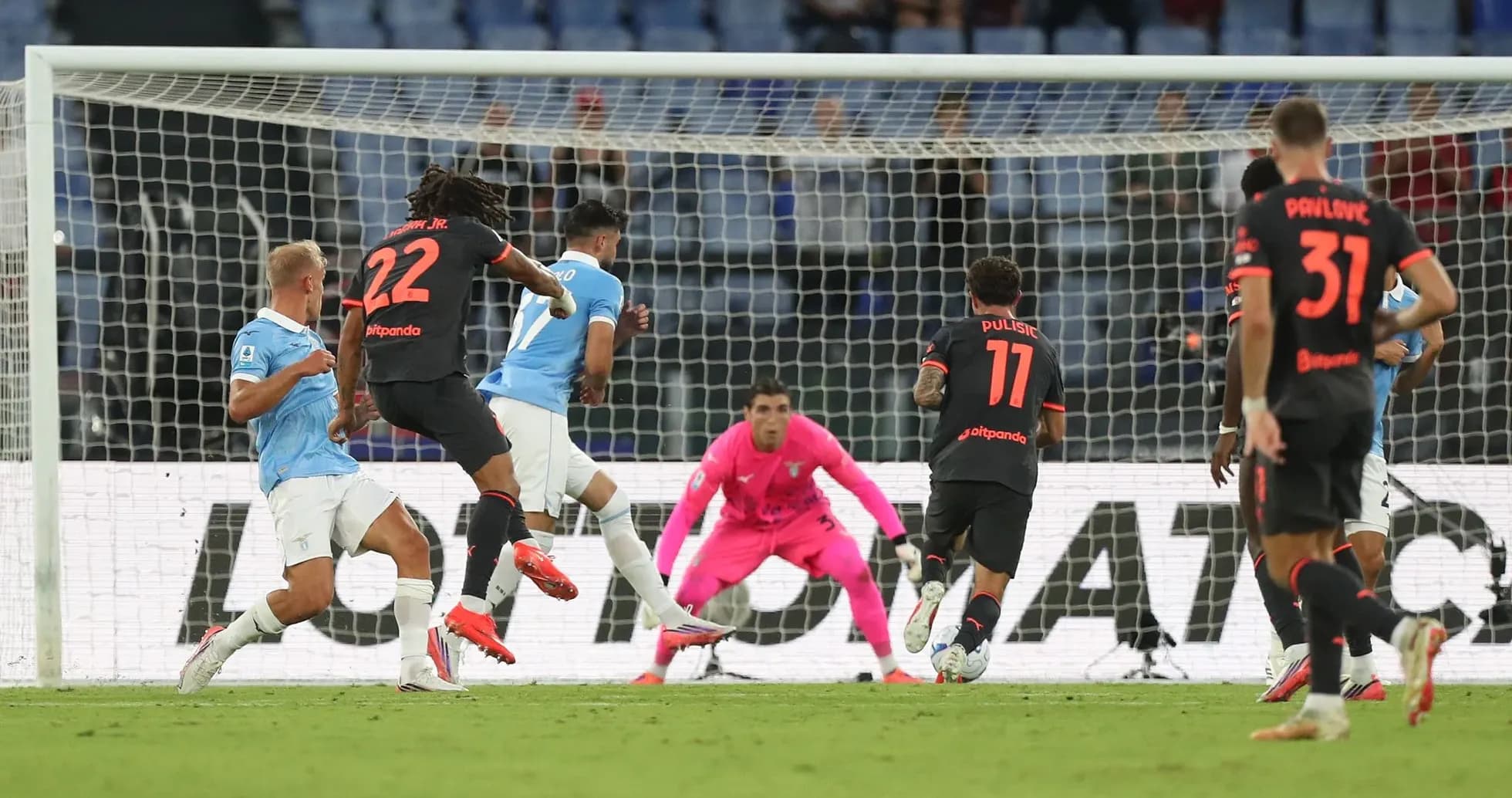
Stadio Olimpico had already told one story by the time the final whistle went – Lazio 2, AC Milan 2 – but the numbers and the lineups hint at a deeper narrative between two sides built to stay near the top of Serie A.
I. The Big Picture – Two contenders, two identities
This was Round 4 of the Serie A regular season, a meeting of early‑season heavyweights. Heading into this game, Lazio sat 4th with 10 points from 4 matches, unbeaten with 3 wins and 1 draw. Their overall goal difference was +3, built from 6 goals scored and 3 conceded. At home, they had taken 4 points from 2 fixtures, scoring 3 and conceding 2; away, they were perfect with 2 wins from 2, 3 goals for and just 1 against.
AC Milan arrived in Rome ranked 6th with 8 points from 4 games, also unbeaten with 2 wins and 2 draws. Their overall goal difference was likewise +3, courtesy of 7 goals scored and 4 conceded. On their travels, they had quietly efficient numbers: 3 away matches, 1 win and 2 draws, 5 goals scored and 4 conceded.
The draw in Rome preserved both teams’ unbeaten starts and underlined their profiles: Lazio as a controlled, balanced unit under Gennaro Gattuso, Milan as a more vertical, transition‑minded side under Ruben Amorim.
II. Tactical Voids – What was missing, and how it bent the game
Lazio’s squad sheet came with a long list of absentees. F. Dele‑Bashiru (muscle injury), D. Doekhi (hand injury), A. Furlanetto (knee injury), A. Marusic (muscle injury), Patric (ankle injury), L. Pellegrini and N. Rovella (both listed simply as injured) were all unavailable. That stripped Gattuso of defensive depth and some rotational options in midfield, forcing him to lean heavily on a core that has already logged serious minutes.
Despite those losses, Lazio stuck to their 4‑3‑3, a formation they had used in all 4 league games so far. C. Mandas started in goal behind a back four of R. Floriani, J. Sutalo, O. Provstgaard and N. Tavares. In midfield, D. Frattesi, R. Belahyane and K. Taylor formed a hard‑running trio, while the front line of M. Cancellieri, T. Noslin and M. Zaccagni provided width and direct running.
Milan, with a fuller complement available, were able to roll out their now‑established 3‑4‑2‑1. M. Maignan was shielded by a back three of M. Gila, K. De Winter and S. Pavlovic. The wing‑back line of S. Chukwueze and P. Estupinan flanked a double pivot of L. Modric and A. Rabiot, with R. Loftus‑Cheek and A. Cisse operating behind central striker G. Ramos.
Disciplinary trends added another layer. Lazio’s yellow cards this season have been spread but with a clear tilt toward the middle and late phases: 25.00% of their bookings between 16–30 minutes, another 25.00% between 31–45, then 12.50% in each of the 61–75 and 76–90 windows, and a further 25.00% deep into added time (91–105). Milan, by contrast, have concentrated all their yellows after the break: 25.00% in each of 46–60, 61–75, 76–90 and 91–105. Both sides have avoided red cards in the league so far, but those patterns hint at a game likely to grow increasingly fractious after half‑time.
III. Key Matchups – Hunter vs Shield, Engine Room battles
Hunter vs Shield
For Lazio, the primary “hunter” is not a forward but midfielder D. Frattesi. Heading into this game he had 3 goals in 4 appearances, from just 5 shots (3 on target), with an impressive rating of 7.55. His late runs from midfield, plus 6 tackles and 3 successful blocks, make him a dual‑threat presence. Milan’s defensive “shield” in this context is S. Pavlovic, who has emerged as a dominant figure in Amorim’s back three: 12 tackles, 1 block, 1 interception and a huge 29 duels won from 40 contested, all while completing 268 passes at 92% accuracy.
Frattesi attacking the right half‑space from Lazio’s 4‑3‑3 naturally brought him into Pavlovic’s orbit. Lazio’s overall attacking profile – 1.5 goals per game in total, both at home and on their travels – suggests a side that creates enough to score once or twice without becoming chaotic. Milan’s defensive record away, conceding 1.3 goals per game, hints that this duel would be finely balanced rather than one‑sided.
On the other side, Milan’s main “hunter” in current form is A. Cisse. With 2 goals in 4 appearances and a willingness to attack space (31 duels contested, 8 fouls drawn), he thrives in broken play. Lazio’s defensive shield is more collective than individual, but J. Sutalo and O. Provstgaard were tasked with containing Cisse’s runs between the lines, supported by the work of R. Belahyane screening in front.
Engine Room – Modric and Rabiot vs Lazio’s trio
The heart of this fixture lay in midfield. For Milan, A. Rabiot and L. Modric offered contrasting but complementary profiles. Rabiot arrived as one of the league’s top assist providers with 2 assists and 1 goal, having completed 133 passes at 84% accuracy and won 8 of 21 duels. Modric, stationed slightly deeper, is the rhythm‑setter, ensuring Milan can escape Lazio’s press and progress into the half‑spaces where S. Chukwueze and R. Loftus‑Cheek wait.
Chukwueze, with 2 assists, 10 key passes and 6 successful dribbles from 9 attempts, is the sharp edge of that structure. His direct running from the right wing‑back slot forces full‑backs into constant backward sprints, stretching the back four and creating room for late arrivals like Loftus‑Cheek and Cisse.
Lazio’s engine room is more industrious than star‑studded, but no less influential. Beyond Frattesi’s goals, K. Taylor and R. Belahyane provide legs and vertical passing, enabling quick switches to the wide threats of M. Zaccagni and M. Cancellieri. Zaccagni, in particular, is a creative hub: 2 assists, 8 key passes, 10 shots (6 on target) and 19 duels won from 36, plus a defensive contribution of 6 tackles and 8 interceptions. He also walks the disciplinary tightrope, with 2 yellow cards already this season and a place among the league’s most‑booked players.
S. Pavlovic mirrors that edge for Milan. His 2 yellows and physical style underline how fine the line is between dominance and over‑aggression. With both Zaccagni and Pavlovic sitting high in the yellow‑card charts, their individual duel down Lazio’s left/Milan’s right was always likely to be spiky.
IV. Statistical Prognosis – A draw that fits the numbers
Following this result, the underlying trends still hold. Lazio’s overall scoring rate of 1.5 goals per game and concession rate of 0.8 paint the picture of a side that usually edges tight contests. Milan, scoring 1.8 goals per game in total and conceding 1.0, profile as slightly more open but still structurally sound.
Neither side has taken nor missed a penalty in the league so far; both have “0%” conversion only because they have yet to step up from the spot. Their defensive records are built instead on structure: Lazio with 2 clean sheets in total (1 at home, 1 away), Milan with 1 at home and a more hard‑fought defensive life on their travels.
In that light, a 2–2 at the Olimpico feels like the statistical midpoint between two teams whose seasons so far have been defined by balance. Lazio’s 4‑3‑3 and Milan’s 3‑4‑2‑1 are not merely formations but philosophies: one privileging compactness and controlled progression, the other leaning into width, overloads and aggressive wing‑back play.
The draw keeps both unbeaten, preserves their matching +3 goal differences, and sets the stage for a season in which Lazio and Milan look destined to share the same air near the top of Serie A – different shapes, different rhythms, but equally hard to beat.