Leverkusen Faces Coaching Change After Filipe Luís Snub
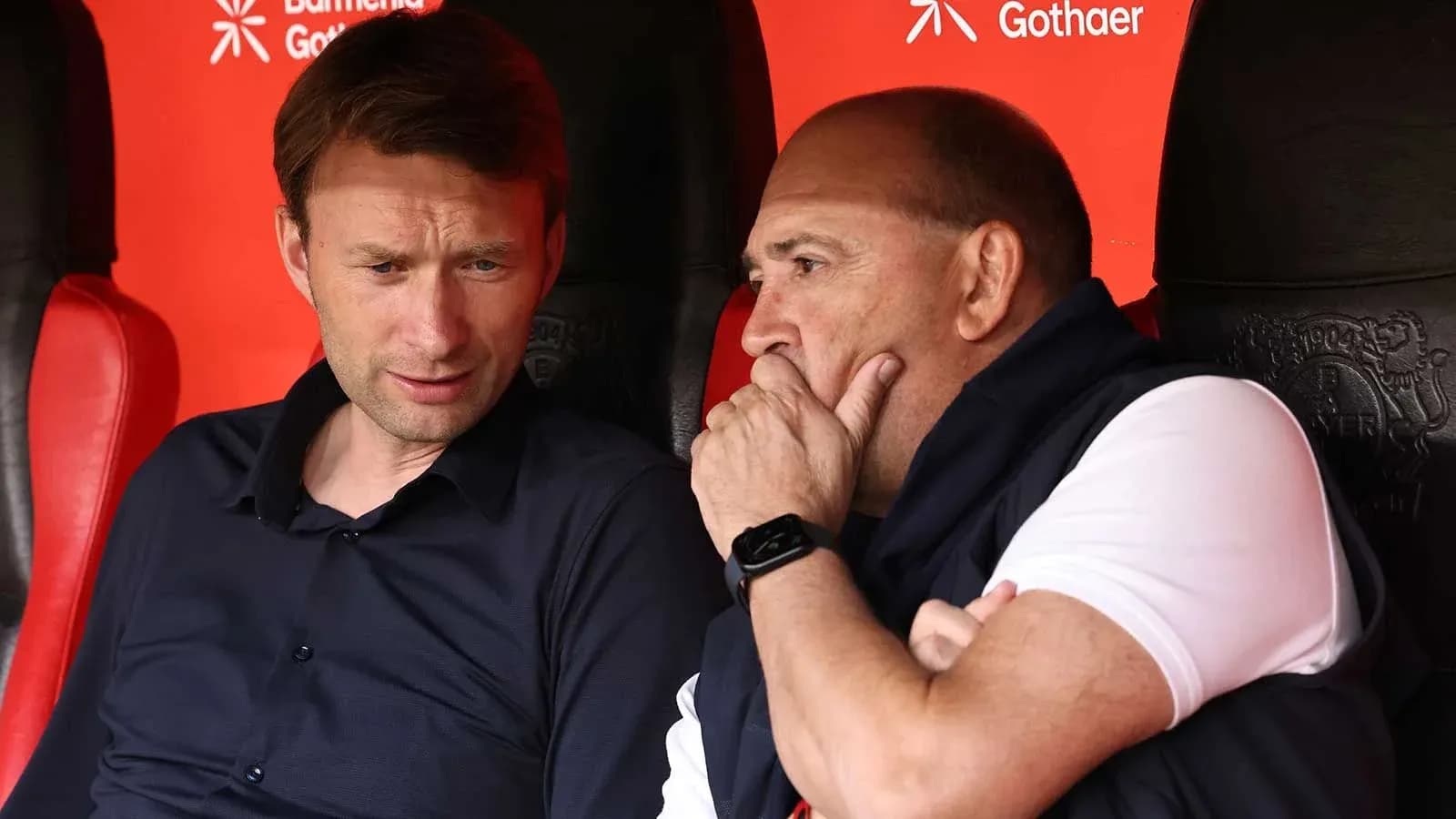
Bayer Leverkusen thought they had their man. Filipe Luís, the serial winner at Flamengo, was the preferred choice to lead the next chapter at the BayArena. Eight trophies in three years had convinced sporting bosses Simon Rolfes and Fernando Carro that the Brazilian was the ideal architect for a reset.
Then the door slammed shut.
With Filipe Luís off the table, Leverkusen are back in the market and back to “Options B and C” – a pair of names already familiar across Europe: Oliver Glasner and Andoni Iraola.
Both coaches are set to be free agents from 1 July after opting not to extend their current deals with Crystal Palace and AFC Bournemouth respectively. For a club desperate to inject fresh energy and a clearer identity, the timing is almost perfect.
Glasner’s Stock Rises Again
If Glasner was already on Leverkusen’s radar, Wednesday night only sharpened the focus.
In his farewell match with Crystal Palace, the Austrian lifted a second European trophy, adding the UEFA Conference League to his famous Europa League triumph with Eintracht Frankfurt in 2022. Palace edged Rayo Vallecano 1-0 in the final, another tight, nervy European occasion navigated with the kind of tactical clarity and emotional control that appeals to ambitious sporting directors.
Glasner now steps into the summer as one of the most decorated and intriguing free agents on the market. His track record in knockout competitions, his ability to galvanise squads quickly, and his comfort working within structured sporting hierarchies all tick boxes for a club like Leverkusen.
Iraola, meanwhile, offers something different. His high-intensity, front-foot football has turned Bournemouth into one of the Premier League’s more awkward opponents. He, too, is walking away at the end of his contract, open to a new challenge and a bigger stage.
The question in Leverkusen is no longer whether a change is coming. It’s who will be trusted to deliver it.
Hjulmand Era Nears Its End
The club has yet to make anything official, but the writing has been on the wall for Kasper Hjulmand for weeks.
The 54-year-old Dane arrived early in the season, parachuted in after Erik ten Hag’s relationship with the club’s sporting management, parts of the coaching staff and sections of the dressing room collapsed at alarming speed. Hjulmand calmed the noise. He stabilised the results. He brought order where there had been open friction.
It still wasn’t enough.
Leverkusen missed out on Champions League qualification, stumbled out of the DFB-Pokal in the semi-finals against Bayern, and fell to Arsenal in the Champions League last 16. A sixth-place finish in the Bundesliga, on paper, might look respectable for a mid-season firefighter. Inside the club, it felt like underachievement.
The performances told their own story. Leverkusen rarely convinced over 90 minutes. Several expensive signings failed to justify their transfer fees, drifting through games rather than defining them. The team looked functional rather than fearsome, competent rather than convincing.
For a club that sees itself as a permanent Champions League fixture, that simply does not fly. A fresh start under a new head coach is no longer a debate. It is a plan.
Whether that plan is Glasner’s methodical, trophy-tested approach or Iraola’s aggressive, high-energy model will shape the club’s identity for years.
Monaco Also Reach for the Reset Button
This is not just a Leverkusen story. Across the continent, another ambitious club is also cutting short an experiment.
AS Monaco are set to replace Sebastien Pocognoli after just over six months in charge. He took over in October, tasked with steadying a volatile project and pushing for Europe. When it mattered most, his side faltered.
Back-to-back defeats to Lille and Strasbourg at the end of the campaign cost Monaco European qualification. In a league where margins are thin and patience even thinner, that late collapse has proved decisive.
Two clubs, two projects, the same conclusion: the current trajectory isn’t enough.
The managerial carousel is spinning again. For Leverkusen and Monaco, the next appointment will not just define the dugout. It will decide whether this season’s frustrations become a blip – or the start of a slide.