Lille vs Galatasaray: A Clash of European Fortunes
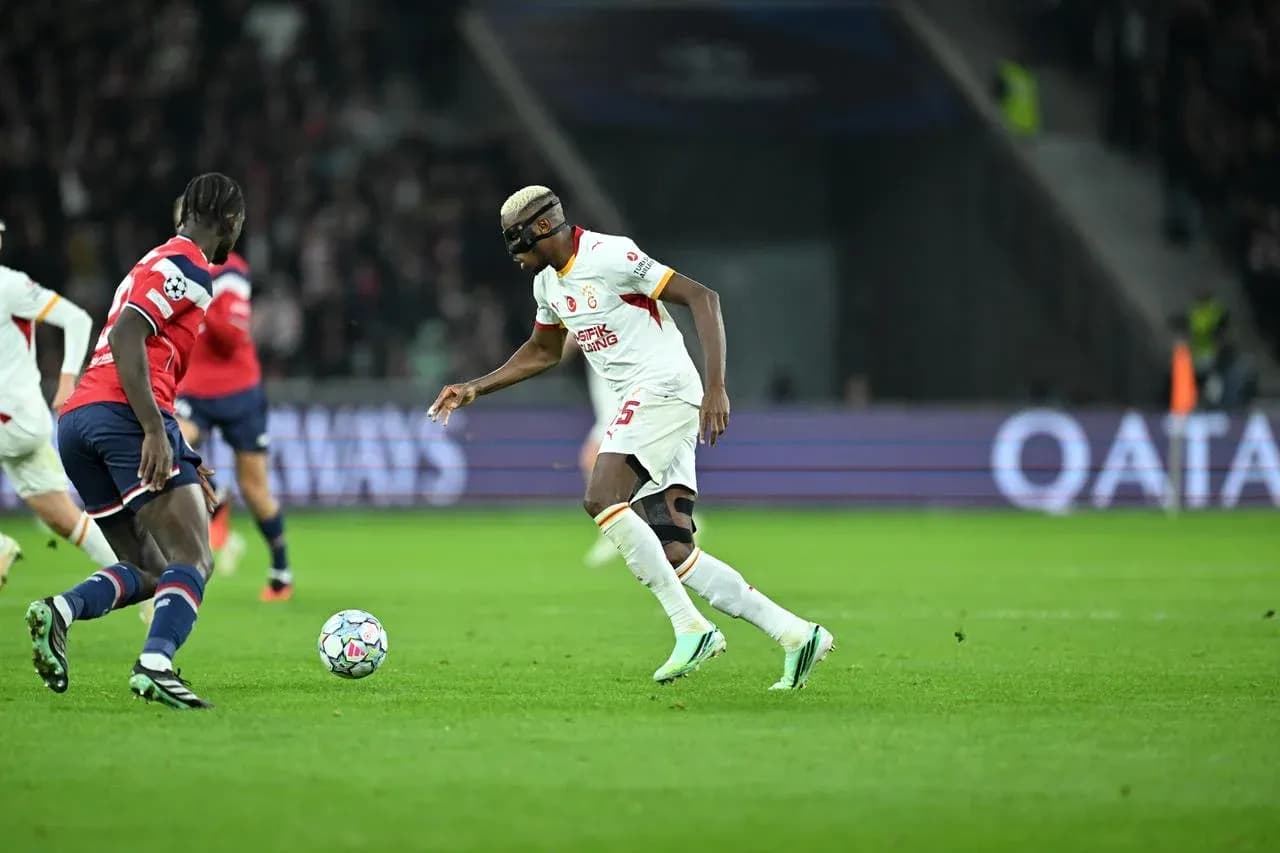
Under the closed roof of Stade Pierre-Mauroy, this League Stage - 3 clash told a story of two clubs at very different stages of their European education. Lille, rooted in 35th place in the UEFA Champions League standings with 0 points and a goal difference of -6 (4 scored, 10 conceded in total), met a Galatasaray side sitting 23rd with 3 points and a goal difference of -3 (6 scored, 9 conceded overall). The 4-2 away win for the Turkish club did more than tilt the group dynamics; it underlined structural truths about both squads.
Lille’s seasonal DNA in this competition is brutally clear. Overall they have played 3, lost 3, with no wins or draws. At home they have played 2, lost 2, scoring 4 and conceding 7; on their travels they have played 1, lost 1, with 0 scored and 3 conceded. An average of 2.0 goals for at home against 3.5 conceded there tells of a side that can punch, but not protect itself. Davide Ancelotti’s commitment to a 4-3-3 has remained consistent – it has been used twice in three European fixtures – but the structure is bleeding under pressure.
Galatasaray, by contrast, arrived with a different kind of volatility. Across 3 matches they have 1 win and 2 defeats, with 6 goals for and 9 against overall. Away from home they have played 2, winning 1 and losing 1, with 5 goals scored and 5 conceded. Their average of 2.5 goals scored away and 2.5 conceded away paints them as an open, front-foot side. Okan Buruk has locked into a 4-2-3-1 in all three Champions League outings, and in Lille it delivered its clearest attacking expression yet.
The tactical voids on both sides framed the contest before a ball was kicked. Lille were stripped of depth and variety in attack: H. Igamane (knee injury), O. Sahraoui (coach’s decision), T. Santos (knee injury), A. Ueda (foot injury) and E. Mbappé (suspended after a red card) were all unavailable. Mbappé’s absence was particularly symbolic; he has already left a mark on this campaign, appearing once, creating an assist, and then seeing red – a reminder of Lille’s disciplinary tightrope in Europe.
Galatasaray’s missing list was different in tone. E. Aydin, K. Ayhan, A. Guner, K. Karatas, A. Unyay and A. Yilmaz were all “off the roster” rather than injured, while R. Leao’s injury deprived Buruk of an explosive wide option. The spine, however, was intact, and that proved decisive.
On the pitch, Lille’s 4-3-3 was built around a narrow back four and a hard-working midfield trio. B. Özer in goal had M. Goffi and C. Verdonk as full-backs, with N. Ngoy and Alexsandro Ribeiro in central defence. In front of them, N. Mukau, N. Bentaleb and B. André formed a three-man engine room, tasked with both screening and building. Up top, D. Bakwa and S. Diaoune flanked H. Haraldsson in a mobile front line.
Galatasaray’s 4-2-3-1 was more layered. U. Çakır anchored the side in goal, protected by a back four of R. Sallai, D. Sánchez, A. Bardakcı and I. Jakobs. In midfield, L. Torreira and Gabriel Sara formed a double pivot: Torreira the destroyer, Sara the distributor. Ahead of them, Y. Akgün, A. Batrakov and B. Yılmaz floated behind lone striker V. Osimhen, who led the line with the power and depth-running that this system is built to unleash.
The “Hunter vs Shield” battle was embodied by Osimhen against a Lille defence that, heading into this game, had conceded 7 goals at home in just 2 Champions League fixtures, an average of 3.5 per match at Stade Pierre-Mauroy. Galatasaray’s away attack, scoring 5 in 2 on their travels with an average of 2.5 per away game, was always likely to find cracks. The final 4-goal haul away from home aligned almost perfectly with those trends: Lille’s back line struggled to hold a high line against Osimhen’s runs and the late surges of Y. Akgün and B. Yılmaz from the half-spaces.
In the “Engine Room” duel, Bentaleb and André were forced into a reactive posture. Without Mbappé’s vertical carries or Ueda’s movement, Lille’s midfield had to drop deeper, attempting to shield a defence that already concedes 3.3 goals per game overall in this competition. Torreira and Gabriel Sara, meanwhile, could dictate the tempo. Torreira’s aggression and reading of second balls allowed Galatasaray to squeeze Lille’s attempts at building through Mukau, while Sara’s passing range linked the pivots to the trio behind Osimhen.
Discipline and emotional control added another layer. Lille’s yellow-card profile in this Champions League run shows a pronounced late-game surge: 40.00% of their yellows arrive between 76-90 minutes, with further cards in the 16-30 and 46-60 windows and a red card already shown between 46-60. Galatasaray’s bookings also spike late, with 50.00% of their yellows between 76-90 minutes and additional cautions in the 46-60 and 61-75 ranges. This shared tendency towards late anxiety meant that the closing stages were always likely to be stretched and chaotic – exactly the type of game Galatasaray’s transition-heavy 4-2-3-1 relishes.
From a statistical prognosis, the trajectory is stark. Lille’s overall average of 1.3 goals scored per match in this competition is drowned by 3.3 conceded. Galatasaray balance 2.0 scored overall against 3.0 conceded, but crucially they are more productive on their travels than at home, with 2.5 goals scored per away match. Even without explicit xG numbers, the patterns are clear: Lille create enough at home to score, but their defensive structure and disciplinary record undermine them; Galatasaray concede, but their offensive ceiling away from home is higher.
Following this result, Lille’s campaign looks like a salvage operation rather than a charge. The 4-3-3 has attacking promise but demands a level of defensive concentration and midfield protection that this squad, depleted and ill-disciplined, is not yet matching. For Galatasaray, the 4-2-3-1 has been validated: Torreira and Gabriel Sara provide a sturdy platform, the three behind Osimhen give variety, and the team’s away scoring rate suggests they will remain dangerous on their travels. If future xG numbers mirror these goal patterns, expect Lille to continue in high-scoring, punishing nights – and Galatasaray to live by the sword, but increasingly on their own terms.