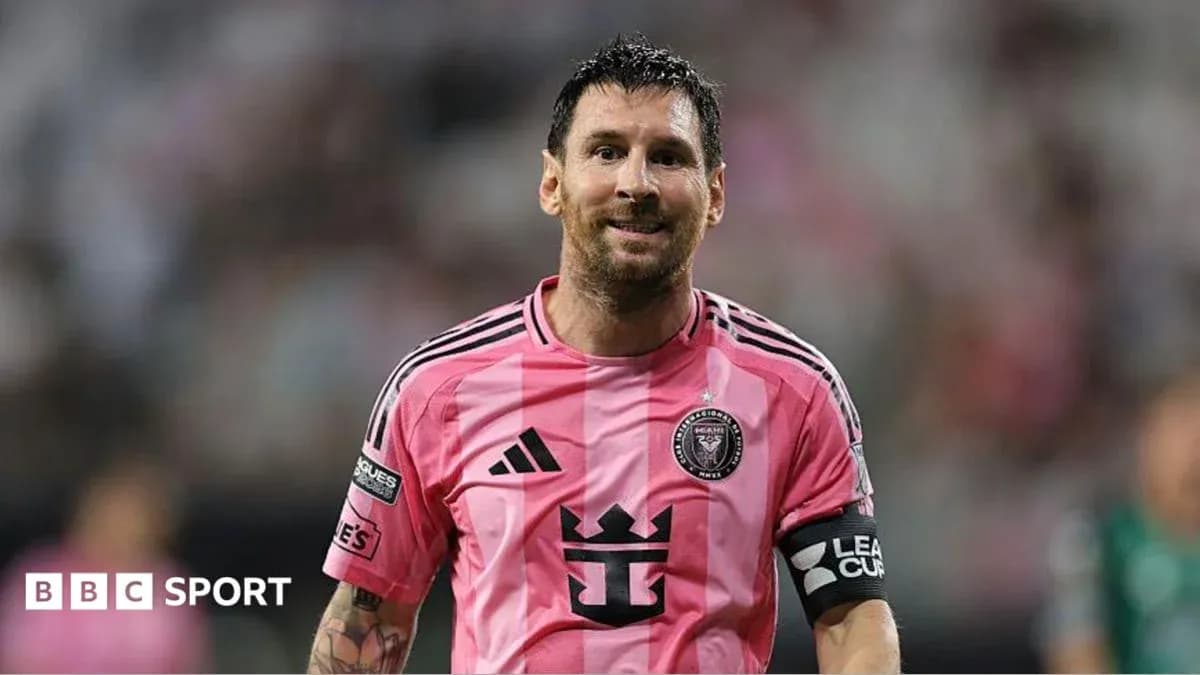
Lionel Messi Returns to the Pitch Amid Personal Loss
Lionel Messi walked back onto a football pitch on Wednesday night carrying far more than Inter Miami’s hopes.
Four days after burying his father in Rosario and days after hinting he may soon walk away from the game, the 39-year-old came off the bench to a roar in Miami’s 3-2 defeat to León in the Leagues Cup. The result ended their campaign in the group stage. The noise when he appeared suggested something very different: a fanbase desperate to hold on to him for as long as possible.
Grief, doubt and a return
Messi’s father, Jorge, died last week in Rosario at the age of 68 after a long illness. He was not just a parent. He had been Messi’s agent since the age of 14, the ever-present figure behind one of the greatest careers the sport has seen, and by his son’s side when Argentina lifted the World Cup in 2022.
The loss has hit Messi hard. In a raw social media post, he admitted he was weighing up his future in football and confessed he was “really not sure if I’ll carry on doing it for much longer”. It was the clearest sign yet that the end, whenever it comes, may not be far away.
He travelled home for a private funeral in Argentina on Sunday, then flew back to the United States to rejoin Miami. He missed the 2-1 defeat to Monterrey in the Leagues Cup at the weekend, but told coach Guillermo Hoyos he was ready for the must-win meeting with Mexican side León.
Ready, but clearly still grieving.
A subdued night, a loud ovation
Messi started on the bench, then entered at half-time to huge applause, the stadium rising as one. Miami were chasing the game and, in truth, chasing the version of themselves that won this competition in 2023, the year he arrived and immediately lifted the trophy.
This time, there was no rescue act. León held on for a 3-2 win that knocked Miami out in the opening phase for the first time since the tournament expanded in 2023. The holders are gone, and they are gone early.
Yet the story of the night was not the scoreline. It was that Messi was there at all.
His teammates felt it. Yannick Bright, who scored Miami’s second goal, admitted he had not expected to see his captain in the dressing room, let alone on the pitch.
“It shows how much he cares,” Bright said. The moment he realised Messi had made himself available, his mindset changed: “When I saw he was here, all I was thinking about was to give my 150% for him.”
Bright spoke of a squad trying to rally around a man who has carried so many others for so long. “It’s a tough situation. We try to stay close to him and support him as much as we can, but it’s a lot.”
A different kind of spotlight
On the opposing bench, León coach Javier Gandolfi watched the same scene unfold and offered his own perspective.
Messi, he said, “is human being that is different to the rest”. On a night when he played through obvious emotional strain, Gandolfi believed the Argentine had once again shown “what he’s made of”.
The wider backdrop only deepens the sense of a crossroads. Argentina reached the final of this summer’s tournament but lost 1-0 to Spain in extra time. Messi later revealed that his father had urged him “to play in one last World Cup” even as his health deteriorated, a final push on the international stage from the man who had guided him since childhood.
Now that voice is gone. The decision about how long he continues, and whether that last World Cup actually happens, rests with Messi alone.
On Wednesday in Miami, he chose to play. He chose to lead. The result went against him, the title defence ended, but the image of him stepping back into the arena so soon after personal loss will linger.
The question now is not what he can still do with a ball at his feet. It’s how much longer he wants to keep doing it.