Lionel Messi's Heartbreaking World Cup Exit: A Legacy of Unity and Resilience
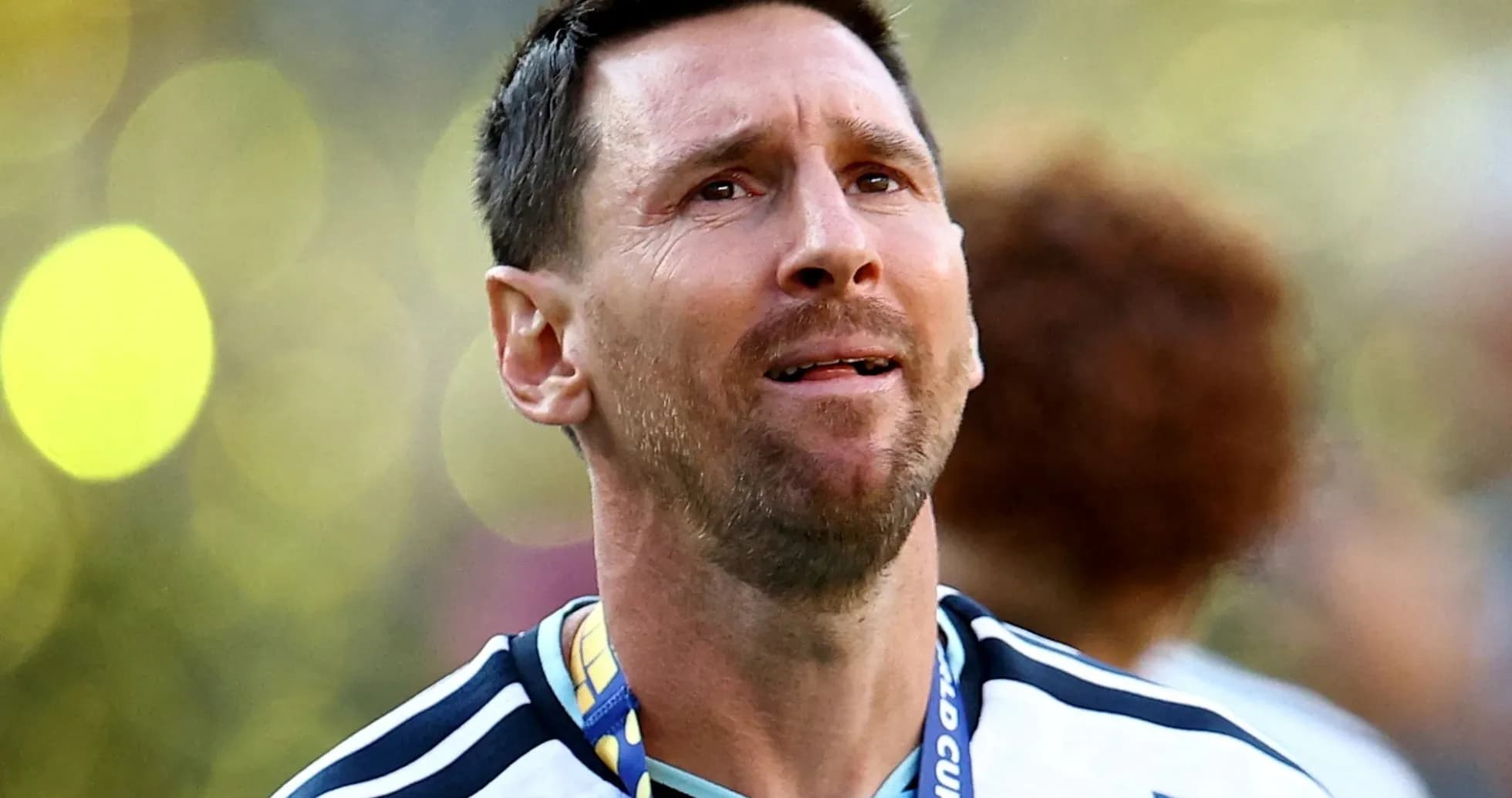
Lionel Messi stood alone on the MetLife Stadium grass, silver medal around his neck, eyes wet and distant. The stadium noise had dipped to a low murmur by then, but the weight of the moment was deafening.
If this was the last World Cup act of his career, it ended not with a coronation, but with a cut that will sting for a long time.
Spain had just beaten Argentina 1-0 in East Rutherford, slamming the door on Messi’s bid for back-to-back World Cup titles. No shots on target for the defending champions. No late rescue. No miracle left in those famous left foot and tired legs of a 39-year-old who has spent two decades bending the sport to his will.
The tears came quickly. The answers, as ever with Messi, will take longer.
A farewell without a goodbye
Messi did not announce a retirement. He didn’t need to. The context did the talking.
He will be 43 when the next World Cup kicks off in Spain, Portugal and Morocco. His body has already carried him through five tournaments, two finals in a row, and the highest emotional peak of all in Qatar in 2022, when Argentina outlasted France on penalties after that wild 3-3 epic.
On Monday night, he reached for his phone instead of a microphone. The message he sent on Instagram, written in Spanish and paired with a photo of him holding that unwanted silver medal, cut straight through the usual platitudes.
“The pain is immense, and this wound will take time to heal,” he wrote.
He didn’t hint at what comes next for him in the Albiceleste shirt. He chose instead to frame the defeat within the journey: the comebacks, the unity, the climb back to the summit of the game.
“I also hold onto all the good things… The matches we turned around by giving it our all – moments that will remain in our memories forever – and the support of an entire country which, combined with this group’s hard work and effort, brought us back among the world’s elite once again.
“It is hard to fully appreciate our achievement right now, but this group reached two consecutive World Cup finals.”
Those are not the words of a man satisfied. They are the words of a captain trying to make sense of heartbreak while reminding his country what it has become again: a giant that walks among the elite, not chases them.
From Qatar glory to North American heartbreak
Argentina arrived in North America as world champions and played like it. They moved through the tournament with the assurance of a side that knows exactly who it is, and what it takes.
They rallied past England in the semifinal, another show of resilience from a squad that has learned to live on the edge and still find a way. The old fragility that haunted previous generations never really surfaced.
Then came Spain.
Luis de la Fuente’s side strangled the game with their control and structure, but it was their defensive discipline that truly suffocated Argentina. Across 90 minutes and the desperate late pushes, the champions failed to register a single shot on goal. For a team built around Messi’s creativity and Argentina’s capacity to improvise under pressure, that statistic felt brutal.
The pressure that so often breaks opponents finally broke them.
Spain lifted the trophy. Argentina were left with the silence of a dressing room that knows it had been one game away from history.
Messi, ever the competitor, still found space in his message to salute the new kings.
“I also want to congratulate Spain on winning the championship,” he wrote, an acknowledgment that this was no fluke, no robbery. Argentina were beaten, cleanly and conclusively, on the biggest stage.
Records, rivals and the shadow of Mbappé
Even in defeat, Messi continued to rewrite the World Cup record book.
Earlier in the tournament he passed Miroslav Klose’s mark of 16 goals to become the competition’s all-time leading scorer. He finished this World Cup with 21 goals.
That record, too, did not last long.
Kylian Mbappé, the man who chased him all over the Lusail pitch in 2022 and now stalks his numbers in the history books, surged past him to 22. The French forward also snatched away the Golden Boot, ending with 10 goals to Messi’s eight.
The duel between the two has become one of football’s defining threads of the last decade: Messi, the enduring genius stretching his career deep into his late 30s; Mbappé, the relentless heir, piling up goals and finals before he hits his prime.
On this stage, in this tournament, the Frenchman won the statistical battle. The Argentine, though, leaves behind a World Cup legacy that stretches far beyond numbers.
A nation united, again
Messi’s post did what his football has done for years: it pulled Argentina together.
“Thank you from the bottom of my heart for every greeting and message,” he wrote. “Once again, we managed to unite as a country and stand together, sharing the immense pride of being Argentine.”
That, perhaps, is the most enduring achievement of this era. After years of near-misses and internal tension, Argentina under Messi’s late-career leadership rediscovered itself. Copa América glory. The Finalissima. The World Cup in Qatar. Now another final, even in defeat, that confirms their place at the top table.
He didn’t talk about tactics or missed chances. He talked about identity. About pride. About a group that dragged the shirt back to where it belongs.
What comes next
For now, there is only rest.
ESPN reported on Monday that Messi and his Argentina and Inter Miami teammate Rodrigo De Paul will sit out the club’s next two regular-season matches, and will also skip the MLS All-Star Game, to recover from the physical and emotional toll of the World Cup.
It is a small, immediate consequence of a colossal campaign. A breather for a player who has spent a month carrying a nation’s expectations once again.
Whether this was truly his final World Cup match will only be answered with time. The calendar says yes. His competitive streak has defied logic before.
But the image from East Rutherford lingers: Messi alone on the pitch, silver medal in hand, eyes brimming, saluting a country he once more managed to unite, even in defeat.
If that is the last World Cup snapshot of Lionel Messi, it is not of a king dethroned. It is of a champion walking away from the summit, still hurting, still adored, and still leaving the game with a question it may never fully answer:
How do you replace a presence like that?