Liverpool vs Brighton: Premier League Round 8 Analysis
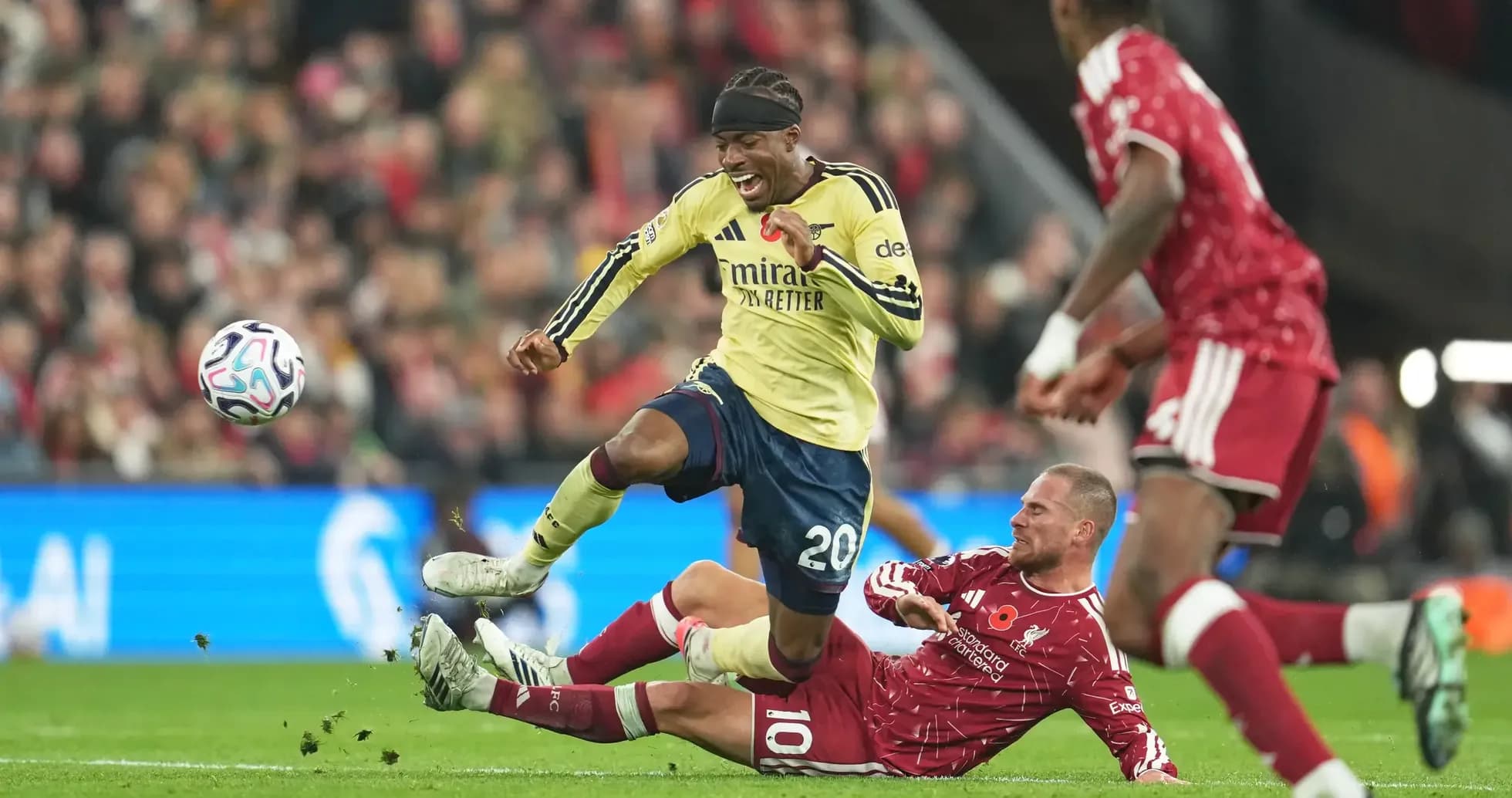
Anfield under a cold October sky, Premier League Round 8, and two of England’s most enterprising sides met with Champions League ambitions already shaping the table. Liverpool, 4th with 15 points and a goal difference of 3 (11 scored, 8 conceded overall), hosted a Brighton side one point and one place better off, 3rd with 16 points and a goal difference of 16 (23 scored, 7 conceded overall). On paper, Brighton arrived as the division’s great entertainers; by full time, Liverpool had imposed a more ruthless script, winning 2–0 after a decisive first half.
I. The Big Picture – duelling 4-2-3-1s, opposite trajectories
Both coaches doubled down on their seasonal blueprint. Andoni Iraola kept Liverpool in the 4-2-3-1 that has underpinned all 8 league outings so far. The structure is familiar, but the personnel felt almost like a rebooted era: Alisson behind a back four of Miloš Kerkez, Virgil van Dijk, Jérémy Jacquet and Ronald Araújo. In front, Ryan Gravenberch and Alexis Mac Allister formed a double pivot, with Cody Gakpo, Florian Wirtz and Bradley Barcola supporting Alexander Isak as the lone forward.
Across from them, F. Hürzeler matched shape with shape. Brighton’s own 4-2-3-1—also used in all 8 league matches—featured Bart Verbruggen in goal, Olivier Boscagli and Lewis Dunk at centre-back, Ferdi Kadıoğlu and Maxim De Cuyper as full-backs. Pascal Groß and Chema Andrés anchored midfield, with Diego Gómez, Yasin Ayari and De Cuyper behind young forward Charalampos Kostoulas.
Heading into this game, the numbers painted a stark contrast. Overall, Liverpool were controlled but unspectacular: 4 wins, 3 draws, 1 defeat from 8, scoring 11 and conceding 8. At home, they had been oddly fragile—just 1 win in 4, with 4 goals scored and 5 conceded, averaging 1.0 goal for and 1.3 against at Anfield. Brighton, by contrast, were devastating: 5 wins, 1 draw, 2 defeats in total, with 23 goals scored and only 7 conceded. On their travels, they averaged 2.5 goals for and 1.5 against, winning 2 of 4 away.
Yet the final 2–0 scoreline to Liverpool suggested that Iraola’s side had found a way to mute Brighton’s attacking chaos and lean into their own emerging strengths.
II. Tactical Voids – injuries and absences redraw the map
This fixture was shaped heavily by who was missing. Liverpool were without C. Bradley, H. Ekitike, J. Frimpong, G. Leoni, V. Munoz, A. Nallo and D. Szoboszlai. That cluster of absences removed an entire flank’s worth of dynamism and depth, particularly at right-back and in advanced midfield. It made Ronald Araújo’s selection at right-back and the centrality of Gravenberch even more important.
Brighton’s voids were arguably even more dramatic. F. Azeez, E. Ferguson, Y. Minteh, K. Mitoma, P. Struijk, S. Tzimas, M. Wieffer and Z. Yohanna all missed out. That list strips Hürzeler of his most direct wide runner, his penalty-box focal point and a key midfield screen. The absence of Mitoma and Ferguson, in particular, forced Brighton to lean more on the technical interplay of Kostoulas, De Cuyper and Gómez rather than raw vertical threat.
Disciplinary profiles framed how aggressive each side could be. Liverpool’s season-long card map shows a sharp spike in yellow cards between 46–60 minutes (47.37% of their yellows), with a solitary red card arriving between 61–75 minutes. That pattern hints at a side that raises intensity—and risk—immediately after half-time. Brighton’s yellows are more evenly spread, with a peak of 23.53% between 61–75 minutes and a red card in the 46–60 window. Both teams, then, are at their most combustible in the hour around the break, which made Liverpool’s composed management of a 2–0 lead in the second half especially notable.
III. Key Matchups – Hunter vs Shield, Engine Room battles
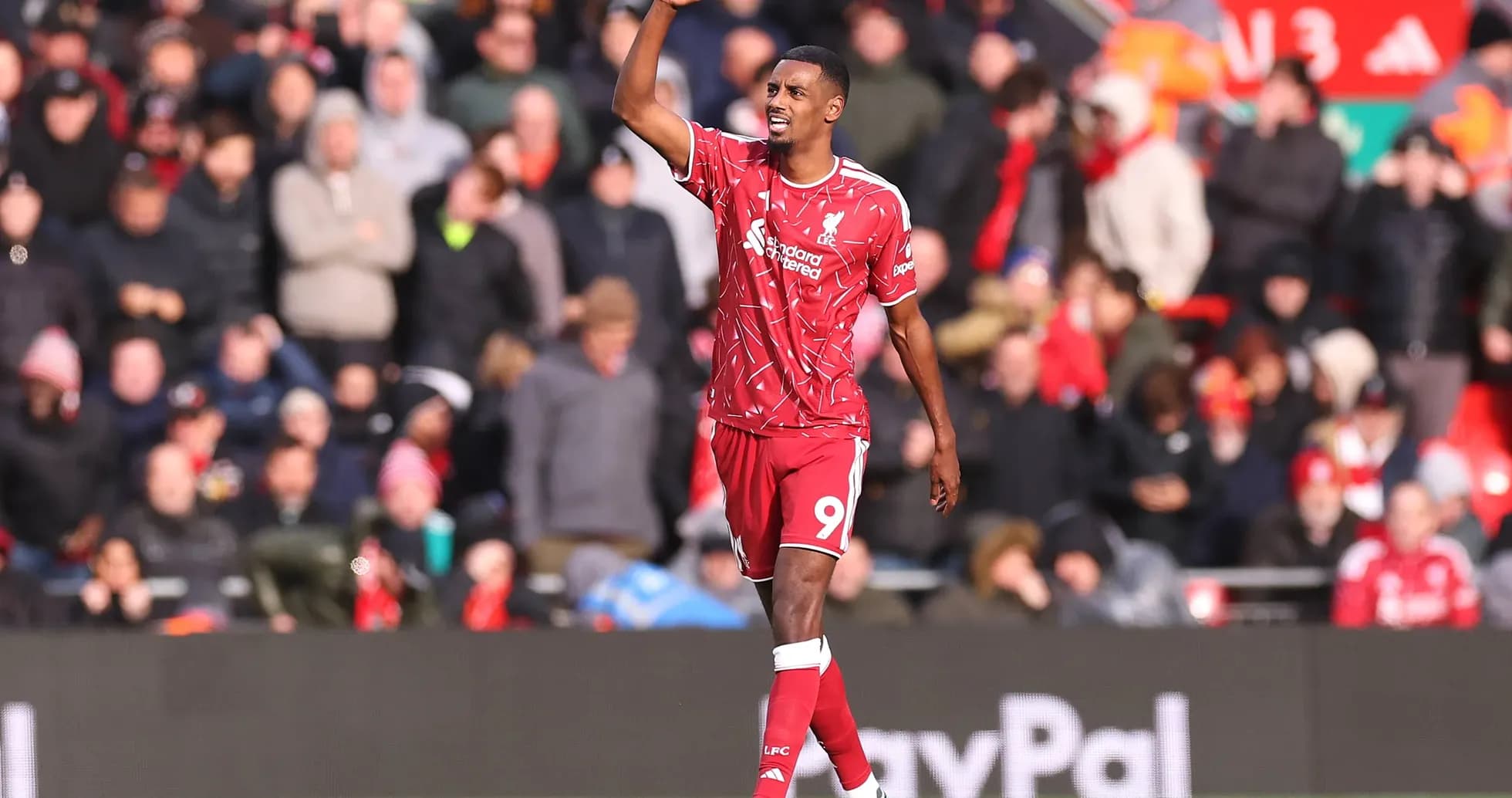
Hunter vs Shield began with Alexander Isak against a Brighton defence that, overall, had conceded just 7 goals in 8 games. Isak came into this fixture as one of the league’s most efficient forwards: 6 goals in 7 appearances, from 17 shots and 9 on target, with a rating of 7.54. He is not just a finisher; he had also blocked 2 shots and won 16 of 35 duels, making him a pressing trigger as much as a penalty-box presence.
Brighton’s shield was collective rather than individual. At home they had conceded just 1 goal in 4 matches; away, that figure rose to 6 in 4, but their overall defensive record remained strong. Boscagli, with 3 yellow cards already, 11 fouls committed and 10 interceptions, embodies their front-foot defending. Dunk’s presence alongside him promised aerial security but also a potential lack of pace against Isak’s movement and Gakpo’s drifting runs.
In the Engine Room, the narrative centred on Mac Allister and Gravenberch against Pascal Groß and Chema Andrés. Mac Allister, orchestrating from deep, had to solve Brighton’s press while protecting a defence that, overall, concedes 1.0 goal per game. Gravenberch arrived with a complicated disciplinary record—one yellow card and a previous dismissal via a second yellow this season—but also with 8 tackles, 7 interceptions and 85% passing accuracy. He is Liverpool’s balance point, tasked with breaking up play and feeding Wirtz between the lines.
Groß, meanwhile, is Brighton’s brain and their most influential figure in the league so far. With 3 goals and 4 assists, 23 key passes and 473 total passes at 86% accuracy, he sits among the top creators. He has also scored from the spot this season, converting Brighton’s only penalty. His 3 yellow cards and 13 fouls committed underline how much defensive work he shoulders in addition to creation. For much of the afternoon at Anfield, Liverpool’s success lay in narrowing his angles and forcing him deeper, away from Kostoulas and the half-spaces.
On the flanks, Gakpo’s role as a creative conduit was pivotal. With 3 assists already, 13 key passes and 70 duels contested (33 won), he is Liverpool’s hybrid winger-playmaker. His presence against Kadıoğlu and De Cuyper targeted the edges of Brighton’s 4-2-3-1, especially given Brighton’s reliance on those full-backs to progress the ball.
IV. Statistical Prognosis – control vs chaos, and why 2–0 fits
Heading into this game, the raw attacking metrics suggested a Brighton goal-fest. Overall, they averaged 2.9 goals per match, compared to Liverpool’s 1.4. On their travels, Brighton’s 2.5 goals per game dwarfed Liverpool’s 1.0 at home. Yet Liverpool’s defensive trend and minute-by-minute patterns hinted at a different story.
Liverpool’s goals-for distribution shows a pronounced surge between 46–60 minutes (27.27% of their goals) and steady contributions in every 15-minute segment of the first and second halves. Their goals-against map, however, reveals a vulnerability between 61–75 minutes, where they concede 33.33% of their goals. The tactical intersection was clear: if Liverpool could establish a first-half lead and survive that 61–75 window, they could tilt the contest.
Brighton, for all their scoring power, arrived with a slightly looser away defence—1.5 goals conceded per game on their travels—compared to Liverpool’s overall 1.0 goals against per match. Liverpool’s 4 clean sheets overall, split evenly between home and away, suggested that when they control tempo, they shut games down effectively.
In the end, a 2–0 Liverpool win feels like the statistical midpoint between Brighton’s attacking exuberance and Liverpool’s growing defensive authority. Isak’s presence as a high-efficiency finisher, Gakpo’s creative volume and the suppression of Groß in central zones tilted the match away from chaos and towards structure. Following this result, Liverpool’s home narrative begins to realign with their away resilience, and Brighton are reminded that in the tight air near the top of the Premier League, the margins for their expansive football are brutally fine.