Liverpool Dominates Galatasaray 4-0 in Champions League Clash
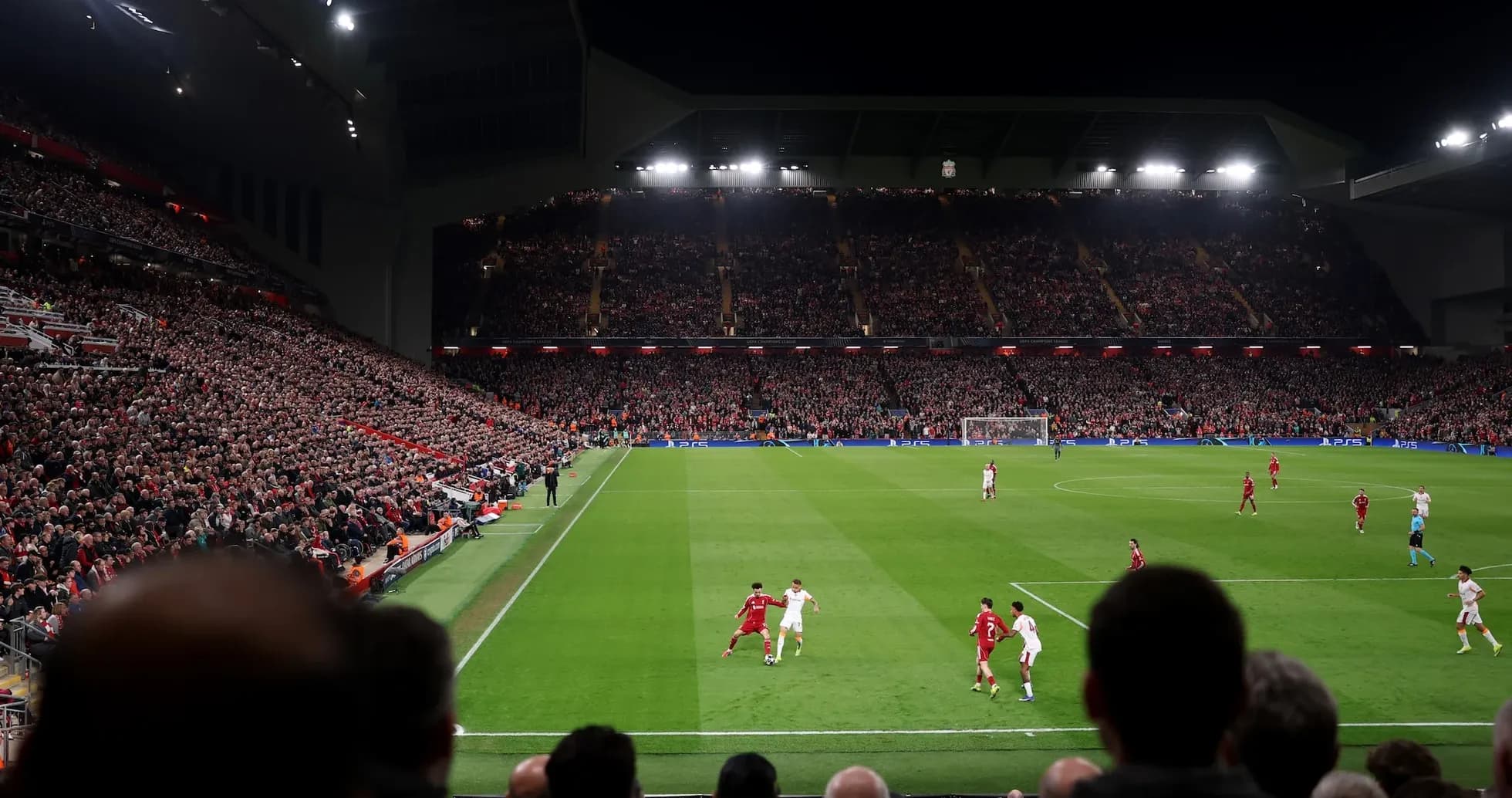
Anfield hosted a UEFA Champions League 1/8 final second leg with Liverpool, ranked 3rd in the competition standings, dismantling 20th‑ranked Galatasaray 4–0 on the night, 1–0 at half-time, to underline the gap between their overall season profiles.
Squad & Tactical Setup
Liverpool
- Formation used in this match: 4‑3‑1‑2
- Most-used formations overall this season:
- 4‑2‑3‑1 (6 matches)
- 4‑3‑1‑2 (2 matches, including this one)
- 4‑4‑2 and 4‑2‑2‑2 (1 match each)
Arne Slot leaned into the 4‑3‑1‑2 that has become his secondary but clearly trusted shape in Europe. The back four of M. Kerkez – V. van Dijk – I. Konate – J. Frimpong sat in front of Alisson, with a midfield triangle of R. Gravenberch, D. Szoboszlai and F. Wirtz, plus A. Mac Allister operating as the advanced midfielder behind a narrow front two of M. Salah and H. Ekitike.
This is a more central, combination‑heavy structure than the 4‑2‑3‑1 Liverpool have used most often overall this season, and it suited the need to control tempo and protect against Galatasaray’s transition threat.
Bench options were deep in every line: two goalkeepers (F. Woodman, G. Mamardashvili), full-back and centre-back cover (A. Robertson, J. Gomez, A. Nallo), extra midfield control (C. Jones, K. Morrison, T. Nyoni) and fresh attacking pace (F. Chiesa, C. Gakpo, R. Ngumoha). It is a bench built to either chase a game or close one out; here it underlined how far ahead Liverpool are in squad depth.
Galatasaray
- Formation used in this match: 4‑2‑3‑1
- Most-used formations overall this season:
- 4‑2‑3‑1 (10 matches)
- 4‑4‑2 and 4‑3‑3 (1 match each)
Okan Buruk stayed loyal to the 4‑2‑3‑1 that has defined Galatasaray’s European run. U. Cakir started in goal behind a back four of I. Jakobs – A. Bardakci – W. Singo – S. Boey. The double pivot of L. Torreira and M. Lemina shielded the defence, with an attacking midfield line of B. A. Yilmaz, Gabriel Sara and R. Sallai supporting lone striker V. Osimhen.
This shape is designed to spring quickly into transitions and isolate Osimhen against centre-backs, but away from home – and against a side pressing as aggressively as Liverpool have overall this season – it can leave the double pivot overloaded and the back four exposed.
On the bench, Galatasaray had experience and firepower (I. Gundogan, L. Sane, M. Icardi, N. Lang), plus defensive alternatives (K. Ayhan, E. Elmali) and extra forwards (Y. Akgun, A. Kutucu, Y. Asprilla). The raw names are strong, but the overall squad balance is thinner than Liverpool’s, particularly in defensive depth and in players who can reliably help them play out under pressure.
Overall Season Profiles (UEFA Champions League 2025)
Liverpool – overall this season
- Matches: 10
- Wins: 7
- Draws: 0
- Losses: 3
- Goals:
- Scored: 24 (15 at home, 9 away) – 2.4 per match
- Conceded: 9 (6 at home, 3 away) – 0.9 per match
- Clean sheets: 5
- Failed to score: 2
- Penalties: 1 taken, 1 scored, 0 missed (1 successful penalty)
Liverpool’s numbers paint the picture of a high‑ceiling, front‑foot side with a genuinely strong defensive platform. Scoring 3.0 goals per home match while conceding only 1.2 underlines why Anfield is so difficult for visiting sides in Europe.
The goal timing is important for understanding the squad’s physical and mental profile:
- They spread their scoring fairly evenly:
- 0–15: 3 goals
- 16–30: 3
- 31–45: 4
- 46–60: 4
- 61–75: 5
- 76–90: 4
The spike between 61–75 minutes (5 goals) shows how much impact their depth and intensity have after the break; the squad is built to maintain or even raise tempo when others tire.
Defensively, they concede only 0.9 goals per match overall, with no period of the game being a catastrophic weak spot. Their goals against are spread (2–2–1–1–2–2 across the six 15‑minute windows), which suggests a side that very rarely collapses in any particular phase.
Discipline is controlled:
- Yellow cards cluster between 46–75 minutes, indicating aggressive mid‑game pressing and counter‑pressing phases.
- No red cards overall this season in the competition.
Galatasaray – overall this season
- Matches: 12
- Wins: 5
- Draws: 1
- Losses: 6
- Goals:
- Scored: 17 (11 at home, 6 away) – 1.4 per match
- Conceded: 20 (5 at home, 15 away) – 1.7 per match
- Clean sheets: 3
- Failed to score: 4
- Penalties: 3 taken, 3 scored, 0 missed (3 successful penalties)
Galatasaray are competitive but far more volatile. At home they are dangerous (11 goals scored, only 5 conceded), but away from home they concede 2.5 goals per match and score just 1.0. That away‑day fragility is exactly what was exposed at Anfield.
The goal timing shows a side that can start fast but struggles to sustain control:
- Goals scored:
- 0–15: 4 goals (very strong starts)
- 46–60: 4 (good early second‑half threat)
- More modest returns in other windows.
- Goals conceded:
- 16–30: 4
- 31–45: 4
- 61–75: 6 (clear late‑game vulnerability)
That 61–75 window – where they concede 6 of their 20 goals – is a critical weakness against a Liverpool side whose own scoring spikes in the same phase. In squad terms, this points to drop‑offs in physical output and concentration once Buruk has to turn to his bench.
Discipline is more of a concern than Liverpool’s:
- Yellow cards: 22 in total, heavily stacked in 76–90 minutes (9 yellows) – this suggests late frustration and tactical fouling when chasing games.
- Red cards: 1, also in the 76–90 window, underlining that emotional and structural control late on is an issue.
Standings Context
- Liverpool: 3rd in the Champions League table, 18 points, goal difference +12.
- Galatasaray: 20th, 10 points, goal difference –2.
The table confirms what the season statistics already suggest: Liverpool are operating at a higher level both offensively and defensively, and over a smaller number of games they have already produced a much stronger goal difference.
Key Individuals & Matchup Battles
Battle 1: Top Scorer vs Opponent Defence
The competition’s top scorer data we have is for V. Osimhen (Galatasaray):
- Osimhen overall this season:
- 10 appearances, all starts, 841 minutes
- 7 goals, 2 assists
- 36 shots (25 on target)
- 3 successful penalties (0 missed)
- 7.46 average rating
- 95 duels, 51 won
- 11 dribbles attempted, 7 successful
Osimhen is the clear cutting edge of Galatasaray’s attack: high‑volume shooting, excellent shot accuracy, strong penalty reliability and good duel success. He is a complete focal point who can run behind, hold up and finish.
He faced a Liverpool defence that, overall this season, has conceded only 9 goals in 10 Champions League matches and kept 5 clean sheets. At home, they concede just 1.2 goals per match, with Van Dijk and Konate forming one of the most physically dominant pairings in the competition, backed by an elite goalkeeper in Alisson.
In pure matchup terms:
- Osimhen’s 7 goals in 10 appearances vs a defence conceding 0.9 per game is a genuine heavyweight clash.
- However, Galatasaray’s away defensive frailty (15 conceded in 6) means that even if Osimhen performs, the rest of the squad often cannot keep the game tight enough for his goals to matter. The 4–0 final scoreline in this fixture reflects that imbalance.
Battle 2: Playmaker vs Enforcer (Assists vs Cards / Possession Proxy)
We have explicit top‑assists data for D. Szoboszlai (Liverpool), but not a single “top cards” enforcer. Given the instruction, we pivot to a playmaking vs discipline/possession lens.
- D. Szoboszlai overall this season:
- 10 appearances, 10 starts, 885 minutes
- 5 goals, 4 assists (top of the assists chart in this dataset)
- 20 shots, 14 on target
- 618 passes, 26 key passes, 88% accuracy
- 17 tackles, 1 block, 6 interceptions
- Cards: 1 yellow, 0 reds
- Penalties: 1 scored, 0 missed (1 successful penalty)
Szoboszlai is the complete modern midfielder: he creates (4 assists, 26 key passes), scores (5 goals), and still contributes defensively. His 88% passing accuracy at high volume underpins Liverpool’s ability to control games from midfield.
On the Galatasaray side, we look at their card profile and possession proxy through structure:
- Galatasaray’s yellow cards are heavily skewed to the final quarter of matches, with 9 yellows and 1 red between 76–90 minutes overall this season.
- This suggests their midfield and back line (including players like L. Torreira and M. Lemina) are often forced into late, reactive defending rather than proactive control.
In this matchup:
- Szoboszlai’s ability to dictate tempo and pick passes between the lines directly tests the discipline of Galatasaray’s double pivot.
- The overall season numbers (Liverpool’s superior goal difference, control in midfield zones, and Galatasaray’s late‑game card spike) suggest Szoboszlai and Liverpool’s creative unit were far more likely to impose their style – which is consistent with a 4–0 home win.
Battle 3: The Void – Injuries & Suspensions vs Replacements
We contrast unavailable players’ profiles with the squads that had to compensate for them.
Liverpool absences
- Missing for Liverpool:
- S. Bajcetic – Hamstring injury
- C. Bradley – Knee injury
- H. Davies – Inactive
- W. Endo – Foot injury
- A. Isak – Broken leg
- G. Leoni – Knee injury
- R. Williams – Inactive
Structurally, this affects:
- Defensive depth: Bradley and Williams would normally add options at right‑back/centre‑back. Their absence increases the importance of J. Gomez and A. Nallo on the bench.
- Midfield rotation: Bajcetic and Endo are both capable of playing holding roles; without them, more defensive responsibility falls on Mac Allister and Gravenberch, with Jones and Nyoni as the main relief options.
- Attacking variety: A. Isak would offer a different profile to Ekitike and Gakpo as a central striker. Without him, Liverpool rely more on Salah’s movement and the support from midfield to provide penetration.
Despite these absences, Liverpool’s overall season numbers (24 scored, 9 conceded) show they have absorbed the losses without a significant drop in output. The presence of players like Gakpo and Chiesa on the bench mitigates the absence of Isak, while the starting pairing of Van Dijk–Konate has remained intact.
Galatasaray absences
- Missing for Galatasaray:
- M. Baltaci – Suspended (Yellow cards)
- C. Guner – Inactive
- R. Nhaga – Inactive
- D. Sanchez – Yellow cards (suspension)
- A. Unyay – Injury
The key structural loss is D. Sanchez, a first‑choice centre‑back profile in many setups. Without him, W. Singo is used centrally alongside A. Bardakci, and while Singo is athletic and aggressive, he is naturally more of a right‑back. That shift affects:
- Aerial and positional stability in the heart of defence.
- The ability to defend Liverpool’s crosses and direct balls into Salah and Ekitike.
- The chain reaction on the right side, where Boey has to be more conservative without a natural, experienced centre‑back inside him.
Given Galatasaray’s overall season defensive record away from home (15 conceded in 6 matches) and their late‑game collapse pattern, the absence of Sanchez and the need to adjust the back line made them even more vulnerable. The 4–0 scoreline is consistent with a back four operating without its key organiser and with limited high‑level cover on the bench.
Squad Dynamics: Depth, Flexibility, and Risk
Liverpool squad dynamics
- Depth:
- Two high‑level goalkeepers behind Alisson (Woodman, Mamardashvili).
- Multiple full‑back options (Kerkez, Frimpong, Robertson, Gomez, Nallo).
- A deep midfield pool (Szoboszlai, Gravenberch, Wirtz, Mac Allister, Jones, Morrison, Nyoni).
- Several forward options (Salah, Ekitike, Gakpo, Chiesa, Ngumoha).
- Flexibility:
- Able to switch between 4‑2‑3‑1, 4‑3‑1‑2, 4‑4‑2, and 4‑2‑2‑2 without major personnel changes.
- Players like Mac Allister and Wirtz can operate as 8s or 10s, while Salah can play wide or as a second striker.
- Risk profile:
- High pressing and high scoring, but backed by a defence that concedes less than a goal per match overall this season.
- Very low disciplinary risk (no reds, controlled yellow distribution).
Galatasaray squad dynamics
- Depth:
- Strong attacking bench (Icardi, Sane, Lang, Y. Akgun, Asprilla, Kutucu) provides alternative profiles up front.
- Midfield depth via I. Gundogan and G. Gurpuz.
- Defensive depth is thinner and more reliant on players shifting roles (Singo as centre‑back, Ayhan as primary alternative).
- Flexibility:
- Mostly tied to 4‑2‑3‑1, with occasional use of 4‑4‑2 and 4‑3‑3.
- The spine is heavily dependent on Torreira–Lemina in midfield and Osimhen up front; removing any of them significantly lowers the side’s ceiling.
- Risk profile:
- Away from home, they concede heavily and rely on early goals and Osimhen’s individual quality to stay in games.
- Late‑game discipline issues (high yellow and red card concentration) increase the risk of collapses and suspensions, as seen with Sanchez’s absence here.
Verdict: Statistical Edge & Squad Outlook
From a pure squad and season‑long statistical perspective, Liverpool had a clear edge coming into this 1/8 final tie, and the 4–0 result at Anfield reflects that:
- Attack:
- Liverpool: 24 goals in 10 matches (2.4 per game).
- Galatasaray: 17 in 12 (1.4 per game).
- Liverpool’s scoring is both more frequent and better distributed across match phases, supported by a deeper set of creators (Szoboszlai, Wirtz, Mac Allister, Salah).
- Defence:
- Liverpool: 9 conceded in 10 (0.9 per game).
- Galatasaray: 20 conceded in 12 (1.7 per game), with 15 away from home.
- The Van Dijk–Konate axis, plus Alisson, gives Liverpool a far more secure platform than Galatasaray’s re‑shuffled back line without D. Sanchez.
- Discipline & game management:
- Liverpool: No reds, controlled yellows, strong late‑game scoring.
- Galatasaray: Significant late‑game card accumulation and a red, plus a tendency to concede between 61–75 minutes – exactly when Liverpool are at their most dangerous.
- Squad depth:
- Liverpool can absorb multiple injuries (Endo, Bajcetic, Isak) without a visible drop in performance.
- Galatasaray’s loss of Sanchez through suspension materially weakens their defensive structure, especially away from home.
Overall, the squad analysis and season data align: Liverpool possess the deeper, more balanced, and more stable squad. Their 4–0 win at Anfield in this Champions League 1/8 final is a logical extension of the underlying numbers, rather than an outlier.