Liverpool's Ifeanyi Ndukwe: A Rising Star's Loan Dilemma
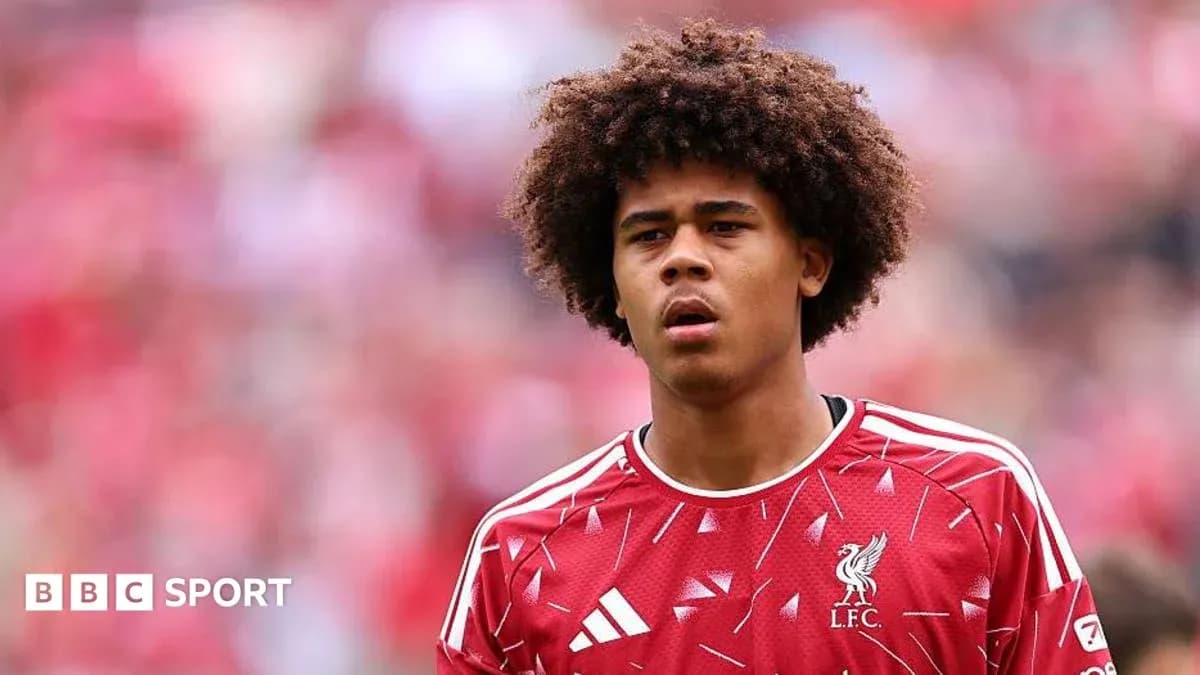
Liverpool’s new era under Andoni Iraola has already thrown up its first paradox: one of the standout performers of pre-season is a centre-back who, as things stand, cannot play a single competitive minute for the club.
His name is Ifeanyi Ndukwe. He is 18, 6ft 6in, and in a matter of weeks has gone from relative unknown to the teenager drawing gasps inside Anfield.
A teenager steps into the spotlight
Liverpool’s summer schedule has been messy and revealing in equal measure. Two wins, two defeats. Comfortable enough against Sunderland and Wrexham, then maddening collapses against Leeds and Monaco, both from two-goal leads. The performances have exposed a squad still trying to understand its new manager – and a defence stretched to breaking point.
In that chaos, Ndukwe has found his opening.
Injuries have ripped through Iraola’s centre-back options. Joe Gomez went down in the very first pre-season outing. £60m signing Jeremy Jacquet has yet to shake off a nagging knee problem. Giovanni Leoni is still on the long road back from a serious knee injury. Someone had to step in. Iraola turned to an Austrian teenager.
Ndukwe has responded like he has been waiting his whole life for it.
Two full 90-minute outings, another 80-minute shift, then a start alongside Virgil van Dijk against Monaco at Anfield on Sunday. No easing in, no gentle cameos. Straight into the deep end, next to the captain, in front of a fanbase desperate for signs of what this Liverpool side might become.
The first impression? Pure theatre.
Early in the game, Ndukwe took a pass under pressure, flicked a neat backheel to wrong-foot Monaco’s Mika Biereth and played Liverpool out of trouble. Anfield drew breath, then applause. The showpiece moment was followed by the substance: strong duels, decisive interventions, a presence that belied his age.
Van Dijk noticed.
“Big talent, big guy and he wants to learn,” the captain said after the game. He spoke of brief conversations, of guidance offered, and of an inevitable next step: “The matter of fact is that he has to go on loan and wherever he goes, he needs to learn, get better and be ready when he comes back to hopefully stay there.”
That is the twist in this story. Liverpool may have stumbled upon a solution in pre-season, but they are not allowed to use it when the real stuff starts.
The Brexit wall
Liverpool open their Premier League campaign against Newcastle with a glaring question: who partners Van Dijk now that Ibrahima Konate has gone?
On form and pre-season rhythm alone, Ndukwe would at least be in the conversation. On paper, he is not even eligible.
Post-Brexit rules mean he cannot play a competitive game for Liverpool in 2026 because he does not yet meet the points threshold for a UK work permit. No Governing Body Endorsement, no visa, no competitive football in England.
The logic behind the system is clear enough: with the UK out of the European Union, clubs face stricter criteria when bringing in overseas players, particularly youngsters who are not yet established at the top level. The impact on Liverpool’s defensive prodigy is brutal.
As an Austria youth international, developed at Austria Vienna and blooded in their reserve side with a single senior appearance, Ndukwe sits just below the line. His performances at the Under-17 World Cup last November alerted Liverpool, who moved quickly, agreeing a deal in principle in January and completing a £2.6m transfer once he turned 18 this summer. The talent is not in doubt. The paperwork is.
To qualify automatically, he needs 15 points across various categories while out on loan. The stronger the league he plays in, the more points he earns. Pick the right destination and the numbers could stack up quickly.
It is understood that, with a smart move, Ndukwe could hit the required tally by January. That possibility changes everything – and complicates it at the same time.
A system with sharp edges
The work permit framework has another wrinkle: the Elite Significant Contribution (ESC) slots. These places exist for foreign players who do not meet the standard GBE criteria but are deemed important enough to warrant special status.
Premier League and Championship clubs can, in theory, use up to four ESC slots. In practice, the number depends on how committed they are to fielding England Qualified Players (EQP). Hit 35% of minutes for EQPs in the previous season and you get all four. Fall short and the allocation shrinks.
Liverpool fell short.
Last season, Freddie Woodman, Gomez, Rhys Williams, Curtis Jones, Trey Nyoni and Rio Ngumoha were the only English players in the squad, combining for 83 Premier League appearances. That usage left Liverpool with just one ESC slot.
It has already gone.
Senegalese 18-year-old Mor Talla Ndiaye occupies that precious place, shutting the door on Ndukwe as an ESC option. The route that might have fast-tracked him into the competitive squad is blocked by the club’s own past selections and the league’s regulations.
So Liverpool find themselves in a strange position. They have a towering teenage defender impressing in pre-season, a shortage of senior centre-backs, a fanbase eager to see more – and a rulebook that says no.
The loan that has to be perfect
For now, Ndukwe’s Liverpool story remains confined to friendlies. He will be available for the final warm-up game against Como on 16 August, another chance to add to his growing highlight reel and to remind everyone what they will be missing when the competitive fixtures begin.
After that, the decision-makers step in.
A loan is not just likely; it is necessary. Van Dijk has already framed it as the key stage of Ndukwe’s development. The club’s legal reality makes it non-negotiable.
Ndukwe’s agent, Georg Lederer, set the tone in July when he spoke to Sky Sports Austria. A loan club, he said, would be found where Ndukwe could gain experience “at a very high level” and he described the situation as “a great opportunity” despite the obvious setback. Several top international clubs, he added, had already shown concrete interest.
On Monday, Lederer told BBC Sport that the process of choosing that club is still ongoing. Europe is open, the options are being weighed, and the stakes are unusually high for a teenager’s first move away from his parent club.
Pick a league too low in quality and the points do not add up fast enough. Pick one too high and the risk grows that he sits on the bench, learning little and earning even fewer points. Agree to a recall clause in January and Liverpool keep the door open to a mid-season return – but that could put off potential suitors who want a full campaign with a key defender.
This is not just about minutes. It is about mathematics and margins.
A glimpse of what might be
Ndukwe’s emergence is a reminder of how quickly narratives can flip in pre-season. Liverpool began the summer worrying about how to replace Konate and integrate Jacquet. They end it having watched an 18-year-old from Austria Vienna stand shoulder to shoulder with Van Dijk and look like he belonged.
The crowd’s reaction to that backheel against Monaco was not just about flair. It was about hope. Supporters saw a player who could be part of Liverpool’s next defensive era, someone who fits the modern profile: tall, aggressive, comfortable on the ball, unafraid to take responsibility.
Yet the immediate reality is harsh. When Liverpool walk out against Newcastle, Ndukwe will not be on the teamsheet. His path runs elsewhere first.
Within the next fortnight, the club and his representatives will choose that path. The right loan could fast-track his return and turn this summer cameo into the prelude to a genuine breakthrough. The wrong one could stall his momentum and extend the wait for competitive football in red.
For now, he has one more friendly, one more Anfield audition, one more chance to make the Kop wonder what they are about to lose – and how quickly they can get him back.