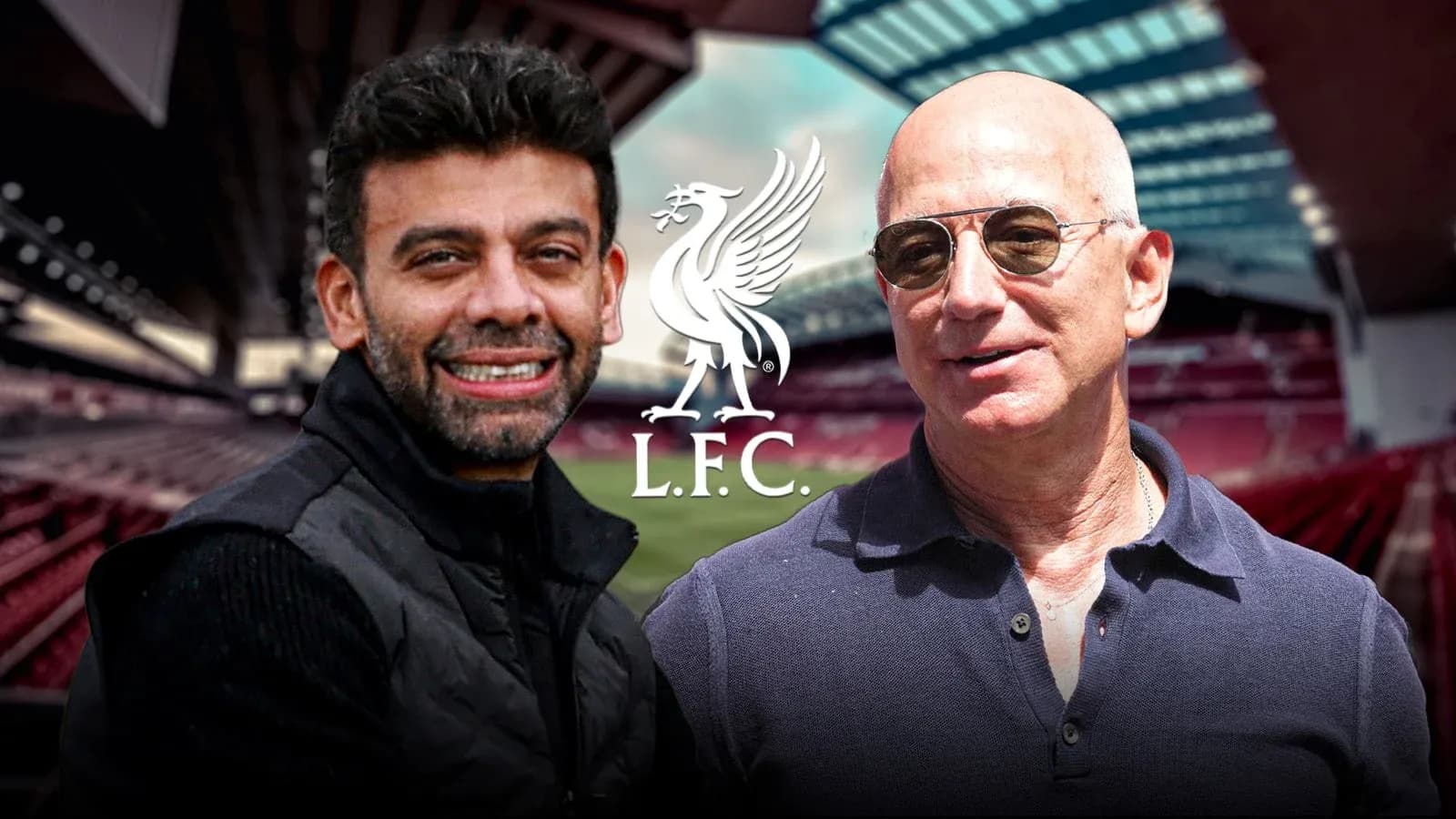
Liverpool Set for Major Ownership Deal with Bezos Consortium
Liverpool stand on the brink of one of the most eye-catching ownership deals in modern football, with Fenway Sports Group set to sell a significant stake in the club to a heavyweight US-led consortium featuring Amazon founder Jeff Bezos.
If completed, the agreement would see one of the world’s richest men buy into one of its most storied clubs, in a move that could reshape Liverpool’s financial firepower and the wider Premier League landscape.
A new cast in the boardroom
The group is fronted by Amit Bhatia, the former QPR co-owner whose name is well known in English football’s corridors of power. Facebook co-founder Eduardo Saverin is also part of the syndicate, adding another layer of Silicon Valley wealth and influence to the talks.
Sky News reports the consortium is closing in on a deal for roughly a one-third stake in Liverpool. The investment would value the club at around £4.4bn ($6bn) – one of the richest transactions the sport has ever seen.
For FSG, who paid £300m for Liverpool in 2010, the numbers underline just how far the club has travelled in 14 years.
Who is coming into Anfield?
Bezos needs little introduction. The Amazon founder, worth an estimated $281bn (£209bn) according to Forbes, is the third-richest person on the planet, behind Elon Musk and Google co-founder Larry Page.
He built Amazon from a garage operation in Seattle in 1994 into a global behemoth, then spread his interests into aerospace with Blue Origin and media via Nash Holdings, the vehicle that owns The Washington Post.
He is a keen American Football fan and has previously explored bids for the Washington Commanders and Seattle Seahawks. To date, though, he is not known to hold a major stake in any sports team. Liverpool would be a dramatic entry point.
Bhatia brings a different profile. A 46-year-old British Indian entrepreneur with an investment banking background, he runs AyBe Capital, a multi-asset investment firm with interests across technology, media, property and real estate, consumer retail, and health.
Football fans will remember his time at QPR. He joined the board and became vice-chairman in 2007 at just 28, after the Mittal family bought a 20 per cent stake in the club alongside Bernie Ecclestone and Flavio Briatore. Bhatia later served five years as QPR chairman between 2018 and 2023, and remained as director and co-owner until earlier this week, when he transferred his stake to majority owner Ruben Gnanalingam.
Sport is threaded through his wider portfolio. Via AyBe Capital, Bhatia is an investor in TGL, the high-tech golf league fronted by Rory McIlroy and Tiger Woods, and in Switch Hitter, Kevin Pietersen’s cricket-focused media brand. His father-in-law, steel magnate Lakshmi Mittal – worth an estimated £23.2bn – acquired a 75 per cent stake in the Rajasthan Royals IPL franchise earlier this year.
Saverin, 44, brings further tech wealth and a track record of interest in elite football. He was part of a consortium that mounted an unsuccessful takeover bid for Chelsea during the 2022 sale triggered by sanctions on Roman Abramovich following Russia’s invasion of Ukraine.
The identities of any other investors in the Liverpool syndicate remain under wraps for now.
Why would FSG sell now?
FSG are not being forced to sell. They have complete control of Liverpool and have overseen the club’s return to the summit of European and domestic football, lifting every major trophy available during their tenure.
But they have been open about their willingness to bring in fresh capital. In 2023, they sold a small stake to Dynasty Equity, who invested £164m in a deal valuing Liverpool at more than $4.5bn. RedBird Capital and Arctos Sports Partners already hold minority positions.
This is different. A one-third stake represents a far larger slice of the club and a far bigger cheque.
From FSG’s perspective, there is a clear logic. They can crystallise a huge profit on an asset they bought in a distressed state in 2010, while still retaining overall control. At the same time, they inject new money into a club that operates in a market where transfer fees, wages and infrastructure costs continue to surge.
After years of success, there is also a sense that a new phase is coming at Anfield. A heavyweight strategic partner with near-unlimited resources would help Liverpool compete with state-backed rivals and private equity-fuelled projects at the very top of the game.
What might the deal look like?
Sky News’ reporting points to a roughly one-third stake changing hands. At a valuation of £4.4bn, that slice would cost in the region of £1.45bn.
FSG would remain majority owners and decision-makers. The structure would resemble the current model, in which they sit above a group of minority shareholders, but with the Bezos–Bhatia–Saverin consortium holding a far more substantial position than existing investors.
Liverpool’s status in the financial hierarchy is already lofty. The club are currently ranked as the fourth most valuable in world football. A £4.4bn valuation would push them even closer to the very top tier of global sports franchises.
When could it happen?
The process has moved quickly since first being reported at the end of last month. There is no fixed public timetable, but the deal is said to have accelerated, with an announcement possible as early as this week. It could just as easily roll into next week as lawyers and bankers finalise the details.
For now, FSG remain in charge. The club continues to operate under its existing structure, with private equity groups RedBird, Arctos and Dynasty Equity all in place as minority backers.
The difference this time is scale. A third of Liverpool, at a £4.4bn valuation, is not just another investment. It is a statement.
If Bezos and his partners walk into the Anfield boardroom, the question will not be what Liverpool have become under FSG. It will be how far – and how fast – they can go from here.