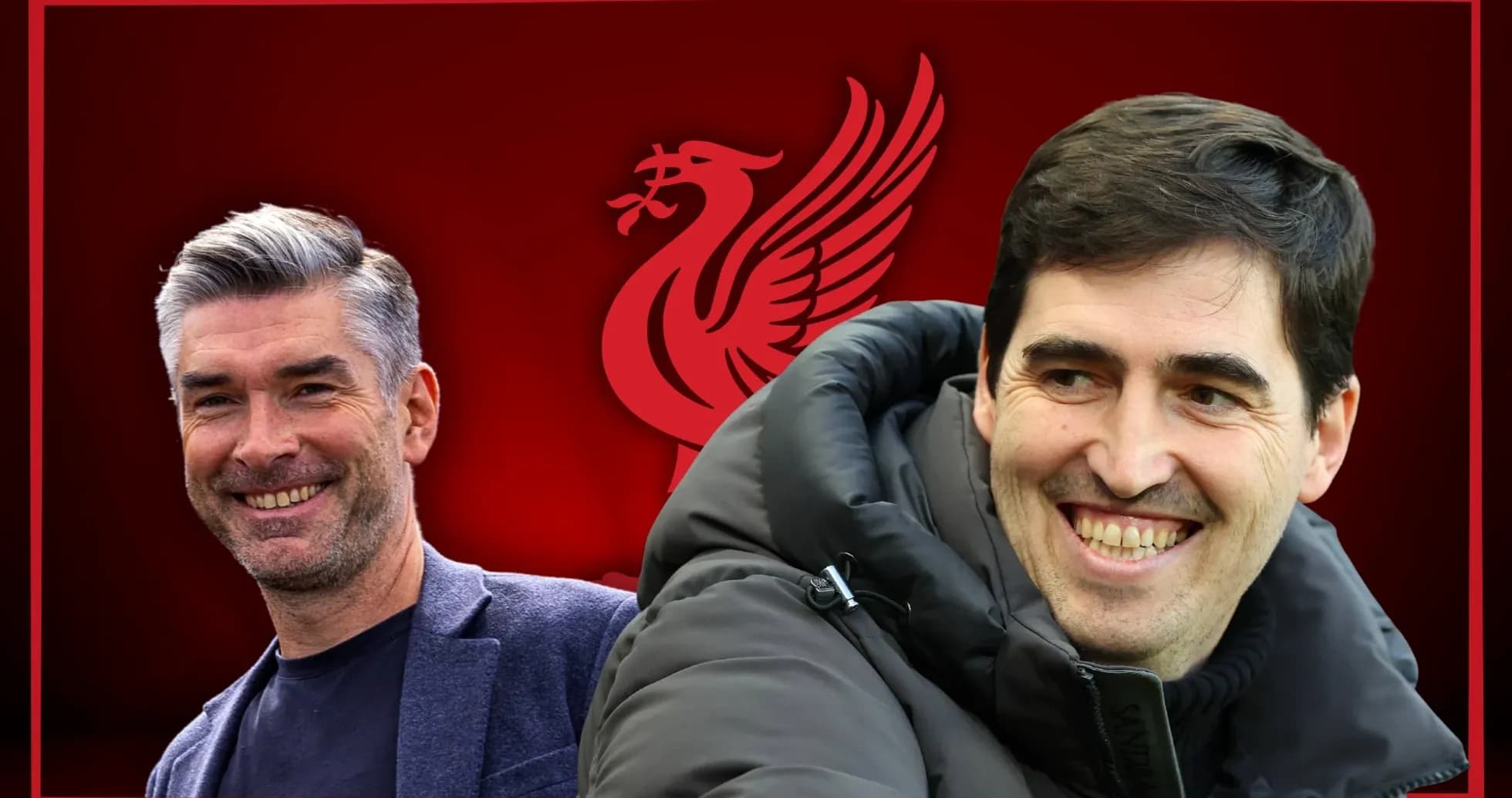
Liverpool's Pursuit of Barcola: A Defining Moment for Hughes
Liverpool’s summer was never going to be quiet. It couldn’t be. Not after Mohamed Salah, Ibrahima Konaté and Andy Robertson walked out the door, taking with them a decade’s worth of reliability, aura and world-class pedigree.
Victor Munoz has already arrived, the first signing of a turbulent window, but he is only the opening act. The real work, the defining work, still lies ahead for sporting director Richard Hughes.
Hughes under the spotlight
Hughes knows what’s at stake. Last summer’s recruitment drew heavy criticism and left doubts hanging over his judgement. This window offers a rare second chance to rewrite that story, but the margin for error is brutally thin.
Complicating everything is the arrival of Andoni Iraola. A new manager means a new blueprint. Pressing triggers change. Build-up patterns shift. Certain profiles become essential; others suddenly look expendable. The squad now has to be sculpted around Iraola’s football, not just patched up after big-name exits.
And those exits cut deep. Losing Salah’s goals, Konaté’s presence and Robertson’s drive in one swoop doesn’t just create gaps. It rips out pillars. Liverpool are not simply replacing talent; they are trying to rebuild the spine of a side expected to compete on multiple fronts.
This window isn’t about plugging holes. It’s about laying down the foundations of Iraola’s Liverpool for years to come.
A stuttering start
The plan, at least initially, was clear enough: bring in a new attacking option to refresh the forward line. Then the first blow landed.
Yan Diomande chose Paris Saint-Germain over Anfield.
That decision did more than derail a single deal. It sharpened the questions already circling around Liverpool’s recruitment strategy, especially in the wake of Michael Edwards’ departure from the club’s hierarchy. The sense of a smooth, joined-up vision took a hit.
So Liverpool pivoted. The focus moved to Bradley Barcola, one of the brightest French attacking talents of his generation and, stylistically, a strong alternative to Diomande.
The Barcola factor
Barcola fits the brief. Pace to burn. Creativity between the lines. A winger who can stretch defences, attack space and still pick the right pass in the final third. On paper, he looks like exactly the kind of player Iraola could weaponise.
The problem? PSG still hold the cards.
Their stance on Barcola is likely to hinge on whether they close the deal for Diomande. If they secure their man, they may be more open to negotiating Barcola’s future. If they don’t, they have even less incentive to weaken their own attacking options. Liverpool, for now, are forced to wait on decisions being made in Paris.
Time, though, is not their friend. The window is moving quickly. Key areas of the squad still need attention. Supporters can see the gaps as clearly as anyone inside the club, and patience is starting to fray.
Liverpool need to move decisively. The challenge is finding the right moment and the right opportunity, without blinking first.
Player power returns
One thing could tilt the balance. Player intent.
Diomande made it clear he wanted PSG. That clarity helped shape the outcome of his move. Now, according to TEAMtalk, Barcola is ready to say yes to Liverpool and is keen on a switch to Anfield.
For the French winger, the appeal is obvious. At PSG, minutes are precious and competition is relentless. At Liverpool, he sees the chance to become a central figure, not a peripheral talent. A club in transition can be a risk, but for an ambitious player, it can also be the perfect stage.
His willingness doesn’t guarantee anything. Contracts, fees, negotiations with PSG – all of that still stands in the way. But it does change the temperature of the talks. It signals that Liverpool are not chasing a reluctant target; they are pursuing a player who wants the move and is frustrated by his current role.
Last summer showed how decisive that can be. Florian Wirtz and Alexander Isak were stark reminders of how much sway a determined player can hold in modern transfer sagas. When a footballer pushes, clubs are often forced to listen.
A defining call for Liverpool
Barcola to Liverpool would be a blockbuster move, not just because of his talent, but because of what it would represent: a statement that, amid upheaval, the club can still attract and secure elite young talent ready to shape the next era.
The groundwork is there. The interest is mutual. The clock is ticking.
Now the question is simple: can Liverpool turn a willing “yes” from Barcola into the signing that anchors Iraola’s first great attacking line at Anfield?