Liverpool's Strategic Growth in New York: Investment Talks and Future Plans
Liverpool chose New York for a reason.
The club say they have more than 26 million supporters in the United States. On a humid Manhattan evening, with the Yankees’ pinstripes swapped for Liverpool red and Wrexham red at Yankee Stadium, the logic writes itself. This is where the club want to grow. This is where they believe the next phase of their story can be sold.
But for all the noise around Andoni Iraola’s arrival and a new tactical blueprint, it is the balance sheet and the boardroom that currently shape Liverpool’s future as much as the training pitch.
Investment talks and a club on the market – but not for sale
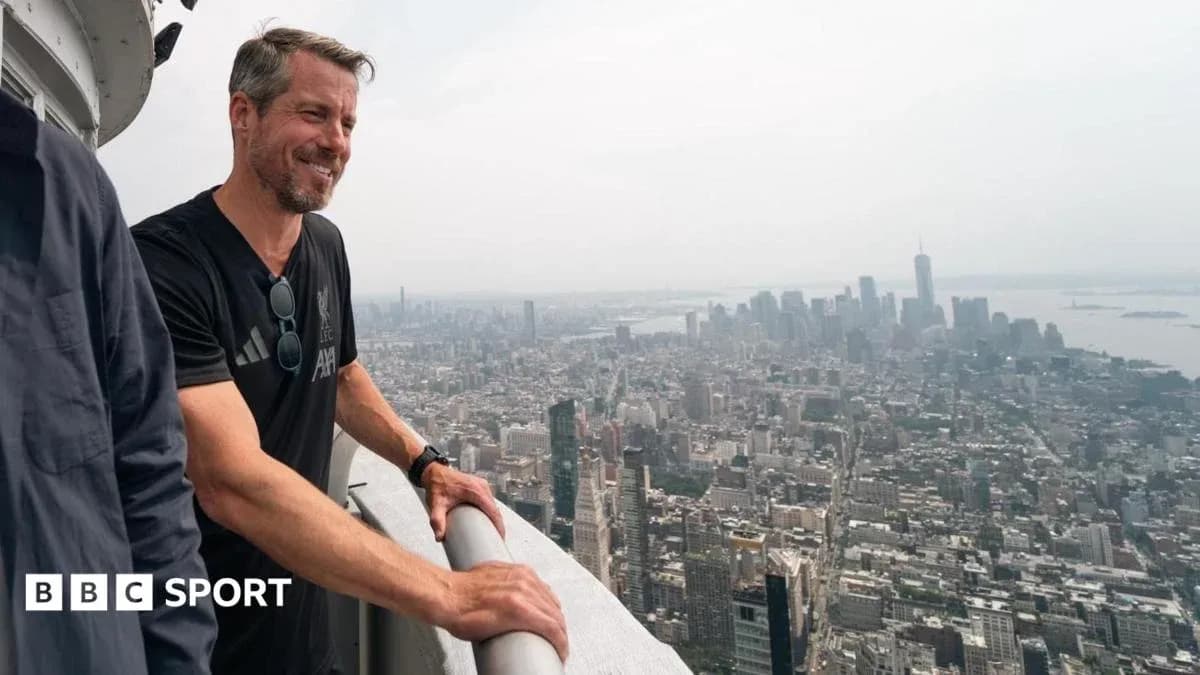
Billy Hogan, Liverpool’s chief executive and long-time Fenway Sports Group lieutenant, sits down with BBC Sport in New York with one subject impossible to dodge: fresh money.
Last week, FSG confirmed that a consortium led by British-Indian businessman Amit Bhatia is in talks over a strategic minority investment. Those discussions have continued, and within the corridors of power there is a growing expectation that an agreement will be reached.
Hogan keeps the message tight.
John Henry and FSG, he stresses, have always been open to investment that strengthens the football club. That stance has not shifted. The Bhatia group, he reiterates, has “come forward and expressed an interest in a minority investment”. Nothing more, nothing less – at least publicly.
What Hogan is keen to underline is what this is not. This is not FSG edging towards the exit. This is not the Boston Red Sox owners, who bought Liverpool for £300m in 2010, quietly cashing out.
According to the Financial Times, any deal with Bhatia’s consortium would value Liverpool at more than £4.5bn. A club once on the brink of administration now sits in the financial elite.
“There’s a huge opportunity still,” Hogan says. The Premier League’s global pull, Liverpool’s size, the sport’s relentless growth – he lists them as reasons FSG believe they have not hit their ceiling. The numbers back him up: fifth in the latest Deloitte Football Money League, with the highest revenue in the Premier League at £702m.
The message is blunt: Liverpool are not for sale. Liverpool are for building.
A bruising season, a sacked coach and big names gone
The backdrop to all this optimism is awkward. Liverpool spent a record £450m last summer. The return on that investment was underwhelming on the pitch.
The campaign ended with Arne Slot dismissed, his tenure cut short after failing to ignite a squad that never quite settled. The dressing room then lost some of its biggest figures. Mohamed Salah, Andy Robertson and Ibrahima Konaté all departed on free transfers, taking with them goals, leadership and years of continuity.
Stability suddenly feels fragile.
Michael Edwards stepped down as FSG’s CEO of football after the group abandoned plans for a multi-club ownership model. Sporting director Richard Hughes is being linked with a move to Al Hilal in Saudi Arabia. Key architects of Liverpool’s recent era are either gone or being courted elsewhere.
Hogan does not flinch at the word “transition”.
“Change is inevitable in football,” he says, and he leans into the idea that Iraola’s approach will energise supporters. It will take time, he admits, but he insists the club is “in a very healthy place” with “steady” leadership from ownership and a clear focus on the seasons ahead.
Spending, restraint and a familiar FSG line
The contrast between last summer’s outlay and this year’s caution is stark. After that £450m spree and the turbulence that followed, the 2024 window has brought only one addition: Federico Chiesa for £12.5m.
For some fanbases, that would sound like a retreat. Hogan frames it as alignment with a long-standing model.
He points out that last season’s heavy spend was offset in part by player sales. Across FSG’s tenure, he argues, the investment pattern has always been the same: spend when necessary, hold when not, with every decision geared towards giving Liverpool the best chance to win.
Sometimes that requires “significant expense”. Sometimes it doesn’t. The ultimate call, he notes, lies with Mike Gordon, the managing owner and central figure in FSG’s football operations.
The principle is unchanged: run the club sustainably, keep the squad competitive, and funnel revenue back into the operation rather than out of it.
A women’s team that can no longer be ignored
Not all of Hogan’s self-assessment is defensive. On the women’s side, he is candid.
Liverpool Women finished 11th in the WSL last season and have not lifted the top-flight title since 2014. For a club that prides itself on elite standards, the gap is obvious.
“To be self-critical,” Hogan says, “that is probably an area that we maybe took our eye off the ball several years ago.” The admission is sharp, and deliberate.
The response has been to invest. AXA Melwood now stands as one of the best training centres in the women’s game. The squad is being strengthened. The plan, Hogan insists, is to run the women’s team with the same sustainable, ambitious approach as the men.
He sees “tremendous growth” in the women’s game and a “huge opportunity” for Liverpool to catch up and then push on.
From brink of bankruptcy to a rebuilt Anfield
For all the current turbulence, the long view is unrecognisable from 2010.
Back then, Liverpool teetered on the edge of bankruptcy. FSG’s arrival stabilised the finances, but the transformation has been physical as much as fiscal. Two of Anfield’s four stands have been redeveloped in the past decade, reshaping one of football’s most iconic venues without stripping away its character.
Hogan draws a line between Liverpool and the Boston Red Sox: historic clubs, fervent fanbases, and stadiums embedded in their neighbourhoods. The next phase, he explains, is not just about seats and hospitality boxes but the footprint around Anfield itself – infrastructure, transport, and making the area a destination even on non-match days.
He takes pride in the club’s “positive and good financial position”, in the ability to stay at Anfield long term, and in the less glamorous infrastructure work that rarely grabs headlines but underpins everything else.
It has not all been smooth. Ticket price rises this year triggered supporter protests, forcing the club to scale back planned increases for the next couple of seasons. Hogan wrote directly to fans, a reminder that off-field decisions still hit nerves in a city that guards its identity fiercely.
Yet the arc remains clear: from crisis to stability, from legal battles in the High Court to multi-billion-pound valuations.
Trophies, memories and the next chapter
Hogan circles back to the only currency that truly matters to supporters: silverware.
He wishes Liverpool had won more under FSG, but he points to the trophies that have come and the journeys that went with them – those Champions League final fan parks, the shared joy even on the nights that ended in defeat.
The club’s stated aim is simple and unchanging. On the pitch, win trophies. Off it, grow revenues and expand the club without losing its soul.
The Premier League grows louder and richer each year. Rival owners are arriving with sovereign wealth funds, private equity backing and aggressive spending plans. Liverpool, under FSG, are trying to walk a narrower path: ambitious but sustainable, global but rooted, modernised but recognisably themselves.
So here they are in New York, in a city built on dreams and deals, talking minority investments and long-term projects while a new coach prepares for his first pre-season game.
After a year that bruised reputations and tested patience, Liverpool stand at another crossroads. The question now is not whether the club is stable. It is whether this carefully managed model can still deliver enough glory for a fanbase that measures success in parades, not balance sheets.