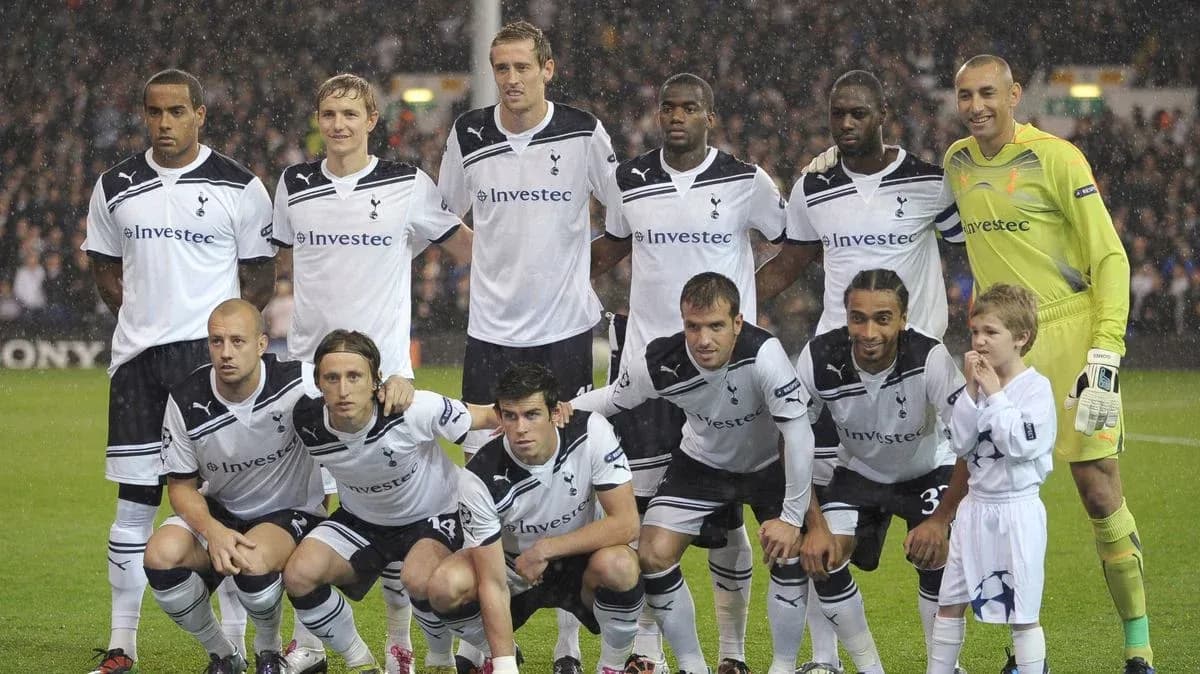
Luka Modric's Departure: A Messy Goodbye for Tottenham
For a generation of Tottenham supporters, Luka Modric was the player who made everything make sense. The slight playmaker who took the ball in tight spaces, dictated the rhythm and made a sometimes-chaotic club look like it belonged among Europe’s elite.
And then he refused to get on a plane.
In the summer of 2012, Modric was 26 and approaching the height of his powers. He had just shone for Croatia at Euro 2012, pulling strings on the international stage the way he had for Spurs in the Premier League. Real Madrid, with Jose Mourinho in charge and a galaxy of stars already in place, decided they wanted him. When Real decide, history shows they usually get their man.
Tottenham knew the drill. A year earlier, Modric had tried to engineer a move to Chelsea. The club dug in, resisted the pressure and kept him. This time, the stakes felt bigger. This was not just a cross-London switch; this was the call from the Bernabeu.
The pressure finally told in a way that still leaves a sour taste for some in north London. As Spurs prepared to fly out for their pre-season tour of the United States, Modric simply didn’t show. No late dash through the terminal. No last-minute change of heart. He stayed away, determined to force the club’s hand.
Tottenham fined him two weeks’ wages. They talked tough, tried to hold the line, and new manager Andre Villas-Boas publicly lamented the situation even as he acknowledged Modric had apologised. Inside the club, they knew what everyone else did: when a player of that calibre decides his future lies in Madrid, the battle is already lost.
It took until the end of August for the inevitable to be confirmed. Modric completed a £33 million move to Real Madrid, signing for a club that would turn him from Premier League darling into a modern great of the European game. For Spurs, the fee felt substantial at the time. In hindsight, it looks light for a player with four years still left on a six-year deal.
Modric has since been candid about that period. Speaking to FourFourTwo in 2018, he admitted the manner of his departure still nags at him. “My one regret is that I didn’t win a trophy with Tottenham, despite us being a strong team who played good, attractive football,” he said. “I’m sorry for the way I left. I wish we had parted in a nicer way. I hope fans understand that I followed my dreams.”
Those dreams became cold, hard medals. In Madrid, Modric lifted six Champions League titles, four La Liga crowns, five FIFA Club World Cups and two Copas del Rey, building a career that will sit comfortably in any discussion about the greatest midfielders of his era. The decision to leave Spurs was vindicated on every competitive level.
And yet, the emotional ledger is more complicated. For some Tottenham fans, the no-show for that pre-season flight remains unforgivable, the moment the relationship cracked. They remember the creativity and control, but they also remember the ultimatum. Others look at the career that followed and see a player who simply outgrew a club that could not match his ambitions at the time.
The irony is hard to miss when you fast forward to the present. Tottenham, once the reluctant seller, now operate in a market where they have spent close to £250 million on new signings in a single summer. They are the ones asking questions of other clubs, testing their resolve, looking to prise away key players.
The lesson from the Modric saga still hangs in the air. Contracts matter, but not as much as a player’s will. Values can be set, but they can also be eroded when a star decides to push, to skip a flight, to force a conversation that clubs would rather delay.
Modric, now at AC Milan and still operating at the highest level as his 41st birthday looms, remains a reminder of what Tottenham had—and how abruptly they lost it. The regret in north London is not just about the way he left, or the fee they banked. It’s the sense that, with a different trajectory, he could have been the cornerstone of a trophy-winning era rather than the symbol of one that slipped away.
The next time a Tottenham talisman starts to look elsewhere, the club’s hierarchy will remember that empty seat on a plane to the United States and ask themselves a blunt question: are they ready to handle it any better than they did with Luka Modric?