Manchester United's Struggles Continue After Bournemouth Defeat
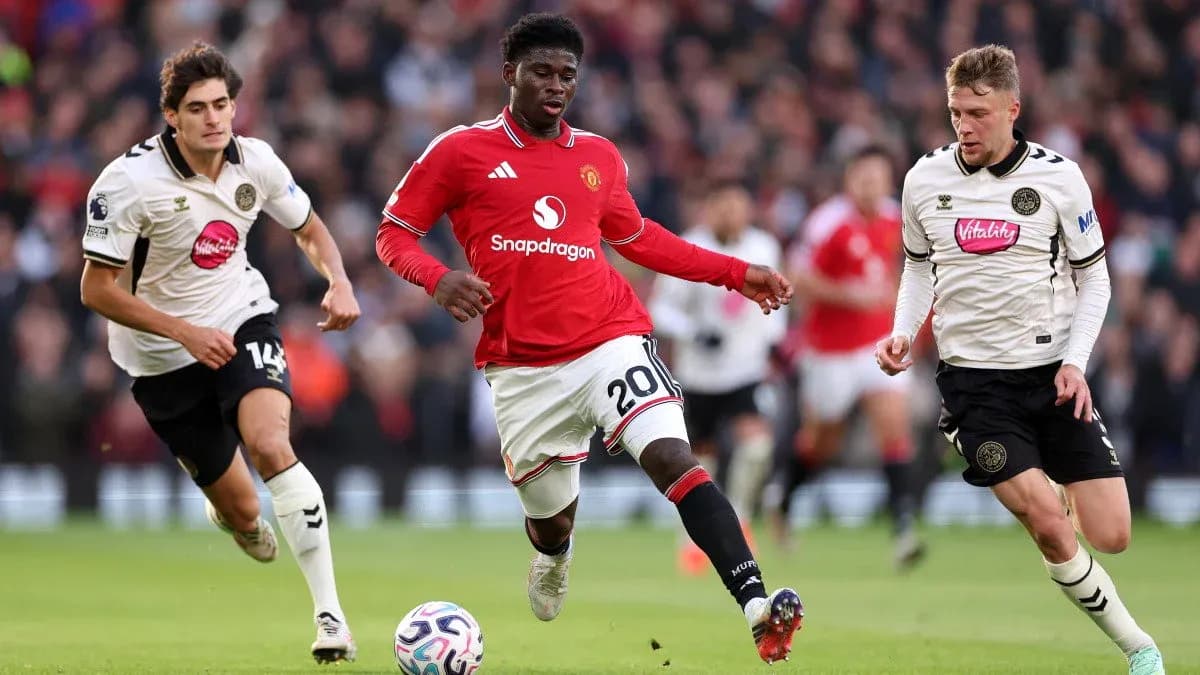
Old Trafford under grey Manchester skies has rarely felt this uncertain. Following this result, a 3–0 home defeat to Bournemouth in Round 8 of the Premier League, Manchester United’s season-long drift hardened into something more structural: a team in 16th place on 7 points, with a total goal difference of -3 (10 scored, 13 conceded), out-thought and out-fought by a side that arrived 13th and left with 9 points and a total goal difference of -1 (12 scored, 13 conceded).
I. The Big Picture – Systems, Context and Trajectories
Both managers set up in a 4-2-3-1, but the shapes told different stories.
For Manchester United, M. Carrick leaned into a technical, possession-first spine. Senne Lammens started behind a back four of Diogo Dalot, Ayden Heaven, Harry Maguire and Leny Yoro. The double pivot of Carlos Baleba and Andrey Santos was tasked with building through pressure, while a narrow band of Amad Diallo, Youri Tielemans and Mason Mount supported Bryan Mbeumo as a lone forward.
This is a side whose season profile already warned of fragility. Overall, United have played 8 league matches, winning only 1 in total, drawing 4 and losing 3. At home they had 1 win, 1 draw and 2 defeats, scoring 6 and conceding 7. The attacking numbers are modest: overall they average 1.3 goals for per match, 1.5 at Old Trafford, but leak 1.6 overall and 1.8 at home. They have yet to keep a clean sheet anywhere and have already failed to score in 3 matches in total. The 4-2-3-1 has been used in all 8 league fixtures, so this is not an experiment; it is their identity.
Bournemouth, under M. Rose, mirrored the formation but not the intent. Đorđe Petrović was protected by a back four of Adrien Truffert, António Silva, James Hill and Adam Smith. In front, Tyler Adams and Lewis Cook formed a combative, positionally disciplined screen, freeing an attacking trio of Marcus Tavernier, Justin Kluivert and Rayan to orbit around Evanilson.
Their season data hinted at a more volatile but sharper edge. Overall they have 2 wins, 3 draws and 3 defeats from 8, with 12 goals scored and 13 conceded. On their travels they had 1 win, 1 draw and 2 defeats, scoring 7 and conceding 9. The away attack averages 1.8 goals per game, significantly more potent than United’s 1.5 at home, but they concede 2.3 away. They are dangerous, but usually open. Here, they were dangerous and controlled.
II. Tactical Voids – Absences and Discipline
United’s squad sheet revealed a spine ripped out by injury. P. Dorgu (hamstring), K. Mainoo (injury), M. Rashford (hip), B. Sesko (leg), L. Shaw (injury) and M. Ugarte (knee) were all listed as missing for this fixture. That is pace in transition (Rashford), penalty-box presence (Sesko), their best left-back (Shaw) and a natural defensive midfielder (Ugarte) all absent. It forced Carrick to rely on a very young central core – Heaven, Yoro, Baleba, Santos – and left Mbeumo as the primary outlet without a natural wide runner to stretch Bournemouth’s back line.
Bournemouth were not untouched either. J. Araujo (thigh), V. Milosavljevic (lacking match fitness), A. Scott (thigh) and A. Toth (muscle injury) were all unavailable. But crucially, their core – Adams, Cook, Tavernier, Evanilson – remained intact, allowing Rose to field his first-choice structure in all key zones.
From a disciplinary perspective, the season patterns foreshadowed a nervy, late-card contest. United’s yellow cards spike in the final quarter: 37.50% of their bookings arrive between 76–90 minutes, with another 18.75% between 91–105. Bournemouth show a similar late-game edge, with 31.82% of their yellows in the 76–90 window and a spread of 18.18% between 16–30, 46–60 and 61–75. Neither side has seen a red card in the league this season, but both build towards frantic finales where control frays.
III. Key Matchups – Hunter vs Shield, Engine Room Battles
The headline duel was always going to be Bournemouth’s “Hunter” Marcus Tavernier against United’s fragile defensive “Shield”. Tavernier came into the day as one of the league’s standout performers: 5 goals in total from midfield, 16 shots with 11 on target, and a rating of 7.48 across 8 appearances. He combines volume shooting with creativity (15 key passes) and a willingness to work without the ball (13 tackles, 2 interceptions).
United’s defensive record offered him encouragement. Overall they concede 1.6 goals per game, and at Old Trafford that rises to 1.8. The back line here – Dalot, Heaven, Maguire, Yoro – has talent but not cohesion, and the team as a whole has yet to keep a single clean sheet this season. With no natural holding specialist like Ugarte available, Baleba and Santos were always going to be overloaded by Tavernier drifting inside, Kluivert between the lines and Evanilson dropping short.
On the other side, United’s primary hunter was Bryan Mbeumo. With 4 goals in total from 19 shots (11 on target), 13 key passes and a rating of 7.02, he has been the club’s most reliable attacking threat. His duel was with Bournemouth’s away defence that, on paper, looked vulnerable: 9 goals conceded in 4 away games, an average of 2.3 per match. Yet Rose’s solution was collective: Adams and Cook screening central lanes, Truffert and Smith tight to their wingers, and António Silva and Hill aggressive in stepping into Mbeumo’s space.
The engine room was perhaps the decisive battlefield. For Bournemouth, Adams and Cook are a classic enforcer–regista blend, recycling possession and setting the press triggers that allow Tavernier, Rayan and Kluivert to counter at pace. For United, Tielemans and Mount between the lines needed to provide progression and final-third craft, but without Rashford’s depth or Sesko’s penalty-box gravity, Bournemouth could compress the pitch and crowd central zones.
IV. Statistical Prognosis – xG Hints and Defensive Reality
Even without explicit xG numbers, the season trends tell a clear story. Bournemouth’s attack on their travels – 1.8 goals per game – against a United home defence conceding 1.8 is a near-perfect intersection: a visiting side that creates and finishes chances meeting a host that consistently allows them. Conversely, United’s 1.5 goals scored per home game running into a Bournemouth defence that concedes 2.3 away suggested they would find opportunities, but only if they could progress the ball cleanly through Bournemouth’s double pivot.
United’s penalty record offers no hidden edge: they have had 1 penalty in total this season, scored it, and have not missed from the spot. Bournemouth have yet to take a penalty. The margins, then, were always likely to be decided in open play and in transition, where Rose’s side have been sharper.
Following this result, the numbers and the narrative now align. United’s winless streak at home deepens, their failure to register a single clean sheet in total remains, and the 0–3 scoreline mirrors their heaviest home defeat already logged this season. Bournemouth, meanwhile, validate their attacking metrics away from home, with Evanilson’s blend of 3 goals and 4 assists in total and Tavernier’s ruthless productivity translating directly onto the Old Trafford pitch.
From here, Carrick must solve structural issues rather than wait for injured stars to return. The double pivot needs more protection, the back four more compactness, and the attack greater depth and variety beyond Mbeumo. Rose, in contrast, leaves Manchester with confirmation that his 4-2-3-1, anchored by Adams and Cook and lit up by Tavernier and Evanilson, can impose itself even in the league’s most storied arenas.