Manchester United's Champions League Return: Revenue Surge and Rebuild Plans
Manchester United are back at European football’s top table – and the numbers behind that return are staggering.
Club executives are projecting around £200m in additional revenue next season, with roughly half of that expected to be generated in the upcoming transfer window. Champions League qualification alone is forecast to bring in up to £100m in extra income.
That changes the mood. It does not change the plan.
Carrick, cash and a calculated rebuild
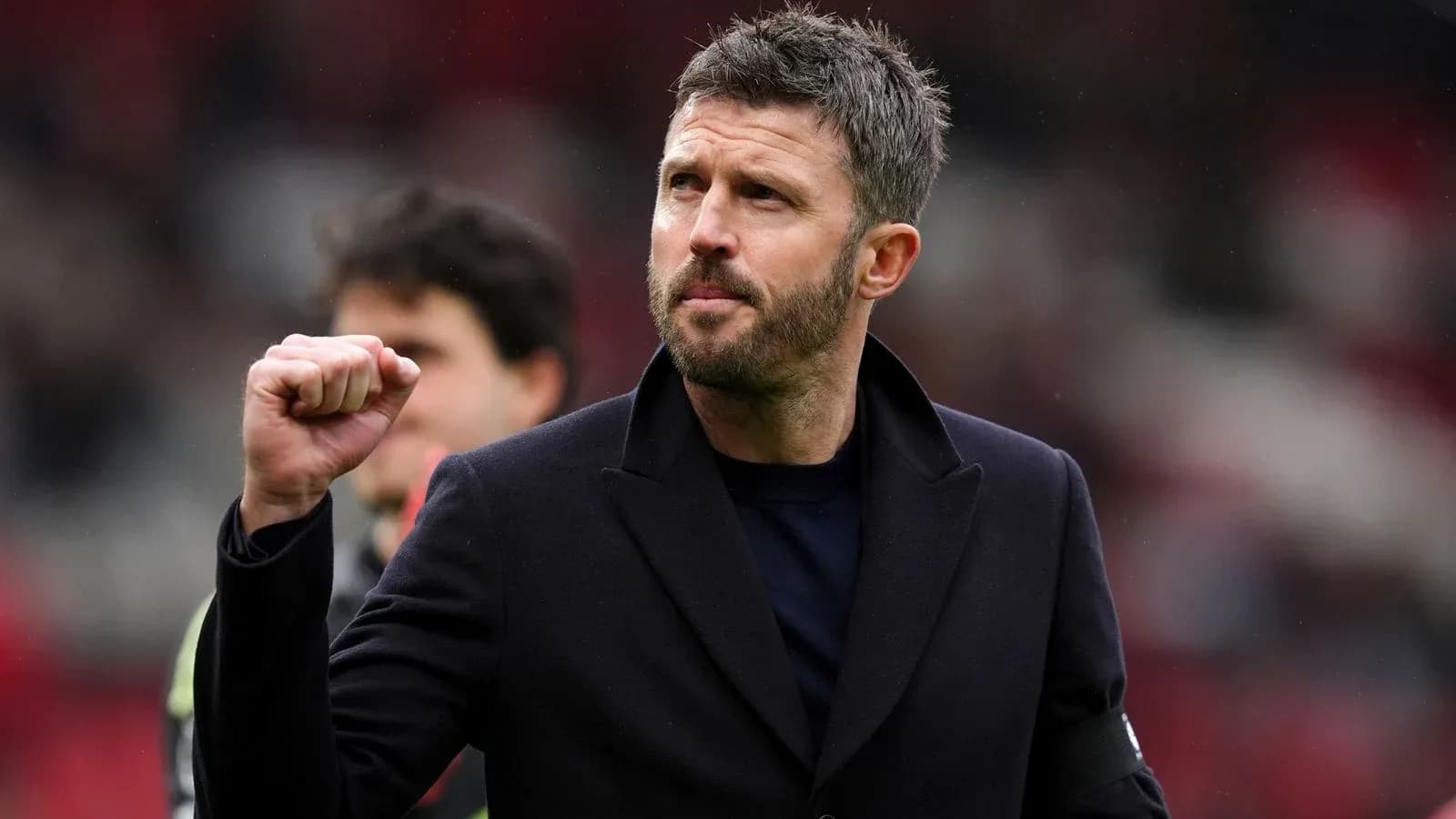
The immediate consequence of this surge in revenue is obvious: it strengthens Michael Carrick’s hand.
He has hit every target set for him in January, guided United back into the Champions League and steadied a club that had been lurching from one crisis to the next. With fresh money coming in and a clear upward trajectory on the pitch, it becomes harder to argue against giving him the job on a long-term basis.
Yet no one at Old Trafford is rushing to crown him. Not yet.
United will only decide on the head coach after the season ends, and they intend to run a full, rigorous process. The shortlist is heavyweight: Carlo Ancelotti, Thomas Tuchel, Julian Nagelsmann and Luis Enrique have all been monitored. Carrick remains the strong favourite, but the club wants to test every option before committing.
That same caution runs through their transfer strategy.
Champions League football and a cash injection might suggest a summer of wild spending. United insist it will be nothing of the sort. The key word inside the club is “sustainability” – hardly the slogan fans dream of, but the guiding principle of the new project.
The money is also not arriving in one hit. It will be spread across the season in instalments. United cannot, and will not, empty the bank before a ball is kicked in August.
Champions League boost – and the fine print
The raw figures are eye-catching. Even if United lose every single Champions League game next season, they stand to earn up to £70m from extra broadcast revenue, ticket sales, merchandising and corporate activity. Simply being back among Europe’s elite also activates an automatic £10m bonus from Adidas.
But there is a sting in the tail.
Many players’ contracts are structured around Champions League participation. Qualification triggers wage rises across the squad, immediately increasing the club’s costs. The notion that every extra pound from Europe can be thrown straight at transfers is a fantasy.
On top of that, the club is working towards a vast infrastructure project: a new 100,000-seater stadium, pencilled in to be ready within five to six years. That kind of development will shape every major financial decision from here on.
So the summer will be about balance. United want to strengthen decisively in key areas, but they are just as focused on cutting costs and slimming down a bloated, expensive squad. Internally, there is a belief that effective cost-cutting could have an even bigger impact on the books than the £80-100m Champions League windfall.
Outgoings: big names, big wages, big decisions
The clear-out has already been mapped.
Rasmus Hojlund’s potential £38m sale to Napoli becomes an obligation if the Italian club secure Champions League football. United are also preparing for the likely departures of Marcus Rashford, Manuel Ugarte and Joshua Zirkzee, sales that would further boost the transfer pot and ease wage pressures.
The wage bill will be trimmed again when Casemiro leaves. Contracts for Jadon Sancho and Tyrell Malacia are running down and are due to expire in the coming months. Once those salaries come off the books, United gain significant room to manoeuvre.
That space is not a luxury. It is a necessity. With more games on the schedule next season, Carrick – or whoever takes charge – will need a deeper, more balanced squad to compete on multiple fronts.
Midfield will be the first area under the knife. Ugarte is expected to follow Casemiro out of the door, and the long-standing plan has been clear: United want two elite central midfielders to anchor the next phase of the rebuild.
Midfield targets and a reshaped core
Nottingham Forest’s Elliot Anderson sits near the top of United’s list. The club’s recruitment team has also tracked Brighton’s Carlos Baleba and Newcastle United’s Sandro Tonali over a longer period.
These are not scattergun names. They fit a broader profile: younger, high-ceiling midfielders who can grow with the project and offer longevity, rather than short-term, high-cost fixes.
The intention is to rebuild the middle of the pitch around that type of player. Two top-level additions there would reshape the team’s spine and, in the club’s eyes, represent the most important business of the summer.
Left-back: Shaw needs help
Attention will also turn to left-back.
Luke Shaw has been excellent since returning to his natural position under Carrick, but the depth behind him is thin. Malacia is out of contract this summer and has played just seven minutes of Premier League football all season. With United facing a heavier workload and Shaw’s history of injuries, relying on him alone would be reckless.
Recruitment staff are already scouring the market. Eintracht Frankfurt’s Nathaniel Brown is on the radar. Newcastle United’s Lewis Hall is being monitored, as is Arsenal’s Myles Lewis-Skelly. None is a marquee name, but all are viewed as options who can bolster a vulnerable area of the squad.
A new edge on the left wing
The left flank in attack is another position earmarked for change.
Matheus Cunha has largely made that role his own this season, with Patrick Dorgu emerging as a useful alternative. United, though, want greater variety and a different type of threat from that side.
The ideal profile is clear: a more direct, right-footed winger cutting in from the left, capable of stretching defences and adding goals. RB Leipzig’s Yan Diomande has long been on United’s list and is expected to draw interest from across Europe this summer.
This is where the Champions League really matters. The club’s increased buying power, backed by the prestige of Europe’s top competition, could prove decisive in negotiations that might previously have been beyond them. Players in demand want guarantees: of ambition, of investment, of a stage worthy of their talent. United can now offer that again.
The bigger picture – and the biggest call
Strip away the numbers and the noise, and the picture is stark.
United are preparing for a summer of controlled aggression: targeted signings in midfield, left-back and the left wing; major departures to free up funds and wages; and every move weighed against a long-term vision that includes a 100,000-seat stadium and sustained Champions League football.
At the heart of all this planning sits one unresolved question.
Who will be trusted to lead it?
Carrick has done everything asked of him and more. He has delivered Champions League qualification, stabilised performances and restored a measure of calm to a restless club. On form, on results, on momentum, he looks the logical choice.
Yet logic does not always dictate decisions at the very top of elite football. United will sit down, interview their chosen candidates, and test every argument before they hand over the keys.
The money is coming. The squad will change. The stadium will rise.
The real statement of intent will be the name on the manager’s door when the new era truly begins.