Manchester United Appoints Eva Olid as New Head Coach
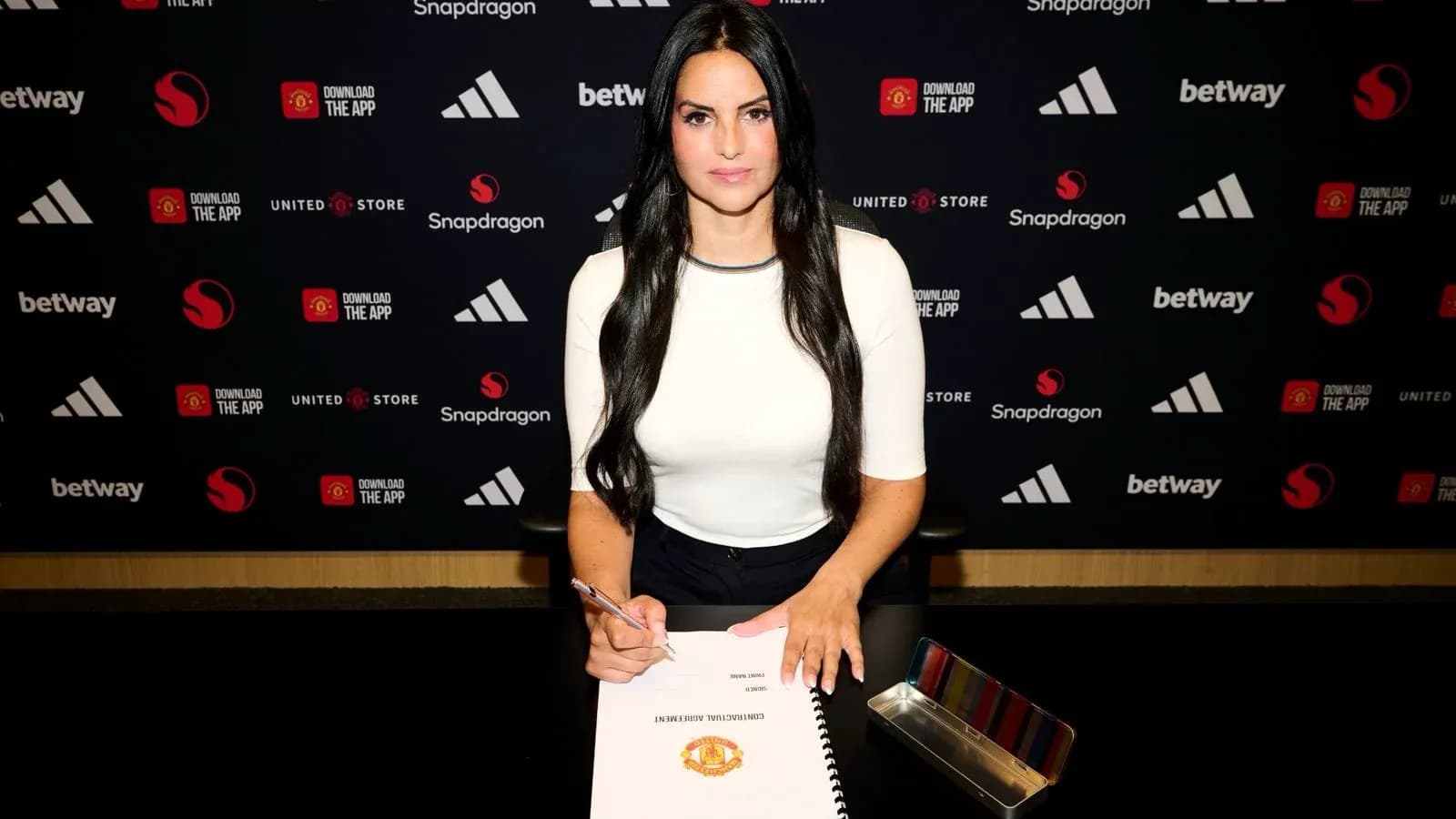
Manchester United Women have handed the reins to Eva Olid, a coach who arrives with a championship medal and a mandate that stretches far beyond the touchline.
The Spaniard replaces Marc Skinner, who left on Monday after five years in charge, his exit landing just a month before United open their WSL campaign against London City Lionesses on September 4. The timing is sharp. The direction of travel is even sharper.
From Hearts history-maker to United’s new architect
Olid walks into Carrington off the back of a landmark season in Scotland. She led Hearts to their first-ever Scottish Women’s Premier League title last term, edging Rangers by two points and signing off on a high after it was announced in April she would leave by mutual consent at the end of the campaign.
Her five-year spell in Edinburgh, which began in 2021, transformed Hearts from contenders into champions. Under her watch they also reached their first Scottish Cup final in 2024, losing to Rangers but proving they could live with the established powers when the stakes were highest.
That record – a league title, a major cup final, sustained progression – is exactly what has caught United’s eye. They see a coach who can build, not just buy.
“The opportunity to become head coach of Manchester United Women is a dream come true,” Olid said. “The club has outstanding infrastructure and everything we need to achieve our ambitions. We have an excellent training facility, an academy that is already producing players capable of performing in a competitive first team and an exceptional group of support staff.”
Those words matter at a club that has just redrawn its roadmap.
A change of era under Ratcliffe and INEOS
When Sir Jim Ratcliffe and INEOS arrived, the message around the women’s side was bold and simple: win the WSL by 2028. The club spent, pushed, and tried to fast-track its way into a title race dominated by Chelsea, Arsenal and Manchester City.
Now the tone has shifted.
United have decided to pivot away from big transfer outlays and heavy wages towards something more patient, and more uncertain: the academy. The new strategy is to develop from within, build a squad rooted in youth, and trust that a stronger production line will deliver trophies in the long run.
Behind that change lies a hard calculation. The club believes the escalating cost of chasing the WSL title on the open market is becoming unsustainable. They feel the return on investment in star signings has not matched the outlay, and they are wary of being dragged into an arms race they cannot, or will not, keep funding at the same level.
So they are turning to something they know well on the men’s side – homegrown talent – and trying to transpose it onto a women’s game that has yet to prove the model works at the very top.
It is a gamble. Not in principle, but in timing.
Skinner’s legacy and the risk of stepping back to move forward
Skinner’s numbers tell their own story. Four finals in five years – three in the FA Cup and one in the League Cup. United’s first major trophy in the 2023/24 season. A debut campaign in Europe that ended in the quarter-finals of the Champions League. The only team to consistently trouble the WSL’s entrenched “big three”.
He turned United from hopefuls into a genuine force, even if the league title remained out of reach. Under him, the club learned to live in the pressure zone, to play in big games, to expect to be there when silverware was on the line.
Now the club is asking for something that football almost never grants: time.
Youth development does not move in straight lines. Breakthrough seasons are followed by dips. Prospects stall. Some shine, some fade. For a team that has tasted trophies and Champions League nights, accepting a slower climb will test everyone’s resolve – players, fans, and hierarchy alike.
This is where Olid comes in.
Why Olid fits United’s new vision
United see Olid as the ideal bridge between ambition and austerity. Her track record at Hearts shows she can nurture players, build a coherent structure, and still deliver when the pressure bites. She did not inherit a superclub in Scotland; she built one in her own image.
At United, she steps into an environment with superior facilities, a deeper academy, and a club determined to squeeze every drop of value from its own pathway. The expectation is clear: refine what is already there, elevate the youngsters, and keep the first team competitive while the next generation grows into its roles.
It is a delicate balance. Push too hard and development suffers. Lean too heavily on potential and the first team drifts away from the sharp end of the WSL. The margin for error shrinks when the financial tap is turned down.
But Olid has shown she can walk that tightrope. Hearts did not just win; they evolved year on year, culminating in a title and a cup final appearance. She leaves Scotland having proved she can complete a cycle. United now ask her to start a new one.
The question is not whether she can coach. That much is settled. The question is how long United will stay loyal to a project that, by design, may take years before it produces another trophy parade.