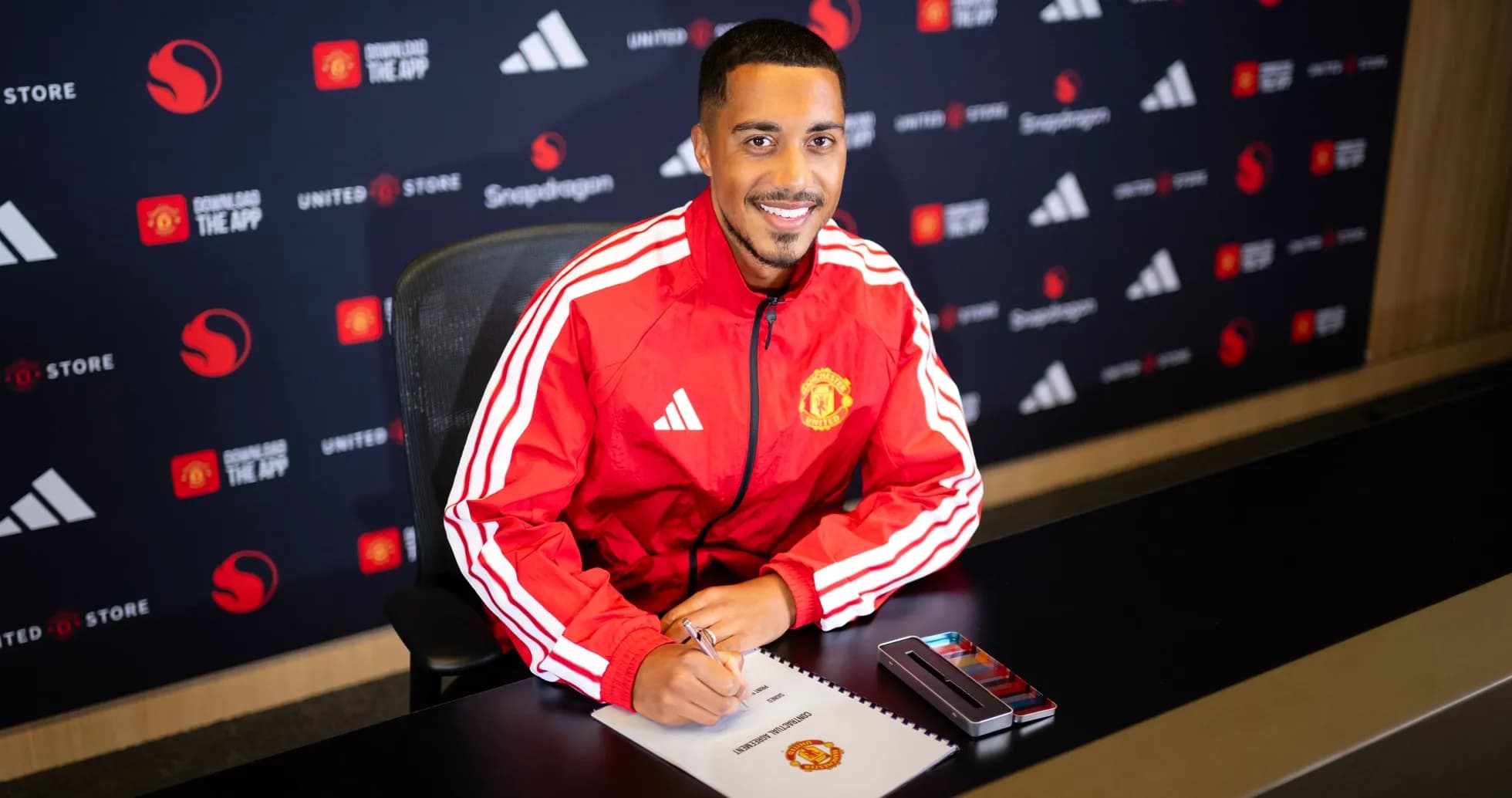
Manchester United’s Smart £35m Tielemans Transfer and Lammens' Impact
Manchester United’s summer has been full of expensive noise elsewhere, but Shay Given believes the smartest move of all might be the quietest: Youri Tielemans for £35 million.
While others have thrown nine-figure sums at midfield problems, United, in Given’s eyes, have found value.
Speaking to BOYLE Sports, Given didn’t dress it up. Compared to the £100m outlay on Sandro Tonali and the £75m splashed on Bruno Guimaraes, Tielemans at £35m looks, to him, like a steal.
He pointed to the context at Aston Villa. Tielemans arrived there on a free, only to be moved on because of financial constraints rather than footballing ones. “Aston Villa only had to sell him because of financial reasons, because they signed him on a free,” Given noted, underlining the frustration that will linger at Villa Park, especially with owners of such wealth. Rules are rules, though, and United have been the beneficiaries.
For Given, the equation is simple: proven quality at a fraction of the going rate. Tielemans has years of top-level experience for club and country, and that, he argues, is exactly what United need in the middle of the pitch. “To sign Tielemans for £35 million when Sandro Tonali was £100 million, well that’s actually a really good piece of business,” he said. The implication is clear: United have strengthened without getting dragged into another arms race.
Lammens: The Calm After Years of Turmoil in Goal
If Tielemans is the shrewd piece of business, Senne Lammens is the revelation.
Given, who knows the pressure of the position as well as anyone, went further with his praise of the Belgian goalkeeper. He called Lammens the most complete keeper United have had since David De Gea left, and suggested the club may finally have solved a problem that has lingered for years.
“I think Senne Lammens has got the lot,” he said. “He’s been a breath of fresh air for Manchester United.” That freshness, in Given’s view, only throws the recent past into sharper relief. Andre Onana and Altay Bayındır, he argued, simply were not at the required level.
What surprises Given is how long it took for Lammens to be trusted fully. He expected Ruben Amorim to throw him straight in. The comparison he drew was telling: Manchester City once put Gianluigi Donnarumma straight into the side. United, with Lammens, hesitated.
The Manchester derby loomed as a possible debut. Amorim held back, wary of the size of the stage for a young, relatively inexperienced keeper. Given would have done the opposite. He sees a goalkeeper whose calmness belies his age, a player who steps into chaos and looks untouched by it. “Nothing seems to faze him,” he said.
From World Cup Heartbreak to Old Trafford Assurance
Lammens’ story is not a smooth rise. The World Cup left a scar.
Called from the bench, he committed a costly fumble that sent his country out of the tournament. One mistake, one moment, and the narrative turned. For many keepers, that kind of error can linger far beyond the final whistle.
Given, though, offered a keeper’s perspective. Coming on cold is brutal. An outfield substitute can ease in with a few simple passes, a couple of touches to feel the game. A goalkeeper does not get that luxury. Lammens’ first real involvement was a shot he would normally handle without a second thought. “He would save 99 times out of a 100 and hold on to it,” Given said.
On that day, he didn’t. The ball slipped, the consequence was brutal, and a nation went home. Given acknowledged the scale of the mistake and the impact: “There will be mental scars from that,” he admitted.
Yet he also sees that moment as a test, not a verdict. Lammens has returned to Manchester United with time and space to process what happened, to rebuild his rhythm away from the suffocating glare of a tournament knockout match. For a 24-year-old, how he responds could define the next decade of his career.
The Keeper Who Changes the Mood
United fans have spent years watching uncertainty seep from their goalkeeper into the back line. One slip, one misjudged cross, and the whole defence tightens. Given believes that era is over.
He talked about something that doesn’t show up on a stats sheet: the feeling a goalkeeper gives his defenders. With Lammens behind them, he argued, those in front finally trust what is happening at their backs. That trust changes everything — how high they hold the line, how aggressively they press, how they react under pressure.
“I don’t think United have any problems when it comes to his position now in goal and they’ve got it wrong so many times in the past,” Given said. It is a stark verdict on previous decisions, but also a clear endorsement of the current one.
He painted Lammens as the sort of keeper who walks out and instantly settles the dressing room. Players believe he will be a seven or eight out of 10 as a minimum. They expect saves, not hope for them. That reliability, Given suggested, is the foundation of any serious side.
Between the bargain of Tielemans and the emergence of Lammens, United, in Given’s eyes, have finally started to buy not just players, but certainty. The question now is whether that new spine can carry them where the club expects to be.