Maradona’s Final Days Revealed in Emotional Court Testimony
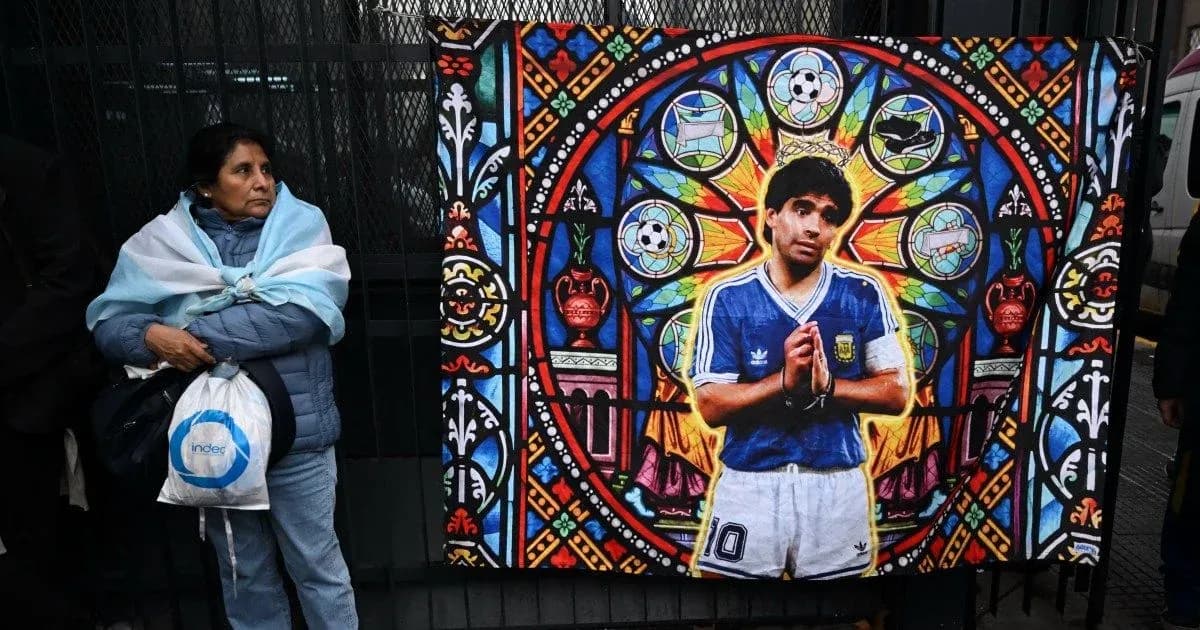
Diego Maradona spent his last days bedridden, swollen, and seemingly resigned to the end, according to stark and emotional testimony from his former masseur at the trial examining the circumstances of the Argentinian icon’s death.
Nicolas Taffarel, who worked closely with the 1986 World Cup winner, told the court on Thursday that Maradona had stopped engaging with even the most basic routines of daily life.
“He wouldn’t get out of bed, he didn’t want to eat, he didn’t want to wash, he didn’t want to look after his personal hygiene,” Taffarel said, describing a man who had retreated from the world.
The picture he painted was not of El Diego the showman, but of a 60-year-old legend trapped in a failing body, surrounded by a medical team he no longer seemed able to challenge.
A Warning He Felt Was Ignored
Taffarel testified that he had raised the alarm with Maradona’s doctors, urging them to be more present and to visit “every day”. An audio message played in court captured his concern at the time.
“I reported the issues I observed with him, but I saw no concrete action or swift resolution,” he told the judges, his voice breaking as he recalled those final days.
“He was bloated, his legs were swollen,” he said. The symptoms, he felt, demanded urgent attention.
The response he got from the medical staff still haunts him. “The doctors told me to calm down, that these symptoms would pass. When you’re anxious, you put your trust in them; you tell yourself it will pass, that everything will sort itself out. But it didn’t pass.”
Those last words hung heavily in the courtroom, underlining the central question of the trial: did those entrusted with Maradona’s care do enough?
“Nothing, That’s It”
The pressure finally told on November 24, 2020, the day before Maradona died.
Taffarel recounted how he tried one more time to rouse the man who once carried a nation on his shoulders. He urged him to sit up, to share a mate, the herbal drink woven into everyday Argentinian life.
The reply he says he received was chilling in its simplicity.
“He said to me: ‘I don’t want anything, Taffita, that’s it.’ I asked him: ‘What do you mean, that’s it?’ and he replied: ‘Nothing, that’s it’.”
In Spanish, “ya está” can be heard two ways: “it’s all right” or “it’s over”. In hindsight, the ambiguity feels brutal. For Taffarel, it sounded less like reassurance and more like a farewell.
The next day, Maradona died alone in his bed of heart failure and acute pulmonary oedema, a build-up of fluid in the lungs, just two weeks after undergoing surgery.
A Trial with Heavy Stakes
Seven healthcare professionals are on trial in Argentina, accused of potential negligence that may have contributed to Maradona’s death. The proceedings, which began in mid-April, have turned the country’s mourning into a forensic examination of responsibility.
The defendants face up to 25 years in prison if found guilty. They reject any suggestion of wrongdoing.
Most of them have leaned on the limits of their roles as part of their defence, stressing their specialisms and arguing that they had no direct link to the clinical causes of death. The courtroom has become a battleground of expertise, protocols, and fractured communication.
As the testimony piles up, so does the weight of expectation. This is not just a medical case; it is a reckoning over how Argentina’s greatest footballer spent his final hours, and who, if anyone, failed him when he needed them most.
The trial is expected to run beyond this month, with every new witness adding another layer to a story that refuses to fade, much like Maradona’s shadow over the game he once ruled.