Marc Skinner's Manchester United Exit: A Shift in Priorities
Marc Skinner’s Manchester United exit is more than a managerial change. It is a statement of priorities.
A month before the new WSL season, United have lost the coach who delivered the club’s first major women’s trophy, and the reasons cut straight to the top of the new regime at Old Trafford. For talkSPORT’s women’s football correspondent Angelina Kelly, the message from INEOS and Sir Jim Ratcliffe is brutally clear: the women’s team is nowhere near the centre of the project.
Overachievement, then exasperation
Skinner’s reign has always been a contradiction. Turbulent, yes. But undeniably successful within its limits.
“He has actually overachieved,” Kelly told talkSPORT’s Darragh MacAnthony and Alex Crook, pointing out the gulf in resources between United and the division’s heavy spenders. Arsenal, Chelsea, Manchester City – all operate with far greater financial muscle. Yet Skinner still delivered history.
He brought Manchester United Women their first ever piece of silverware, lifting the FA Cup. He secured finishes of fourth, third, fifth, second and fourth in the WSL. He took them into the Champions League for the first time. On paper, that is a body of work many clubs would cling to.
But the mood around him never truly settled.
Fans bristled at his decisions. Critics circled around his tactical calls. United reached four domestic cup finals under his watch, winning only one. The other three ended in aggregate defeats to Chelsea by a combined 6-0. Against the very best, the gap felt stark.
So when he walked away, it was not the shock of a sacking out of nowhere. It was something more calculated.
Kelly likened it to the Eddie Howe situation at Newcastle before the Saudi takeover. “You’re looking at a manager who, within his world, is very well respected,” she said, highlighting how ex-professionals speak highly of Skinner and how he has always been “very polite, very respectful”.
But respect only goes so far when you no longer believe in the project.
Last season exposed United’s thin squad and lack of star power. Those issues have not been fixed. “A lot of players have been sold. The squad depth is less,” Kelly noted. Skinner could see what was coming. “He’s looking at it and thinking, I’m not going to be able to do anything with this team… I need to walk away from this.”
The powers that be, in his eyes, simply were not backing him.
Ratcliffe’s blind spot
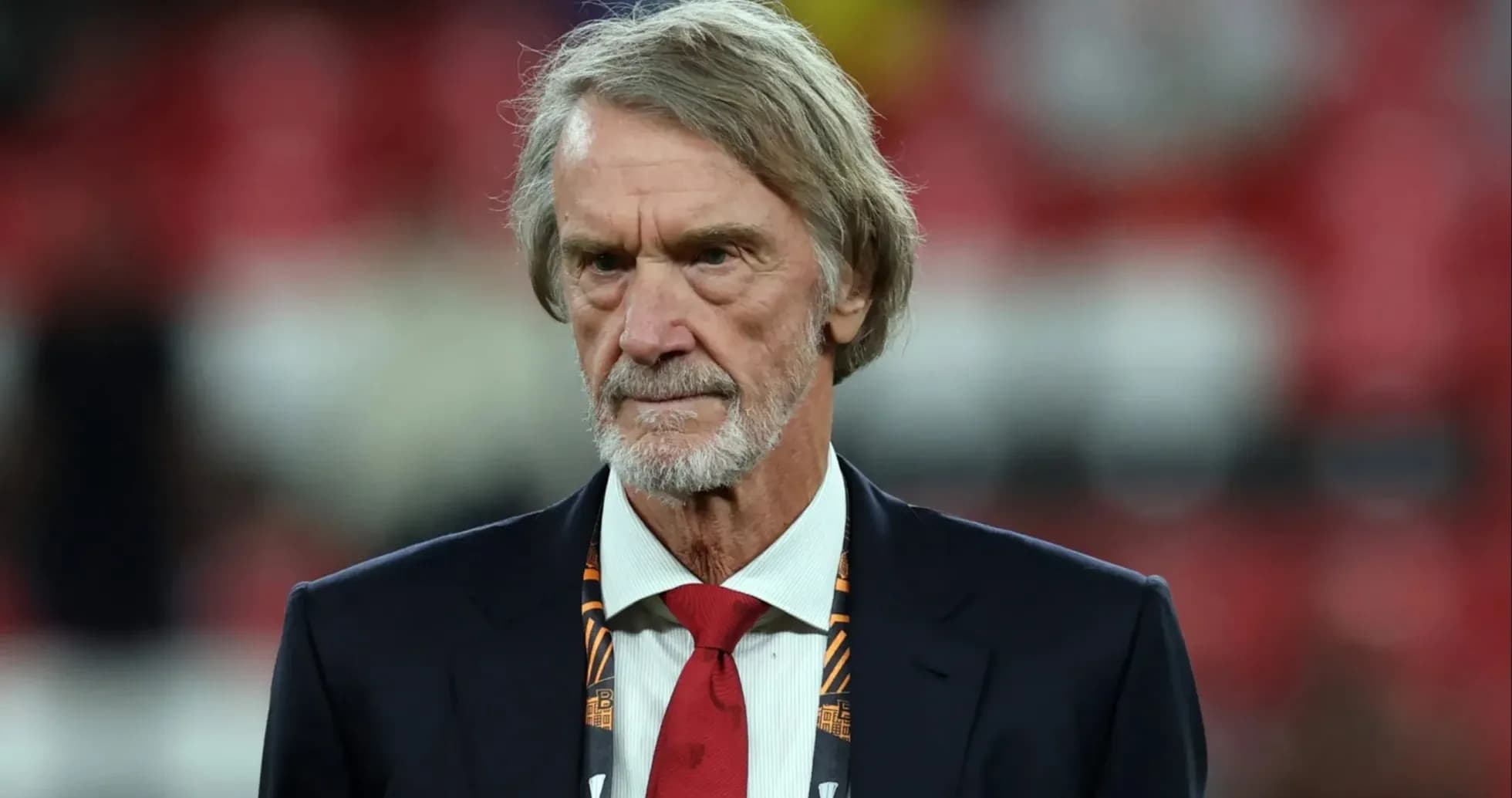
There was a moment that crystallised the unease around INEOS’ stewardship of the women’s side. During a visit to the training ground, Jim Ratcliffe asked then-captain Katie Zelem what her role was at the club. The owner of one of the biggest clubs in the world did not know the captain of his women’s team.
Peterborough United chairman Darragh MacAnthony tried to frame the reality. “The team that's bringing in the mass amount of revenue into Manchester United worldwide… is the men's team,” he told talkSPORT. It is a blunt commercial truth.
Kelly did not dispute that. But she did not let Ratcliffe off the hook either.
“I just think it doesn't help matters when you don't even know who your women's team captain is. You don't even know her name. It's going to come across as a bit disrespectful.”
Other big clubs are choosing a different route. Arsenal, Chelsea, Brighton – and owners like Tony Bloom – are investing heavily in their women’s sides without demanding instant profit. Brighton are even building a stadium specifically for their women’s team.
“Tony Bloom, a good owner, a smart businessman?” Kelly asked. “Tony Bloom is pumping money into Brighton women.”
Manchester United Women, by contrast, only just about turned a profit last season, and even that was close to breaking even. Yet the spending brakes are on.
The contrast is jarring. United once looked like a club ready to push on in the women’s game. The summer before Ratcliffe’s arrival, they lost Alessia Russo and Ona Batlle on free transfers, but responded by signing Brazilian forward Geyse for a club-record fee and adding Melvine Malard, Hinata Miyazawa and Irene Guerrero.
A year later, the rhetoric and the reality have shifted.
A market moving without them
While United stall, the rest of the game is accelerating.
This summer, Lyon defender Alice Sombath joined Tottenham. London City Lionesses, who finished sixth last season in the Championship, pulled off a headline-grabbing move by signing two-time Ballon d’Or winner Alexia Putellas.
United, meanwhile, sold Malard to Chelsea for £850,000 and have pivoted to a new strategy: build around homegrown youth.
On the surface, it sounds aligned with the club’s historic identity. In practice, Kelly believes it is being driven by cost-cutting.
“I think the issue is that sources are claiming that the club feel that spending is not sustainable in the women's academy,” she said. “So the focus is on sustainability with homegrown players… they want to go down this route.”
When asked if “homegrown” is just code for “doing it on the cheap”, Kelly did not hold back. If you want to attract and develop young talent, she argued, you need something tangible to show them.
“At the moment, they have absolutely nothing going into this new season.”
United still have a core. A “fantastic goalkeeper”. A captain in Maya Le Tissier, “a wonderful centre back”. Ella Toone, “the biggest star at Manchester United”. Jess Park, impressive since arriving from Manchester City.
“Minus that, they have that one spine of decent players,” Kelly said. “There is nothing else to show that they really care about this club and that they are building around those players to actually achieve something.”
While London City Lionesses are spending heavily to bring in a global icon like Putellas, United are talking about sustainability and youth pathways.
Smarter than everyone – or just not interested?
This is where the Ratcliffe project faces a blunt question.
“So the thing is either Sir Jim Ratcliffe is going down this sustainable route as far as we understand, and he believes he is smarter than the Arsenal owners, than Tony Bloom, than Michelle Kang, etc, etc,” Kelly said. “He genuinely believes he's onto something, or perhaps this is a situation where they realise that they don't want to put the money into it.”
In Ratcliffe’s mind, she suggested, the women’s side may simply not be “viable” at the moment. Something to cast to the side while the men’s rebuild takes centre stage.
It is a striking stance when you consider the scale of what is being discussed. Kelly estimated that around £10 million would transform United’s women’s team – “less than Mason Mount earns a year”.
“And I understand you can't just get rid of Mason Mount and take that money,” she added. “But what they're asking for isn't hundreds and hundreds of millions. It's nothing on the men's side.”
That relatively modest investment could put United Women back on a footing to compete with Arsenal and Chelsea, attract big names, and keep fans engaged in an increasingly star-driven landscape.
Young supporters often follow players as much as clubs. Alessia Russo’s move to Arsenal is a prime example. “There will be people that supported Man United Women when Alessia Russo was there. Now she's at Arsenal. People switch gears.”
Without ambition in the market, how do United expect to hold that audience?
A broken pathway and a blurred plan
The irony is that Manchester United like to talk about pathways and youth. Yet the women’s pathway has only existed at senior level since 2018. Before that, talented girls would reach the end of the road and be told, effectively, goodbye.
Ella Toone is one of the most vivid examples. She had to play her youth football at Blackburn and Manchester City because the route at Old Trafford simply did not exist.
Now the club is asking supporters to trust that a homegrown model will be slick enough to compete with the best-funded women’s teams in Europe.
“I just struggle to understand what the plan is at Manchester United,” Kelly admitted. She wants to see how this youth system will be “so seamless that it can compete with Arsenal, with Chelsea, with these other big clubs”.
Right now, she cannot see it.
“You still need to be bringing in big players,” she warned. “You still need to be putting on a little bit of a show.”
Instead, United head into a new season with a shrinking squad, a departed manager, a handful of standout players – and a strategy that looks suspiciously like austerity dressed up as philosophy.
To keep pace with the modern women’s game, Manchester United will have to decide what they really want this team to be: a flagship of a global club, or a cost centre quietly managed down while the rest of the league races ahead.