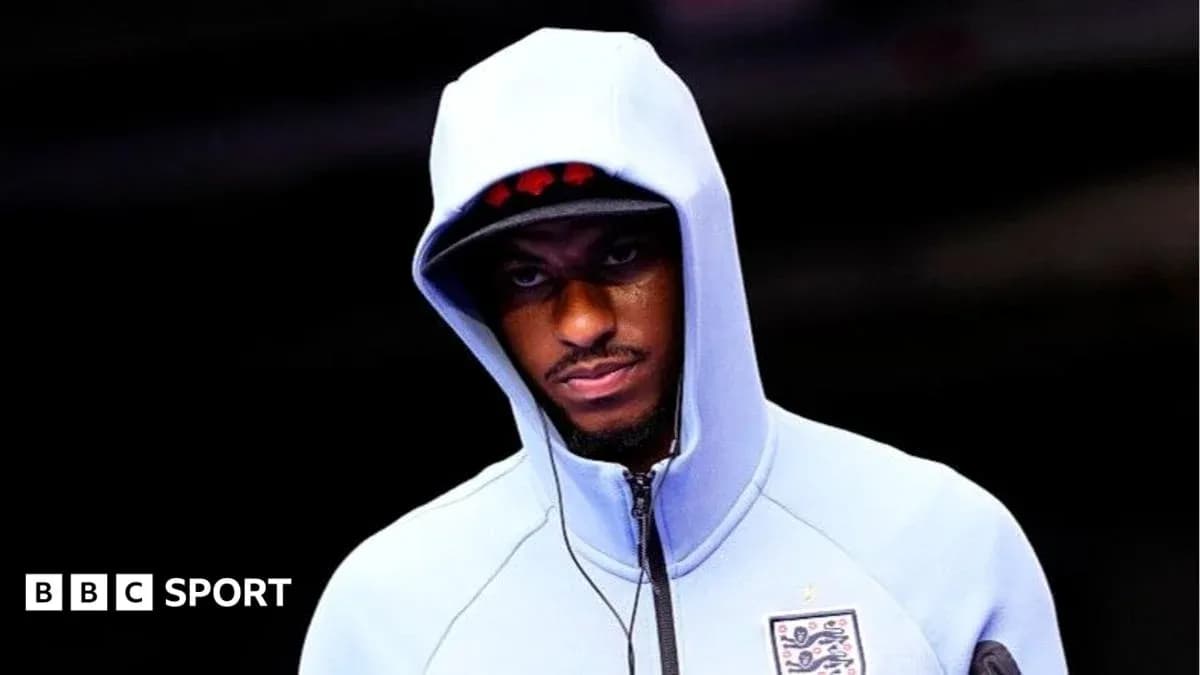
Marcus Rashford's Future at Manchester United: A Crossroads
Marcus Rashford stepped off the World Cup stage not with fireworks, but with a message.
“Keep believing in us. Our time will come,” he wrote after England’s wild 6-4 third‑place win over France in Miami. Then came the line that really mattered for the months ahead: time to “rest, reflect… and come back a better version of myself.”
That word – reflect – hangs over his future as much as his past.
Prime years, big questions
At 28, Rashford should be walking into the peak of his career. He has just lifted his first league title, La Liga with Barcelona. He sits on 77 England caps. He played in six of England’s eight games under Thomas Tuchel at a World Cup that delivered the country’s best finish since 1966.
On paper, this is a forward in his prime, decorated at club and international level, still climbing United’s all‑time scoring list – 138 goals, only 17 short of the top 10.
In reality, he goes into the summer wrestling with a simple, brutal question: is his future still at Manchester United?
Rashford is tied to United until 2028. He earns £325,000 a week, the club’s top salary at a time when minority owner Sir Jim Ratcliffe is trying to drag the wage bill back under control. United’s salaries remain their biggest cost by some distance, and Rashford sits right at the top of that pile.
Barcelona had the chance to make his loan permanent for £26m. The deadline in mid‑June came and went. No bid. No negotiation. Just silence.
Another clause allowed any club – apart from Liverpool and Manchester City – to buy him for £40m until early July. That expired as well, untouched. Those close to Rashford always felt it was unrealistic that someone would pay more than the cut‑price Barcelona option. The market agreed.
So he heads into a three‑week break with England’s World Cup over, his contract secure, his salary heavy, and his options strangely thin.
From ‘bomb squad’ to old ally
Unless plans change, Rashford will report back to United just as they head for a six‑day training camp in the Republic of Ireland, built around an historic meeting with Leeds at Croke Park on 12 August.
The mood music is very different from a year ago.
Ruben Amorim arrived from Sporting Lisbon and clashed with Rashford within weeks. The relationship broke quickly. Amorim exiled him, the rupture prompting a loan to Aston Villa. When pre‑season rolled around last summer, Rashford was placed in Amorim’s infamous ‘bomb squad’ with Alejandro Garnacho, Antony, Tyrell Malacia and Jadon Sancho.
The other four have gone. Rashford remains.
Amorim does not. His replacement, Michael Carrick, is a very different presence: former team‑mate, former coach, briefly his manager in the interim after Ole Gunnar Solskjaer’s sacking in 2021. The two are understood to get on well.
Carrick’s only public line on Rashford towards the end of last season was conciliatory, fitting his understated personality. He has not yet been pressed on how he sees Rashford fitting back into the squad, but the absence of hostility already marks a significant shift.
Rashford, for his part, is said to be relaxed about returning to Carrick’s dressing room. The war with the manager has gone. The question now is whether the club – and the market – give him any real alternative.
United dig in on discipline
United’s stance is clear. They will not renegotiate with Barcelona on reduced terms. They will not entertain a second loan to the Camp Nou.
That position comes in a summer when the club are desperate to prove they will no longer be bounced into panic fees. They watched Elliot Anderson head to Manchester City for £116m from Nottingham Forest and never seriously considered matching it. They saw Mateus Fernandes leave West Ham for Tottenham at £85m and stood aside again.
Inside Old Trafford, the message is that the numbers matter now. Director Michael Sansoni and his data team have taken a far more prominent role in recruitment. United believe they can find better value elsewhere, both in buying and selling.
The problem is obvious: to buy smart, they still need others to buy from them. To reshape the squad, they need a market for players they no longer see as central.
In Rashford’s case, that market is painfully narrow. Only a handful of clubs worldwide can touch his current wage. Of those, only some would want him. And even then, he has to want them back.
A shrinking market, a narrowing path
Barcelona’s option has gone. The Catalan club have already moved for Anthony Gordon and are closing in on Karim Adeyemi from Borussia Dortmund. Their need for another high‑profile wide forward on major wages looks minimal.
Elsewhere, there is interest in Rashford as a name, a brand, a proven goalscorer. But not enough to trigger clauses, not enough to force United’s hand, not enough to break their new financial discipline.
Some Premier League clubs have been ruled out by Rashford himself. BBC Sport has been told there are domestic sides he would not consider. He also knows any move that jeopardises his England place is a non‑starter. His recent post made that clear: international football still matters deeply.
So as the transfer window ticks towards its 1 September close, the likeliest scenario by some distance is the one that would have seemed improbable a year ago: Marcus Rashford staying at Manchester United.
After that, the possibilities get vague. Any Spanish club. Any Turkish club. Any German club. The lack of specifics says everything about the current market for a player who, statistically, should be one of Europe’s most attractive forwards.
Time to reconcile?
Plenty believe the story at Old Trafford should already be over. Former captain Gary Neville is among those who feel Rashford’s time is up, that a clean break would suit both sides.
Yet football does not always follow the tidy narrative. Contracts, wages and a flat market have a habit of dragging players back towards the place they know best.
In Rashford’s case, a reconciliation may not just be possible. It may be necessary.
Not everyone would complain. Sam Smith, the Wrexham forward and close friend of Rashford, spoke on the United We Stand podcast after scoring the winner in a pre‑season game against Carrick’s side in Helsinki.
“A fit and focused Marcus Rashford has the ability to be one of the best players,” he said. “He has everything.
“He has had a difficult time at United and getting away from it all was a good thing.
“I don't know what is going to happen but as his friend, I hope he comes back and proves how good a player he was, how good he can be and starts scoring goals again.”
That is the challenge now. Strip away the noise, the clauses, the failed options and the financial posturing, and the picture is stark.
Rashford enters his prime years standing at a crossroads that is, in truth, more like a roundabout. Every road he takes seems to loop back towards Old Trafford.
If he does walk through those doors again, the question will not be whether United still believe in him.
It will be whether he can become that “better version” of himself in the only shirt that has ever truly defined him.