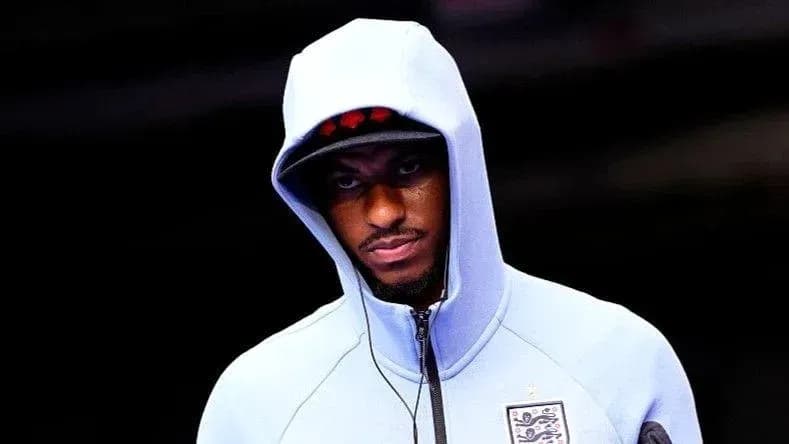
Marcus Rashford's Future at Manchester United: A Crossroads
Marcus Rashford left Miami with a medal, a message and a mountain of decisions to make.
England’s 6-4 third-place play-off win over France was chaotic, wild and oddly uplifting. Rashford’s World Cup ended not with a flourish on the pitch but with a carefully crafted post on social media, the tone measured rather than euphoric.
“Disappointments are guaranteed in football,” he wrote, before turning the lens forward. “Keep believing in us. Our time will come.”
Then came the line that really mattered for what comes next: “Now it's time for me to rest, reflect, spend some quality time with family and friends, and come back a better version of myself.”
That word – reflect – hangs over his summer like a headline.
A career at the crossroads
At 28, Rashford is stepping into what should be the most decisive stretch of his career. He has just lifted his first league title, La Liga with Barcelona, and owns 77 England caps. He featured in six of Thomas Tuchel’s eight World Cup games as England produced their best tournament finish since 1966.
On paper, this is a player in his prime, operating at the top level for club and country.
In reality, much of that reflection with his family – several of whom are heavily involved in steering his career – will centre on a blunt question: does his future still lie at Manchester United?
The contract says yes. The circumstances say: not so simple.
Rashford is tied to United until 2028 and earns £325,000 a week, the highest salary at a club where minority owner Sir Jim Ratcliffe is determined to clamp down on wage costs, the most significant drain on the budget.
Barcelona, who took him on loan last season, had an option to make the move permanent for £26m. No-one at the Camp Nou reached for that trigger. The deadline passed in mid-June, as expected, without a flicker.
Another clause opened the door to the rest of Europe – Liverpool and Manchester City excluded – for £40m. That expired earlier in July. Again, no takers. Again, no surprise.
People close to Rashford never saw that clause as realistic bait. Why would a club pay more than Barcelona had already negotiated as a cut-price fee?
So the World Cup is over, the clauses have lapsed, and Rashford is now entitled to a three-week break. Unless something changes quickly, he will walk back through the doors at Carrington just as United fly out for a six-day training camp in the Republic of Ireland, built around a historic meeting with Leeds at Croke Park on 12 August.
The noise around him suggests he is calm about that prospect. And this time, the manager waiting for him is not an enemy.
From the bomb squad to a possible lifeline
Ruben Amorim never really took to Rashford. Within weeks of arriving from Sporting Lisbon, the relationship had soured. Amorim eventually exiled the forward, a decision that pushed Rashford first towards a loan spell at Aston Villa and then into what became known as the “bomb squad” when pre-season began last summer.
Alejandro Garnacho, Antony, Tyrell Malacia, Jadon Sancho and Rashford – five players pushed to the fringes. Four of them have gone. Only Rashford remains on the books.
Amorim has since gone as well. His replacement is someone who knows Rashford as a kid breaking through, as a team-mate and as a player under his brief caretaker watch: Michael Carrick.
The dynamic is entirely different. Carrick is not a shouter, not a public executioner of reputations. His only comment on Rashford towards the end of last season was soft-edged, conciliatory, very much in line with his personality. The new manager has not yet been forced to spell out his stance on bringing Rashford back into the core group, but the door is hardly bolted.
Inside the club, there is no appetite to reopen talks with Barcelona on a cheaper permanent deal or to entertain another loan. The Catalan side, for their part, have already moved on in the market, signing England winger Anthony Gordon and closing in on Germany forward Karim Adeyemi from Borussia Dortmund.
The sense is clear: if Rashford is to move, it will not be via a backdoor extension of last season’s arrangement. United want clarity, control and, crucially, value.
A new United, a colder market
This is a different Manchester United to the one that routinely overpaid out of panic.
The club’s hierarchy is leaning heavily on data through director Michael Sansoni and his specialist team. They have already walked away from deals that, in another era, might have been waved through. Elliot Anderson went to Manchester City for £116m from Nottingham Forest; United never seriously considered matching that. Mateus Fernandes joined Tottenham from West Ham for £85m; again, United stayed away.
That new-found discipline comes with a cost. To buy, United need sellers who are realistic. To sell, they need buyers who can actually afford their players.
Rashford sits right at the centre of that tension. There are only a handful of clubs in world football who can even contemplate matching his current salary. Those who can must then convince the player himself.
His recent message suggests he will not recklessly gamble with his England place. He has also privately ruled out certain Premier League destinations, according to those briefed on the situation.
Strip away the noise and one conclusion stands out. As the transfer window ticks towards its close on 1 September, the most likely outcome, by a considerable distance, is that Marcus Rashford remains a Manchester United player.
After that, the possibilities become deliberately vague: a Spanish club, a Turkish club, a German club. Nothing concrete. Nothing close. Remarkable, really, for the 15th-highest scorer in United’s history, a forward with 138 goals, only 17 short of breaking into the club’s all-time top 10.
A divided fanbase, an unresolved story
Not everyone at Old Trafford wants a reunion.
Former captain Gary Neville has been clear in his belief that Rashford’s United story should be over, that both sides need a clean break. Others inside and outside the club share that view. They see a player worn down by expectation, by scrutiny, by the weight of being the local hero who never quite escaped the storm.
Yet the game refuses to close the book.
“A fit and focused Marcus Rashford has the ability to be one of the best players,” said his friend Sam Smith, the Wrexham forward who scored the winner in their pre-season victory over Carrick’s side in Helsinki on Saturday, speaking to the United We Stand podcast.
“He has everything. He has had a difficult time at United and getting away from it all was a good thing. I don't know what is going to happen but as his friend, I hope he comes back and proves how good a player he was, how good he can be and starts scoring goals again.”
Those words capture the essence of the dilemma. Rashford has already shown he can be devastating, already carried United for long stretches of seasons. He has also looked lost, isolated, a symbol of the club’s drift.
Now he rests. Now he reflects.
When he walks back into Manchester United’s orbit next month, the question will not just be whether the club still wants him. It will be whether Marcus Rashford can – or even wants to – become that “better version” of himself in the shirt that first made him famous.