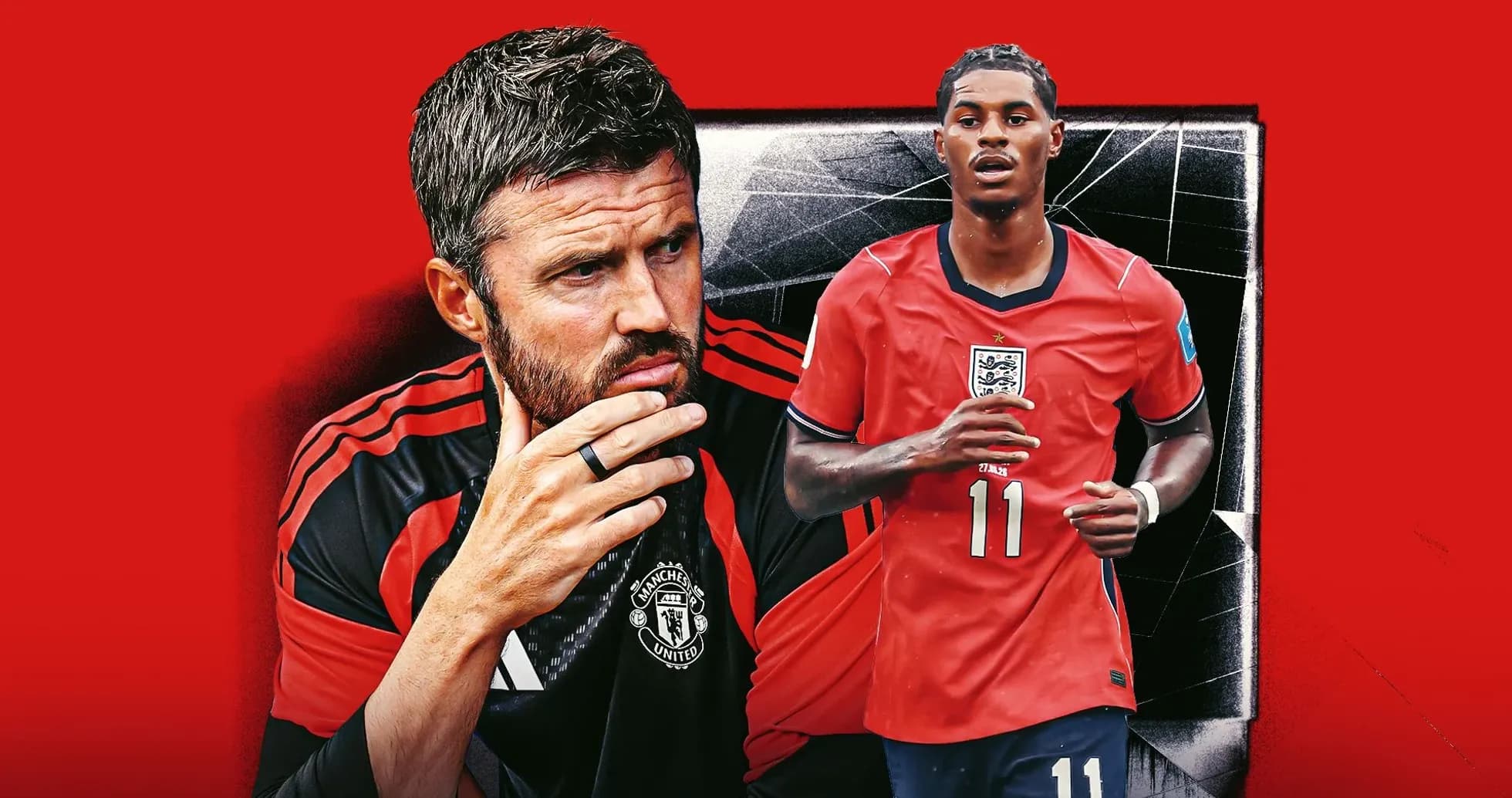
Marcus Rashford's World Cup Journey and Future at Manchester United
Marcus Rashford went to the 2026 World Cup needing a shop window. He came back with the blinds half‑closed.
England’s campaign under Thomas Tuchel offered him a fresh stage, a clean slate on the left flank. Instead, it underlined why both he and Manchester United now find themselves trapped in one of the most awkward stand-offs of the summer.
Gordon takes the stage, Rashford fades
The battle with Anthony Gordon for England’s left-wing role was supposed to sharpen Rashford. On paper, it suited him. Gordon started slowly in North America; Rashford struck in the opening win over Croatia with a typically composed finish and looked well placed to seize the shirt.
He didn’t. Those flat, functional wins over Panama and DR Congo did him no favours. As England laboured, Tuchel turned to his new Barcelona signing. Gordon came in and never looked back, driving England’s attack through the knockouts while Rashford was reduced to a supporting role.
Rashford left the World Cup with one goal and one assist, the latter in a third-place play-off against a French defence that barely turned up. This was not the tournament that was supposed to relaunch him. It was the one that narrowed his options.
Barcelona door closes, clauses expire
The backdrop to his World Cup was brutal in its clarity. Barcelona, his loan club and long‑mooted escape route, had already moved on. Gordon had arrived from Newcastle for £69m, a decisive statement that the Catalans’ future on the left would not be Rashford-shaped.
The buy option in Barca’s agreement with United quietly died on June 15, four days into the tournament. United never entertained renegotiating the figure and ruled out another loan to Camp Nou. One escape hatch slammed shut.
A month later, the £40m exit clause in Rashford’s United contract also expired, a day after England’s semi-final defeat to Argentina. Any future fee now has to be thrashed out in the old-fashioned way. Even that isn’t straightforward. United’s internal valuation is understood to sit around the £26m mark, but the market knows they are desperate.
Meanwhile, the player waited. He turned down approaches from Fenerbahce and Galatasaray, holding out for a leading Champions League club. At the same time, another potential suitor vanished from view as Karim Adeyemi completed his move to Borussia Dortmund, further shrinking the pool of elite options.
United’s own plans fall apart
It is not just Rashford who has watched the board of possibilities shrink. United themselves had been eyeing West Ham winger Crysencio Summerville, only to see the Netherlands international head towards Al-Hilal and Saudi money in a deal worth around £60m.
United’s summer has been cautious, almost restrained. Player sales have not generated a major windfall, and there is little appetite – or ability – to throw big money at wide players. The squad remains thin on the left, a problem that grows more obvious with every pre-season session.
Selling Rashford within the Premier League would, on paper, solve several issues at once. Tottenham were prepared to trigger that now-lapsed £40m clause. Yet United refused. According to The i Paper, the club hierarchy will not sanction a sale to a domestic rival, wary of the optics of an academy graduate rediscovering his scoring touch somewhere else in England. Inside Old Trafford, that scenario is described as a potential “PR disaster”.
Arsenal and Xabi Alonso’s Chelsea have monitored the situation, but their interest has cooled. Chelsea have already thrown £117m at Morgan Rogers, and there is no sense either London club will make a serious move unless the numbers collapse in their favour.
The wage wall
Everything keeps circling back to one figure: £325,000 per week.
Rashford is among the top earners at Old Trafford, and that salary is suffocating the market. No realistic suitor is willing to match it, yet he has reportedly turned down even higher offers from less glamorous clubs. If money alone dictated his choice, he would already be gone.
For Sir Jim Ratcliffe and INEOS, that wage is a red flag. Cost-cutting is a central plank of their plan, and Rashford’s deal is a glaring line on the balance sheet. The decision to push him out on loan in January 2025, backed by then-head coach Ruben Amorim and the board, reflected that reality as much as any footballing call.
The arithmetic is stark. According to The Athletic, the final two years of his contract will cost around £39m before bonuses. That is a heavy commitment for a player who is no longer a guaranteed starter and will soon turn 29.
Yet the market has answered back: if United want that salary off the books, they will have to compromise. So far, they have not.
Carrick’s olive branch
Amid the financial tension, a different tone has emerged from the dugout. Michael Carrick is understood to be open to bringing Rashford back into the fold. After a post-World Cup break, the forward is expected to rejoin the squad in Dublin for the remainder of pre-season.
Despite being dumped into Amorim’s “bomb squad” before his loan, Rashford is said to hold no grudge against the club. The Champions League’s return to Old Trafford adds another layer. Carrick needs depth, especially out wide.
Transfer specialist Fabrizio Romano recently outlined the mood music from both sides. Rashford, he said, is “really looking forward” to working with Carrick; the feeling is mutual. The idea is simple: give each other one more chance, then decide whether to continue together or part ways later in the window.
Carrick himself, speaking back in April, kept the door deliberately ajar: “There’s decisions to be made in time on certain things, and obviously Marcus is in that situation. But at this point in time, nothing’s been decided. From my perspective, whoever’s here, I want to work with, make the best out of and help them improve.”
That is not a promise. It is an invitation.
Can he really go back?
For Rashford to stay, something has to give. A wage cut has been floated as the logical solution, yet those close to the situation consider it unlikely. The more realistic scenario, according to The i Paper, is that United simply keep him because they cannot replace him and cannot move him on. Missing out on Summerville only strengthens that argument.
Then there is the question nobody at Old Trafford can ignore: should you ever go back?
His relationship with sections of the fanbase had curdled long before he left on loan. Criticism of his attitude and application became routine, sometimes justified, sometimes wildly overstated as United floundered under Amorim. Rashford became a lightning rod, the easy symbol of a wider malaise.
If he returns, the margin for error will be thin. He will need visible fight, sharp early form, and a willingness to run through games that are still tight and tense. One languid performance, one half-hearted press, and the mood could turn poisonous. So much will hinge on how United start the season as a whole. A winning team forgives; a struggling one looks for scapegoats.
The loan trap
United’s dilemma is of their own making. They want to sell but have priced the market out. They want the wages off the books but are reluctant to subsidise them. They want to avoid being embarrassed in the league but also want a meaningful fee. Every demand blocks the next.
In that context, another loan begins to look like the least bad option. Replicating the Barcelona model – a club taking on his full salary, with an option to buy – would be ideal for United. It would also be optimistic.
A more realistic structure might see a 40/60 wage split, with the loan club negotiating a pay cut with Rashford to make the numbers work, just as Barca did. Even that requires a buyer willing to play ball with a club that has made its desperation to offload him very public.
Time, though, is on the buyers’ side, not United’s. As the window ticks towards its final weeks, any serious suitor will know the pressure at Old Trafford is rising. If United spend on a new winger, the leverage shifts even further away from them. Rashford, for his part, can continue to be selective, knowing that late moves often bring better terms for players.
Right now, his future could still bend in several directions: reintegrated under Carrick, loaned out again, or sold in a cut-price deal that once seemed unthinkable. The only certainty is that this saga will not end quietly.
For club and player, the next move has to be decisive. Is this the beginning of a redemption arc at Old Trafford, or the long goodbye finally reaching its endgame?