Martin O’Neill to Stay at Celtic for Another Year
Celtic are set to place their future back in the hands of a familiar figure. Martin O’Neill, the manager who once reshaped the club at the turn of the century, has agreed a one-year contract to remain in charge in Glasgow, with an option for a second season.
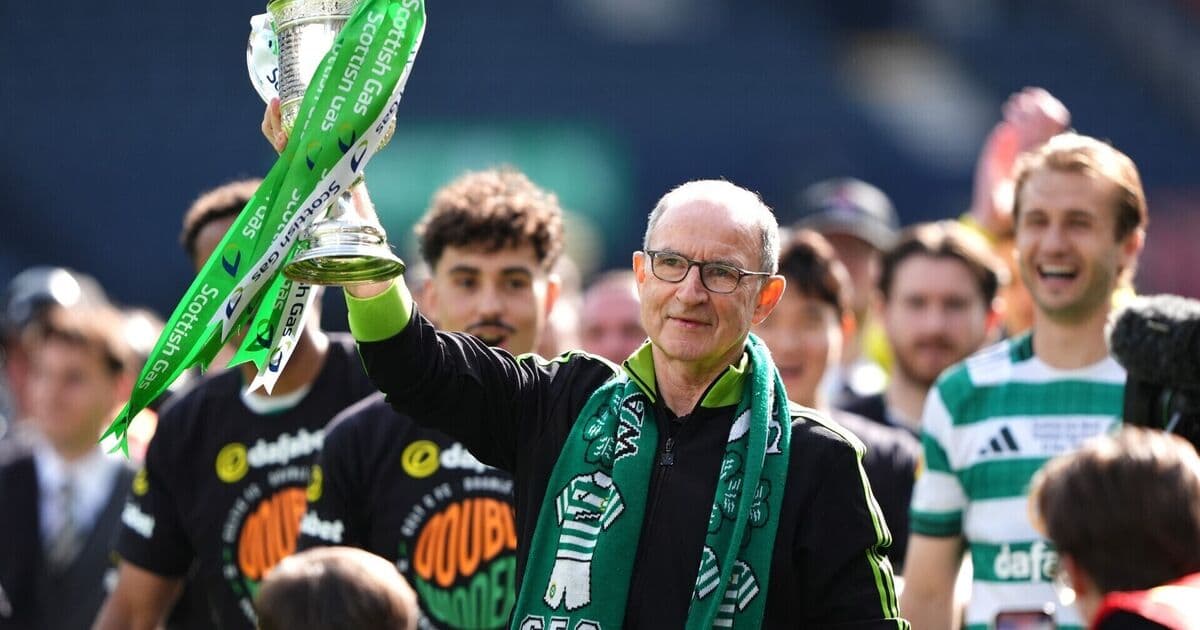
At 74, O’Neill has just delivered a domestic double in the second of two interim spells this campaign, steadying a club that had drifted badly after Brendan Rodgers’ departure last October and the brief, ill-fated Wilfried Nancy experiment. He walked back into the dugout, restored order, and kept the Premiership title where the support believes it belongs.
The Scottish Cup final win over Dunfermline felt like a natural full stop. O’Neill asked for time to think, to weigh whether he wanted the grind of the job on a permanent basis again. The answer, inevitably, was yes. The pull of Celtic, and of one more serious crack at it, proved too strong.
Keane talk, Keane backlash
It might easily have gone another way. Robbie Keane had moved into pole position in the minds of some within the Celtic hierarchy and even held talks with Dermot Desmond, the club’s principal shareholder, earlier in the week. His name carried weight: a former Celtic striker, a marquee figure, a potential long-term project.
Then the mood turned.
Sections of the Celtic support reacted furiously to the prospect, angered by Keane’s managerial spell in Israel with Maccabi Tel Aviv. His subsequent move to Ferencvaros in Hungary, and resignation at the end of May, did little to soften opinion. For many fans, the association with Israeli football in the current climate was simply a line they did not want their club to cross.
That resistance mattered. It shifted the conversation back toward the man who had just delivered trophies and calm.
Twenty-six years on
This new deal lands almost exactly 26 years after Desmond first persuaded O’Neill to leave Leicester City for Glasgow. That decision changed Celtic’s modern history.
The first O’Neill era brought three Scottish titles, three Scottish Cups and two Scottish League Cups. It brought a snarling, fearless Celtic side that strode into Europe and reached the 2003 Uefa Cup final in Seville, where they lost to José Mourinho’s Porto but left an indelible mark on the club’s identity.
Those memories still hang in the air at Celtic Park. They shape expectations of what Celtic should look like: aggressive, organised, emotionally charged. O’Neill, more than most, understands that standard because he helped write it.
From crisis cover to cornerstone again
This season, he was never meant to be more than a stopgap. Rodgers resigned in October, leaving a vacuum. O’Neill stepped in, a trusted firefighter with a legendary past, while the board searched for a fresh, progressive appointment.
They chose Wilfried Nancy. The Frenchman lasted eight games.
Results collapsed, performances unravelled, and the experiment ended almost as soon as it had begun. Celtic, suddenly vulnerable, turned back to the old hand. O’Neill returned, tightened everything, and Celtic clawed their way to another Premiership crown and that Scottish Cup triumph over Dunfermline.
The dressing room responded. The crowd, wary at first of yet another interim fix, quickly fell back in behind him. The old connection sparked again.
Now that temporary rescue act becomes a project of its own. One year, with the possibility of a second. Enough time to shape a squad, to confront a Rangers side that will surely react, and to try to re-establish Celtic’s presence in Europe with something more substantial than fleeting group-stage cameos.
The romance of O’Neill’s return will not protect him if results falter. But Celtic have chosen, quite deliberately, to trust the man who has already shown them how high they can climb.