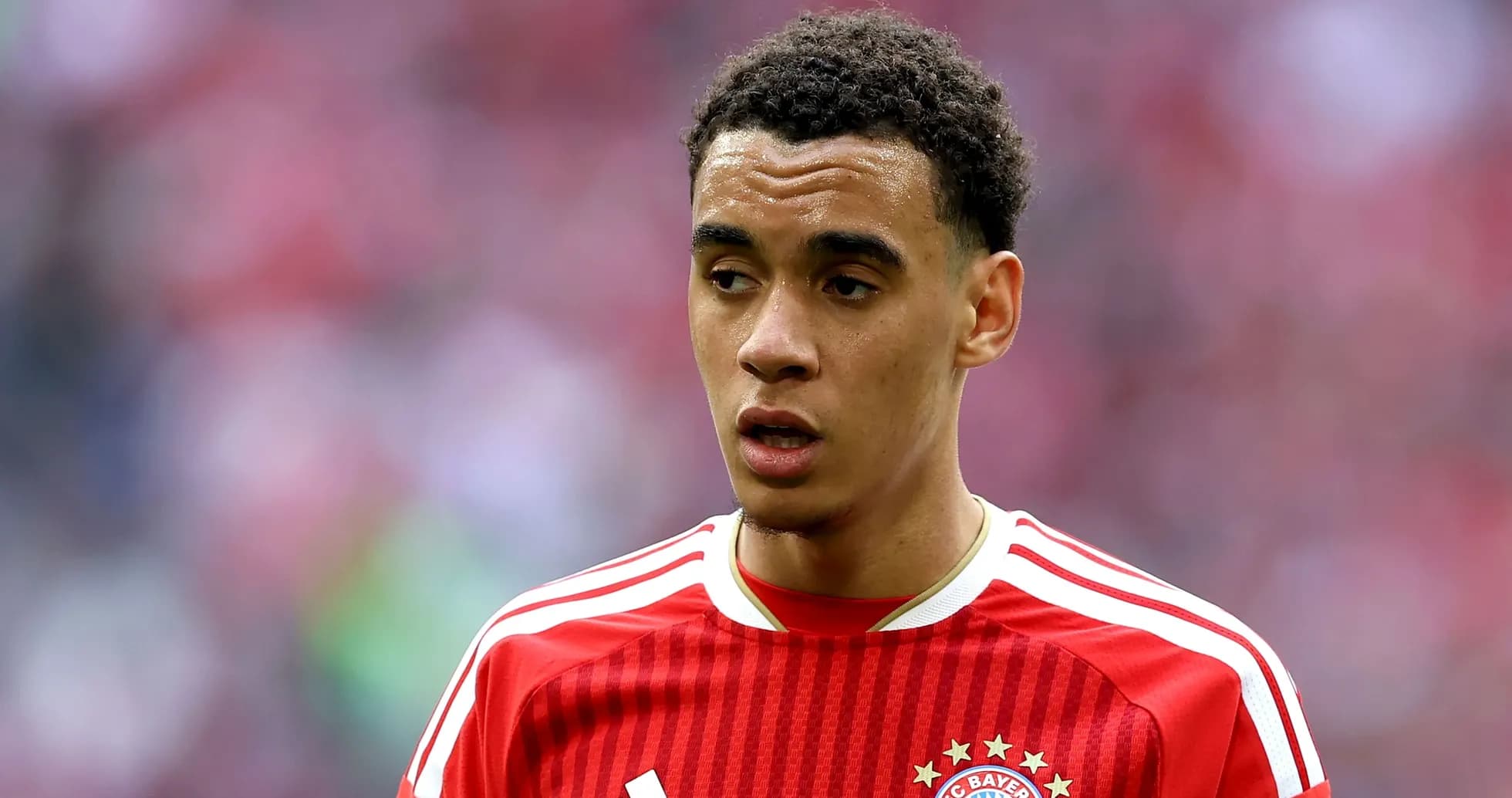
Matthäus urges Musiala: Time to step up
Jamal Musiala has been given his clearest message yet: the time for sympathy is over.
Lothar Matthäus, never one to sugar-coat a verdict, has urged the Bayern Munich playmaker to rediscover his top level ahead of the new season, insisting that the serious injury that derailed his career a year ago can no longer serve as a shield.
The 23-year-old’s story over the last year has been brutal. A fractured fibula and dislocated ankle against PSG at the FIFA Club World Cup in July 2025, six months on the sidelines, then a cautious, stop‑start return in early 2026. Bayern nursed him back, the medical staff did their work, the club showed patience.
Now, Matthäus says, that patience has an expiry date.
“He needs to finally put it behind him”
Writing in his Sky Sport column, the 65‑year‑old Bayern legend laid out the stakes with trademark clarity. Musiala, he argued, is running out of room for error in Vincent Kompany’s team.
“So what’s next for Jamal Musiala? Eventually, the serious injury he suffered over a year ago will heal. He needs to finally put it behind him. That’s crucial now, otherwise, he’ll likely spend a lot of time off the bench due to the stiff competition.”
It is not an empty warning. Bayern’s attacking hierarchy is shifting, and the rhythm of the frontline has started to flow without Musiala at its centre.
Matthäus highlighted the understanding between Harry Kane and Serge Gnabry as a particular threat to Musiala’s status. Their combinations, their rotations, their timing – all of it, he suggested, is operating at a level that makes it harder for Kompany to disrupt.
Kane, Gnabry, Olise, Karl – a crowded stage
Die Roten’s attack no longer orbits around a single creator. Kane drops, spins, and links. Gnabry darts into the gaps. Around them, other options have emerged.
Michael Olise brings craft and unpredictability between the lines. Youngster Lennart Karl has pushed his way into the conversation, another player capable of operating in the number 10 pocket where Musiala once looked untouchable.
Matthäus spelled it out: “Serge Gnabry and Harry Kane have shown excellent chemistry in their rotations. We also know that Olise and Karl can play in the number 10 role. Kompany will find the right mix again. Musiala showed promise at the end of the season at Bayern, and there were also promising signs at the World Cup. But there are no more excuses.”
That line hangs over Musiala’s summer. No more excuses.
He is no longer the teenager breaking through, nor the injured star being eased back. He is a full international at a superclub, fighting for his place in an attack stacked with alternatives.
Pre-season as a proving ground
Musiala’s preparation for the new campaign has included another medical step: a minor procedure in July 2026 to remove the metal stabilisation plate that helped repair his leg. It is a symbolic moment as much as a physical one – the hardware is gone, the final reminder of the fracture taken out.
From here, the focus is pure football. Match fitness, sharpness, and end product.
Pre-season will be his audition. Kompany’s sessions will not just be about rebuilding his legs, but about testing his impact: how quickly he finds rhythm, how decisively he influences games, whether he can again become the player who bends matches his way from the number 10 slot.
If he doesn’t, the consequence is simple. He slips down the pecking order.
Kompany’s puzzle at the top
Kompany, for his part, faces a different kind of pressure. Bayern go into 2026‑27 as defending Bundesliga champions, but with a Champions League itch that has only grown more painful.
Last season’s semi-final exit to back‑to‑back winners PSG still stings. The margins at that level are thin, and the Belgian coach knows he must find an attacking formula that not only dominates domestically but can live with Europe’s most ruthless sides.
He has weapons: Kane’s authority, Gnabry’s movement, Olise’s guile, Karl’s hunger, and the mercurial talent of Musiala. What he does not have is the luxury of sentiment.
If Musiala flies, Kompany gains a game‑changer between the lines. If he stalls, Bayern have other ways to build their attack.
For the first time in his Bayern career, Musiala is not just the great hope. He is a contender in a crowded field, under the scrutiny of a club legend and a coach chasing perfection.
The metal plate is out. The injury is in the past. The question now is brutally straightforward: can Jamal Musiala still be the player Bayern once expected him to become, or will this season mark the moment the team learned to live without him?