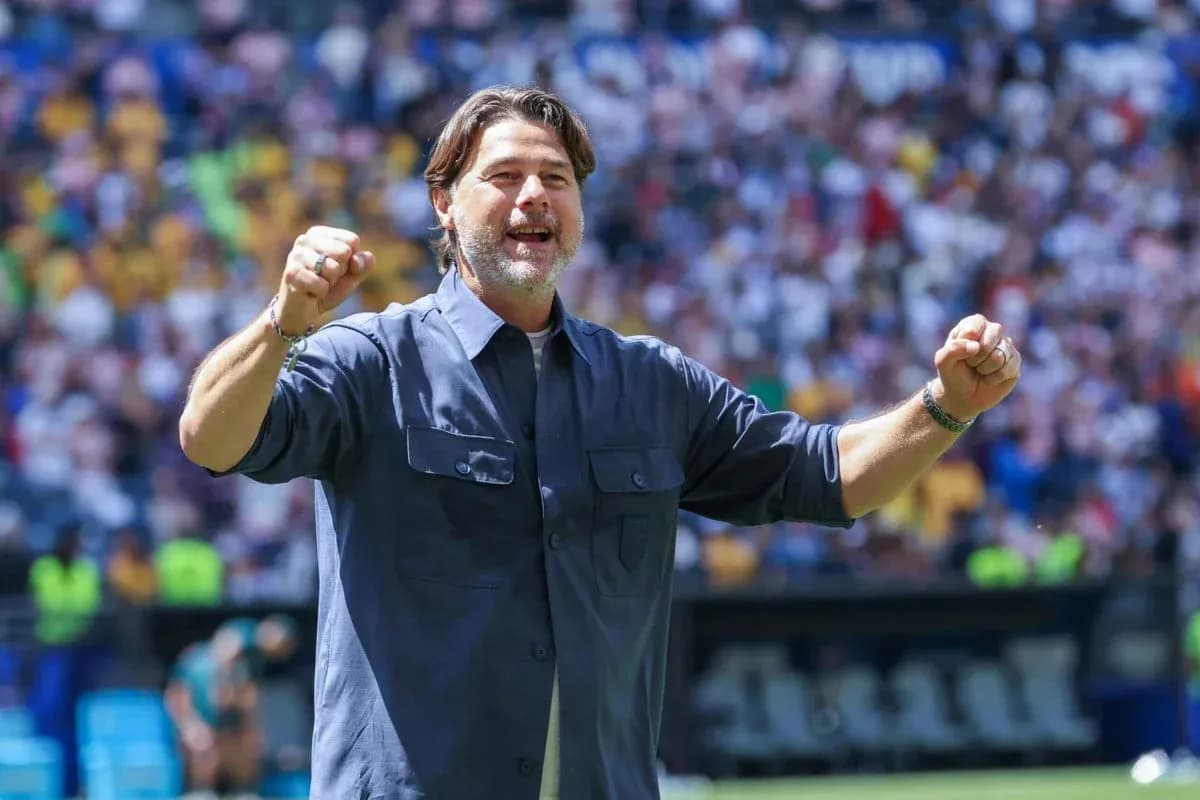
Mauricio Pochettino's Future with U.S. Soccer: A Decision After the World Cup
Mauricio Pochettino has the United States dreaming at this World Cup — and U.S. Soccer wants that dream to run all the way to 2030.
The federation has already put a proposal on the table to keep the Argentine for a second World Cup cycle, extending his stay by another four years. The offer is there, the money is serious, the vision is long-term. But the decision will wait. Nothing will be signed, nothing will be finalized, until after the 2026 World Cup on home soil.
For now, Pochettino coaches. The rest can wait.
A coach in demand, a federation in a hurry
Pochettino’s current deal runs through this World Cup, and on paper he could be a free agent in a matter of weeks. That prospect has kept conversations between the coach and U.S. Soccer alive for months, with senior figures making it clear they want him to stay. The proposal to renew — another four years, another full cycle — was presented before this summer’s tournament kicked off.
They wanted him to know: whatever happens, they see him as the architect of something bigger.
Both sides agreed on one thing. Let the World Cup breathe. Performances and results would inevitably color the conversation, so any final call was always going to come after the tournament. Still, U.S. Soccer felt it had to “signpost” its intent before Europe’s club game came calling.
And that call is real. It has been for a while.
Pochettino, 54, has long been expected to return to the club game at some point, a feeling that only grew when sporting director Matt Crocker — the man who once hired him at Southampton and then brought him to U.S. Soccer — abruptly left in April for a role in Saudi Arabia. The assumption was simple: once the World Cup ended, Pochettino would be back in the weekly grind of European football.
The World Cup has complicated that assumption.
A dream start and a shifting landscape
The USMNT has torn into this tournament with an energy that has shifted the mood around the entire project. Wins over Paraguay and Australia secured a place in the round of 32 with a game to spare, turning Thursday night’s defeat to Turkey into a dead rubber. The performances have gone beyond expectation. The draw looks friendly. A country that often watches the World Cup with hope now dares to talk about the latter stages.
That changes the temperature of everything — including Pochettino’s future.
The next four years offer more than just another World Cup cycle. There is a home Olympic Games in Los Angeles in 2028. Copa America is also expected to land in the United States that same year, with the USMNT in the thick of it. On top of that, a $250 million national training center in Atlanta is coming online, a bricks-and-mortar statement of intent.
For a coach who talks about building, about culture, about legacy, this is not a standard international job. It is a blank canvas in a country still figuring out what it wants to be in world football.
An extension would give Pochettino more than a touchline. It would give him deeper reach into the national setup — from youth teams to coach education, an area in which he has shown genuine interest. The pitch is clear: stay, and you don’t just lead a team. You help shape a football nation.
Big leagues, big money, big decisions
The rest of the world has not stopped watching. Before this World Cup, Pochettino held talks with AC Milan in late May. U.S. Soccer chief executive JT Batson shrugged that off as part of life in “the big leagues” when you hire a coach with a résumé that includes Chelsea, Tottenham Hotspur and Paris Saint-Germain. If Pochettino continues to impress at this World Cup, those conversations will not dry up. They will multiply.
U.S. Soccer knows this. It has spent the past year quietly making sure it can compete.
Before Pochettino’s appointment in September 2024, the federation even sat down with Jurgen Klopp. That alone underlined the scale of its ambition. To land Pochettino, it leaned heavily on private money. The deal was supported “in significant part” by a philanthropic leadership gift from Ken Griffin, the Citadel founder and CEO, with additional backing from Scott Goodwin of Diameter Capital and several commercial partners.
A historical tax filing covering April 1, 2024 to March 31, 2025 projected Pochettino’s pro-rated base salary at around $4 million. Bonuses and incentives pushed the potential package into the $5-6 million range — and that was not even in a World Cup year. An extension, with a home World Cup and expanded responsibilities, would push his compensation into the bracket of the highest-paid international coaches on the planet. It would not match the most lavish contracts at Europe’s richest clubs, but it would be competitive with the top end of the club market.
To keep that up, the federation has kept talking to wealthy donors and sponsors, trying to ensure it can continue to shop in the same aisle as the biggest names in the game.
Pochettino’s dilemma: legacy or the weekly grind?
The decision, in the end, rests with one man.
Pochettino has never hidden his attraction to the day-to-day rhythm of club football, the constant problem-solving, the weekly tests. Over the past year, several clubs have shown interest. The door to Europe is not closing.
Yet his language in recent days has suggested a coach who is at least tempted by the idea of staying.
“It’s difficult to describe or know your future,” he said this week. “But when you are here, I think it’s difficult now to see yourself living in another place, because for sure, we will miss it if one day we don’t stay here in this country.
“We told the federation we are open, but we don’t want to distract when all the energy needs to be with my players.”
In another interview, he went further into the idea of what this job could become.
“If the American people start to show passion in our sport too, why not be here being part of something that can create a legacy?” he said. “The legacy is not to win the World Cup. Of course, we want to win, but that [connection] is the legacy we need if one day we want to be very successful and be consistent. Why not be part of that?”
That is the fault line at the heart of this story. On one side, the lure of elite European club football, with its trophies, its glamour and its relentless pressure. On the other, a long-term project in a rising football nation, backed by serious money, a home World Cup, an Olympics, a Copa America and the chance to leave fingerprints all over the sport’s development.
U.S. Soccer has made its move. The offer is in. The structure is there. The country is watching.
Now the World Cup will decide how loud the question becomes: does Mauricio Pochettino want to build a dynasty in the United States, or is this just the most spectacular stopover of his career?