Mauricio Pochettino's Journey with the USMNT: From Heartbreak to Hope
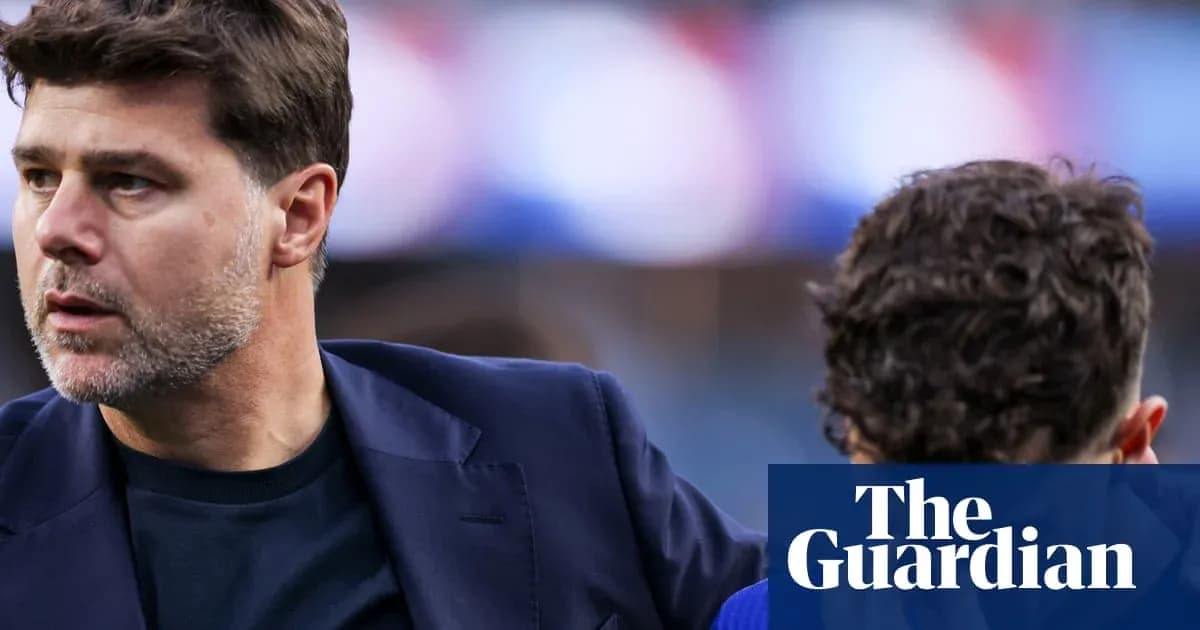
Mauricio Pochettino stood on the touchline in Houston with tears in his eyes, beaten by Mexico, beaten by the noise, beaten by the reality of what he had taken on.
His US team had just lost the 2025 Gold Cup final. A regional title gone to their fiercest rival. A stadium in one of the biggest metro areas in the country roaring almost entirely for the other side. It felt, as he would later admit, like walking into Tottenham on derby day and finding the stands draped in Arsenal red.
Sadness? Of course. Frustration? Absolutely. But those tears carried something else: a jolt of empathy, and a cold, clear understanding of where this program actually stood in its own country.
One year out from a home World Cup, the “big bang” had landed.
A punch in the mouth
The real blow, Pochettino insists, had arrived months earlier.
In March 2025, the Concacaf Nations League presented what looked like routine business. Get past Panama in the semi-final, book another final against Mexico or Canada, extend the US’s perfect record in the young competition. They had won the first three editions. This was supposed to be muscle memory.
Instead, they never even reached the showpiece.
The US labored against a compact, fired-up Panama side. They lacked incision, lacked edge. And this time, the problem wasn’t a hostile crowd. It was hardly a crowd at all.
“It was empty,” Pochettino recalled. Panama played the second game of the double-header, and the stands were dotted mainly with Mexico fans waiting for their turn. The US, nominal hosts, performed in a vacuum.
For years, Panama had been a comfortable matchup. As of mid-2021, the US held a 17-4-2 record against them. Those days have gone. Panama’s 1-0 win that night marked their fourth victory in six meetings, adding to a 2023 Gold Cup semi-final triumph and a 2024 Copa América group win. This time, they punished a US lapse with just their third shot, and walked into their first Nations League final.
“That was [a] good crash, no?” Pochettino said this week. A crash, and a diagnosis. “When we detect all the problems, we go for the solution. And we knew that the solution would arrive.”
The problems, as he saw them, ran deep. Complacency had crept into the culture. Players felt secure. The jersey no longer pinched.
So when Christian Pulisic asked to skip the Gold Cup but still join for the warm-up friendlies against Turkey and Switzerland, Pochettino drew a hard line. No half-measures. No part-time commitments. One group, from day one of camp to the final whistle of the tournament.
Pulisic pushed back. Results didn’t help the manager’s case. The US stumbled through those pre-Gold Cup friendlies, the defeats cranking up outside noise. But the message held: you’re all-in, or you’re watching from home.
Building a new core in defeat
The Gold Cup, painful as its ending proved, gave Pochettino his spine.
Malik Tillman finally ran a tournament as the central playmaker, not a bit-part figure. Matt Freese seized the No 1 shirt and outlasted Keylor Navas in a shootout. Alex Freeman emerged as a young full-back Pochettino simply could not drop. Sebastian Berhalter forced his way into the midfield rotation.
The coach changed as well. International football in a month-long tournament, he discovered, feels closer to club work than the stop-start rhythm of friendlies. Every day with the same group. Every session a chance to refine, to repeat, to drill.
By the time the US walked into that Gold Cup final against Mexico, Pochettino had a clearer idea of what he wanted. The result still cut deep. Mexico lifted the trophy. The crowd in Houston roared for green. Pochettino fought back tears in the dressing room, but his message to the players was simple.
Keep improving. Don’t change who you are.
What needed to change, he believed, was around them.
“Why not us?”
Weeks later, Pochettino sat in the stands in Columbus, watching Ohio State face Texas in college football. Seventy thousand people. A wall of sound. A different sport, same country, a completely different level of devotion.
His question was blunt: why not us?
If that kind of passion existed in the United States, why couldn’t it attach itself to this team, to this sport? If the energy ever aligned with the national side, he believed, it would be “massive… so powerful for the player.”
Out of that came a mantra and a blueprint.
“Why not us?” turned from a slogan into a way of playing. When Pulisic and the other familiar faces returned in September, Pochettino unveiled the shape that now defines this team: fluid, restless, constantly shifting. Players rotate zones, drag markers around, switch play at speed. They take risks when gaps appear. It is calculated chaos, designed to unsettle and overwhelm.
The results started to match the ambition.
A 2-0 win over Japan in September. A draw with Ecuador and a victory over Australia in October. November brought a win against Paraguay and a 5-1 dismantling of Uruguay, closing 2025 with a statement: this was no longer the plodding, predictable USMNT of old.
Then came the third lesson.
The March that hurt
This March, the numbers were brutal: two defeats, 7-2 on aggregate. The performances stung more than the scorelines.
The defensive structure buckled. Against Belgium, the team slipped back into older, leakier habits. Against Portugal, Pulisic, in the midst of a career-worst goal drought, started as a central striker and barely laid a glove on the game.
Chris Richards insisted the group still believed. “I feel like we’ve always bought in,” he said, “but I really feel like the March camp that we had was really important. … I think we really gave, you know, two really good teams in Europe a really strong game.”
Pochettino defended his players, but he didn’t sugarcoat the talent gap. Belgium and Portugal, he pointed out, have several players among the world’s top 100. The US, in his view, have none.
Outside the camp, old doubts resurfaced. This, many felt, was the familiar pattern: a US team capable of the odd big result, yet just as likely to crumble against elite opposition or stumble against a lesser name. With the World Cup looming, some wondered if scheduling Senegal and Germany in the final warm-up window would prove reckless.
Pochettino didn’t flinch. “No,” he said. “That is good for us. It’s going to measure our level.”
The measurement came back promising. A 3-2 win over Senegal. A narrow 2-1 defeat to Germany, but with signs of cohesion and clarity returning. The edges sharpened just in time.
Showtime at the World Cup
Then the lights went up.
In the opening game of their home World Cup, the US tore into Paraguay, winning 4-1 with a swagger that matched Pochettino’s vision. They followed it with a 2-0 win over Australia, controlled and ruthless, the kind of professional performance that used to elude them on this stage.
With two games, six goals scored and one conceded, they wrapped up top spot in Group D before a ball was kicked in the final round. Thursday’s meeting with an already-eliminated Turkey became something almost unheard of for this team at a World Cup: a match with no stakes.
Only four teams in this tournament have secured their groups after two matches. Argentina and Germany, giants of the men’s game. Mexico, backed by one of the most fervent fanbases in world football and hardened by years of playing at altitude in hostile venues.
And now, in that company, Pochettino’s US.
The atmospheres have flipped since that empty Nations League semi-final and the Mexico-dominated Gold Cup final. Home crowds have roared for the US, not just turned up. Players talk about feeling the surge from the stands. Pochettino, once left asking “why not us?” in a college football cathedral, now walks into stadiums where the answer echoes back from every tier.
This is, without question, the high-water mark of his tenure so far. The setbacks – Panama, the Gold Cup heartbreak, the March bruisings – have not disappeared. They sit under the surface, shaping decisions, sharpening edges.
“It’s not going to be figured out overnight,” defender Mark McKenzie said. “It’s not going to be figured out in one camp, or sometimes in six months, or 12 months, maybe not as fast as everybody wanted to. I think we’re showcasing that it’s a process.”
The process has carried them to the knockout rounds with room to spare. The question now is no longer whether the US belong at this level.
It’s how far this version of “Why not us?” can really go.