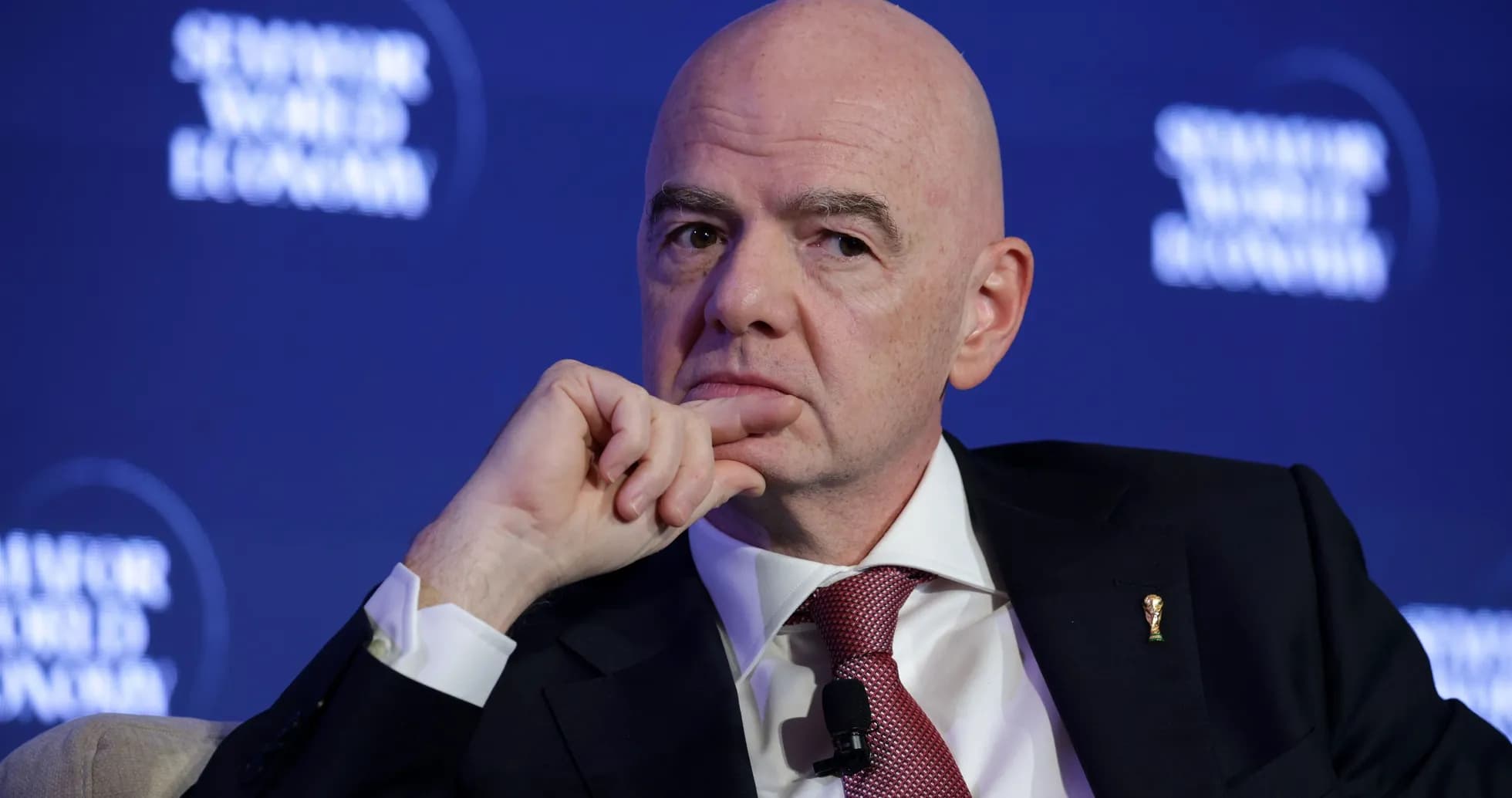
Max Eberl's Fury Piles Pressure on FIFA Amid World Cup Boycott Talks
Max Eberl did not bother with diplomacy. He went straight for the heart of the argument – and for FIFA’s throat.
Speaking on Wednesday, the 52-year-old Bayern Munich executive tore into Gianni Infantino’s investment model and the direction of the world governing body, delivering one of the most blistering public attacks yet from a leading club figure.
“I am ashamed that we even discuss such ideas in football. Football does not belong to us,” Eberl said, as quoted by Sky Sport. “I have the feeling that FIFA exists solely to make a profit. It disgusts me.”
Those are not throwaway lines. They are the kind of words that echo in corridors of power, especially at a time when the relationship between FIFA and Europe is already close to rupture.
Boycott Talk No Longer a Whisper
The friction has been building for months. Now it is out in the open.
Across UEFA member nations, talk of a World Cup boycott is no longer a fringe fantasy but a scenario being openly floated in boardrooms and briefings. Eberl, a major voice at the Allianz Arena, made it clear he would back a united European front if the standoff hardens.
“Then I would indeed be in favor of us as Europe taking a firm stand and saying: No, we won't participate,” he declared.
That sentence lands like a challenge. Not just to FIFA, but to every European federation now weighing up whether to chase a financial windfall or defend what they believe the game should stand for.
Sammer’s Warning: Integrity on the Line
Eberl is not alone in his concern, even if others choose a softer tone.
Matthias Sammer, the former Ballon d’Or winner and now an advisor at Borussia Dortmund, offered a more measured assessment but pointed to the same fault lines. He recognised that Infantino operates in a complex, global environment, where competing interests collide and every decision is scrutinised.
“Gianni Infantino first has to manage to please everyone. That's his job and FIFA's. It's always a fine line,” Sammer said.
He understands the balancing act. Yet even he fears the game’s soul is being pushed to the brink.
Sammer warned that the “emotional credibility” of football is being gambled away in pursuit of bigger returns for the organisation. For him, the red line is clear: there is “danger when the integrity of the game is interfered with.”
Strip away the nuance and the message is stark. The money is huge. The risk, in the eyes of Europe’s heavyweights, is bigger.
Deadline, Millions, and a Deep Distrust
Infantino is not easing off. He has set a firm September deadline for member associations to sign off on the deal, a timetable designed to force decisions and lock in support.
On the table: the promise of millions for each federation. A tempting offer, especially for smaller associations that depend on FIFA funds to keep their programmes alive.
Yet across Europe, scepticism runs deep. Officials fear that short-term cash comes at the expense of long-term control, competitive balance, and the authenticity that keeps fans emotionally invested. The integrity of the competition structure and the calendar is at stake, and many in UEFA circles believe this model tilts power and profit too heavily towards Zurich.
For Eberl and Bayern’s leadership, the calculation is blunt. The club’s stance leans towards principle over payout. The identity of the sport, they argue, is not for sale.
Europe at a Crossroads
That leaves UEFA and its members staring at a moment that could redefine the global game.
Infantino has set his clock. The money is on offer. The proposal is clear.
Now the spotlight turns to the upcoming UEFA meetings, where associations will have to choose: accept the deal and live with the consequences, or stand together and risk a historic split from FIFA.
The next move belongs to Europe.