Inside the Mental Toll of the World Cup Calendar
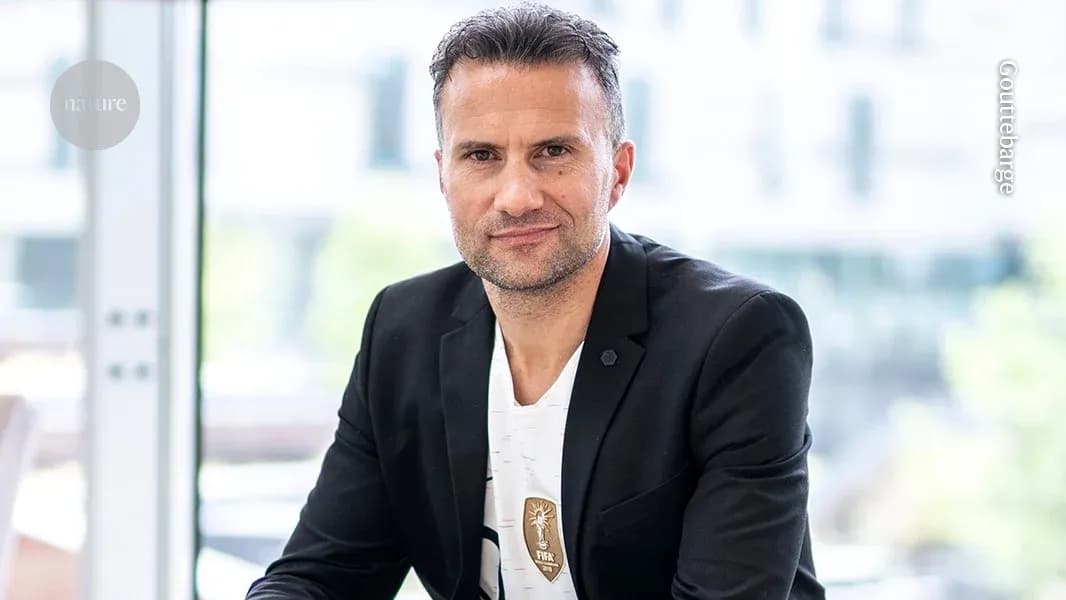
Vincent Gouttebarge knows what it feels like when the body starts to protest and the mind quietly follows. He spent more than a decade in professional football in France and the Netherlands before retiring in 2007. The injuries stayed with him. So did the questions.
Today he is medical director at FIFPRO, the global players’ union, and chairs the International Olympic Committee’s Mental Health Working Group, while conducting research at the University of Pretoria and Amsterdam University Medical Centre. As the 2026 men’s World Cup kicks off across the United States, Canada and Mexico, his focus is not on tactics or team shapes. It is on what this tournament – and the calendar wrapped around it – does to the people inside the shirts.
“Footballers are not superheroes,” he stresses. They are exposed to the same range of health problems as anyone else, from the obvious – musculoskeletal injuries – to the quieter but no less damaging symptoms of mental-health issues. That realisation, years after he hung up his boots, pushed him into studying mental health in professional football, both during a player’s career and long after the last contract expires.
The World Cup dream – and its price
Being called up for a World Cup remains the pinnacle. For most players, it is the moment they imagined in childhood. The pressure, though, does not stop at the anthem.
The experience, Gouttebarge points out, is shaped by details that rarely make the headlines: Are you starting or sitting on the bench? Is your team winning or unravelling? Are you playing your way into a new contract, or watching your value fall with every minute you don’t get?
Then comes the part fans barely see. The World Cup ends, the trophy is lifted, the lights go down – and players are back at their clubs almost immediately. If they are fortunate, they get a week or two off. For many, even that small window is not realistic. There is no real gap between one season and the next, just a blur of flights, medicals and pre-season tours.
The emotional high of a World Cup can be enormous. The crash that follows can be just as steep.
A calendar that grinds players down
For Gouttebarge, this is not just a performance problem. It is a health problem.
The modern match calendar, packed with domestic leagues, continental competitions and international tournaments, has become relentless. At the elite level, players can be pushed into two or even three matches a week, back-to-back, with no genuine day off. Training, travel, commercial duties – the load builds up, physically and physiologically, but also emotionally and cognitively.
In 2024, FIFPRO and the World Leagues publicly called on FIFA to rethink and reschedule tournaments to carve out more recovery time between major competitions. The concern was not about marginal gains or tactical freshness. It was about basic human limits.
Layered on top of the schedule comes something newer and more insidious: social media. The criticism used to arrive in the morning papers. Now it is there in a player’s hand before they have even left the dressing room, and it does not stop for holidays.
How common are mental-health problems in the game?
Measuring mental health in elite sport is complicated. Full clinical diagnoses demand time and privacy that players rarely have. So Gouttebarge’s research focuses on symptoms: self-reported adverse thoughts, feelings and behaviours.
Across epidemiological studies in professional football and other elite sports since 2012, he has seen clear patterns. Some pressures are universal. Footballers have families, relationships and lives outside the stadium. They experience bereavements, break-ups, financial worries and everyday stress, just like anyone else.
Those generic stressors collide with sport-specific ones. Injury stands out as a major factor. The evidence, he says, points to a bidirectional relationship: poor mental health can make an athlete more vulnerable to musculoskeletal injury, while a serious injury – one that removes training and competition for a long spell – ranks as the single most significant adverse life event in many sporting careers.
Unexpected poor performance is another trigger. A dip in form can cost a place in the team, a contract, a move. Confidence erodes, and with it, mental well-being.
The lingering stigma
Despite the growing conversation, stigma still clings to mental health in football.
In many parts of Europe, Gouttebarge feels progress has been made. Players speak more openly, clubs are more aware, and the topic is no longer entirely taboo. The job is far from finished, though, and the picture is very different elsewhere.
In South America, Africa and parts of Asia – regions where football is a cultural force – talking about depression or anxiety is often still seen as weakness. A player can happily tell a press conference about an ankle problem or a hamstring strain. Admitting to panic, insomnia or despair remains rare.
Fear drives that silence. Players worry about how a coach will react. They fear that a label of “depression” or “anxiety” will quietly push them out of the starting XI, or even out of the club.
Gouttebarge argues that the game needs change from both directions. From the bottom up, that means mental-health literacy programmes and education for players and coaches, helping them understand that mental health belongs on the same agenda as physical injury. From the top down, it means reshaping medical structures. National federations traditionally build medical committees around sports physicians, orthopaedic surgeons and cardiologists. Mental-health professionals are rarely at the table. That, he insists, has to change.
Small steps, real impact
In 2018, FIFPRO launched an education programme aimed at players’ mental-health awareness. It was not a randomized controlled trial, but the results mattered. Attitudes and behaviours improved after the programme compared with before it.
For Gouttebarge, this offered at least one solid message: invest a little time in mental-health literacy, explain clearly why these challenges deserve equal footing with muscle and ligament injuries, and you can move the needle. Not dramatically, not overnight – but measurably.
Isolation as punishment
One practice in the professional game troubles him deeply: the sidelining of unwanted players.
It is a familiar story. A new coach arrives, decides the squad is too big, and a handful of players are told to train alone or with the youth team. On paper, it is a football decision. On the training ground, it looks like exile.
From a trade-union standpoint, Gouttebarge calls it unacceptable. These players have contracts with their employer and a right to a professional working environment. From a mental-health perspective, the damage can be even more acute.
Social support is protective. Being part of a group, sharing a dressing room, training and competing together – all of that helps buffer stress. Deliberately isolating a player from their workplace strips that support away and raises the risk of mental-health problems.
In most industries, he points out, such treatment would not be tolerated. In professional football, it still happens regularly. For him, that reflects not tough management, but poor leadership at club level.
As the 2026 World Cup unfolds across three countries and multiple time zones, the spectacle will dominate screens and conversations. Behind it stands a simple question the sport can no longer dodge: how much more can the players’ bodies and minds absorb before the game is finally forced to protect its own?