Lionel Messi's World Cup Legacy: Stars and Silent Exits
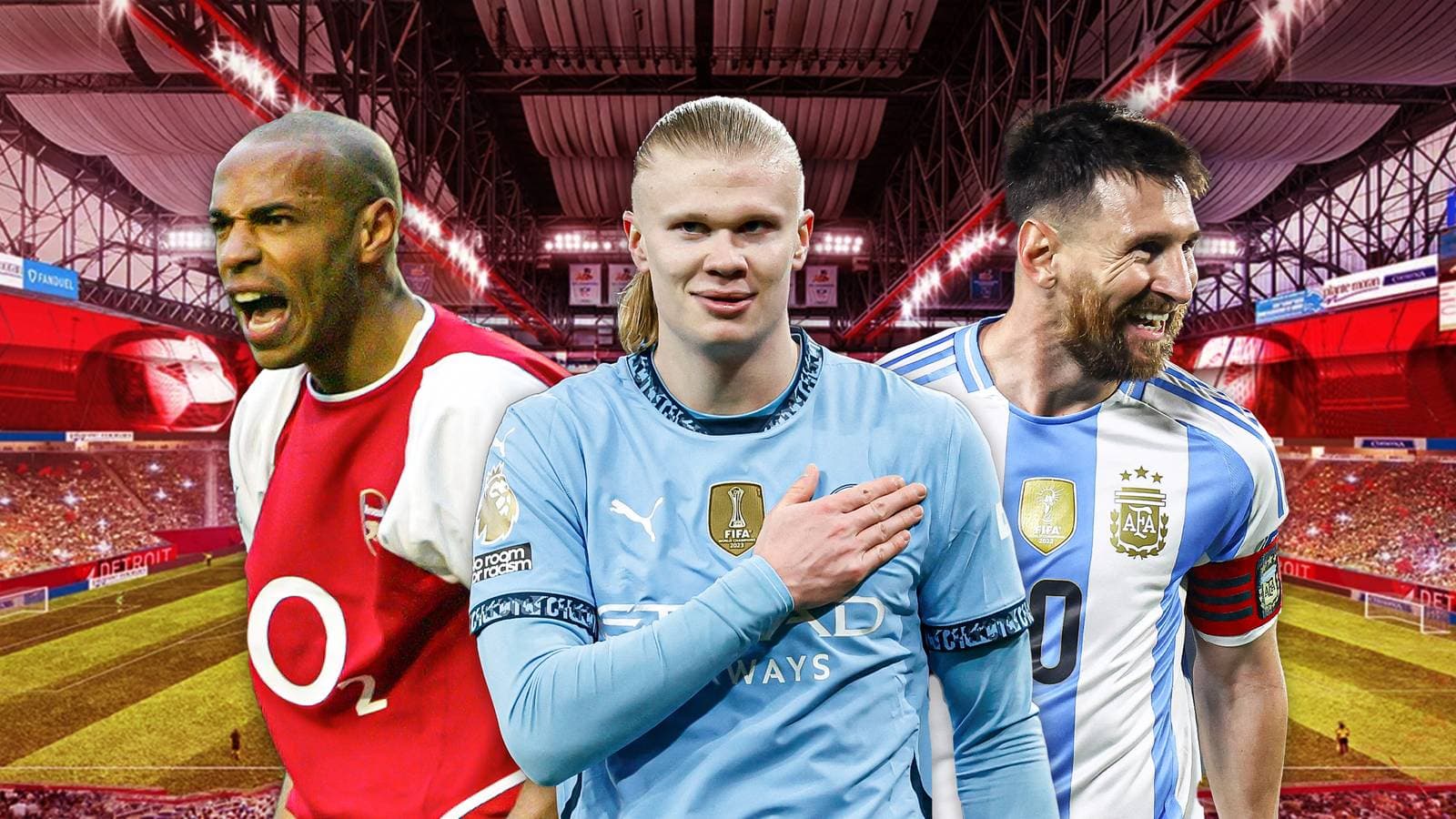
Lionel Messi was never going to be anywhere but No 1.
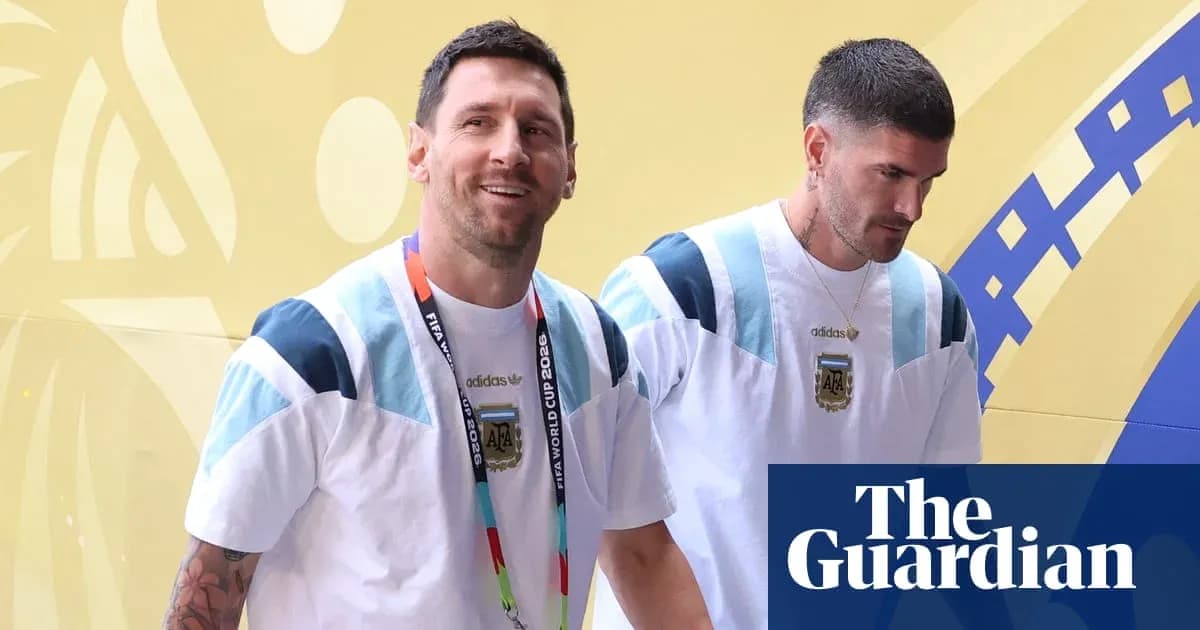
Across what was likely his final World Cup, the Argentinian stitched together another outrageous body of work: eight goals, four assists and, per Futi, more progressive passes than any other player at the tournament. He floated. He dictated. With defensive duties stripped away, the 39-year-old wandered wherever the danger needed to be created and dragged Argentina back from the edge again and again.
It was Messi who pulled a 3-2 win out of Cape Verde’s grasp. Messi who assisted and then equalised against Egypt. Messi who conjured both of Argentina’s late goals to break English hearts. For weeks, the tournament bent to his will.
Then came the final. And the lights dimmed.
Across 139 tense minutes including stoppage time, Messi completed just 28 of 39 passes, had only one shot and barely left a fingerprint on the contest. No Golden Ball, no Golden Boot, no trophy. For once, no individual prize at all. Yet he walked away having stretched a World Cup legacy that sits in a different stratosphere to almost everyone who has played this game.
Argentina’s engine room: De Paul does the dirty work
Behind Messi’s freedom stood Rodrigo De Paul, doing exactly what he always does: covering ground, snapping into challenges, recycling possession. The Inter Miami midfielder started all but two games on Argentina’s run to a second straight World Cup final and logged 70 minutes in the semi-final against Spain.
He was never going to headline this story. He did something more valuable: he made sure others could.
Canada’s creators and Canada’s questions
Stephen Eustáquio arrived as one of Canada’s key schemers and left as the man who delivered their first-ever World Cup knockout win. His right foot was a metronome from wide areas, serving cross after cross, producing 2.76 chances and 0.36 expected assists per 90. Only five players at the tournament played more progressive passes than his 46.
Then came the moment that will live far longer than the data. In the dying minutes of the last-32 tie against South Africa, the 29-year-old intercepted a clearance, cushioned the ball on his chest and lashed a half-volley into the bottom corner. Bedlam. History. After a loan spell at Los Angeles FC, he returns to Porto with his status transformed.
On the opposite flank of Canada’s narrative sat Richie Laryea. The Toronto FC full-back pushed the ball well up the left and posted 0.26 xA per 90, but his defensive lapses hurt. He lost his man for Bosnia and Herzegovina’s opener from a corner and was repeatedly out of position against Switzerland. A long-time mainstay of the national side, he left this World Cup without the spark that once made him undroppable.
Maxime Crépeau’s numbers told their own story: six goals conceded, six saves in five games for Orlando City’s keeper. Jacob Shaffelburg, Jayden Nelson, Mathieu Choinière and Jonathan Osorio all saw minutes off the bench or in isolated starts but never managed to tilt a game Canada’s way. The depth was present. The impact wasn’t.
South Africa’s fearless defender and Cape Verde’s quiet rock
Mbekezeli Mbokazi turned up as South Africa’s youngest player at the tournament, a 20-year-old Chicago Fire defender and former Orlando Pirates captain. He played like someone who had been here for years. Composed, aggressive, unflustered, he anchored Bafana Bafana’s back line so convincingly that his Transfermarkt valuation more than doubled, rocketing from $4m to over $9m by the time he left.
Cape Verde’s story had more glamour on the opposite flank, where Sidny Lopes Cabral drew most of the headlines. Yet Steven Moreira, the Columbus defender on the other side, quietly became a pillar of their back line. He helped push Cape Verde to the brink of something extraordinary against Spain, Uruguay and Argentina, the sort of near-miss that lingers in a nation’s memory.
Paraguay’s grinders: low possession, high impact
Paraguay spent the tournament without the ball. Their average possession of 29% ranked dead last, a tactical reality that shaped everything they did.
Within that, Matías Galarza carved out his own space. He started every game after the opener, scored the winner against Turkey and set up Julio Enciso’s strike against Germany in the knockouts. Starved of touches, he still found ways to matter. Having finished a loan at Atlanta United, he now returns to River Plate having proved he can thrive in a system built on suffering.
Next to him, Andrés Cubas was the hammer. The Vancouver Whitecaps midfielder played every possible minute of Paraguay’s five matches as the team’s destroyer. He anchored a defensive unit that dragged Germany to penalties and kept France to a single goal. His quarter-final against France was a personal statement: seven tackles, three interceptions, seven of 12 duels won, and a flashpoint with Kylian Mbappé that underlined his refusal to back down.
Miguel Almirón’s World Cup, by contrast, will be remembered for one moment of infamy rather than any attacking spark. Four shots, 0.11 xG in four starts for the Atlanta attacker – numbers that barely register. Instead, he became the first player sent off under IFAB’s new mouth-covering ban, shown red against Turkey after covering his mouth during an “altercation” between the sides. Braian Ojeda saw only 21 minutes against Germany in the last 32, touching the ball just nine times. Paraguay’s midfield depth existed mostly on paper.
Uruguay’s task: quiet the prodigy
Juan Manuel Sanabria was handed one of the toughest assignments of the group stage: keep Lamine Yamal quiet. The Real Salt Lake man started Uruguay’s final group match against Spain and did exactly that. Yamal finished with just 0.03 xG, 0.10 xA and five completed dribbles from 12 attempts. In a tournament built on individual stars, Sanabria’s job was to dim one of the brightest. He did.
New Zealand’s contrasting centre-backs
New Zealand’s World Cup offered a glimpse of the future and a painful reminder of the past.
At one end stood Finn Surman, the 22-year-old Portland Timbers centre-back who exploded into the tournament with a pair of breakout displays. He threw himself into last-ditch tackles, hacked away desperate clearances and even scored the All Whites’ lone goal in a 3-1 defeat to Egypt. He looked like a cornerstone.
At the other end was Michael Boxall, the veteran Minnesota defender and one of the oldest players at the tournament. He appeared a half-step behind almost every goal New Zealand conceded, punished repeatedly at this level’s unforgiving pace.
Australia’s quiet operators and a teenager’s breakthrough
Aiden O’Neill did what Aiden O’Neill always does. The New York City FC midfielder sat in the centre of Australia’s team, knitting passes, keeping the ball, rarely drawing attention to himself. He walked away with a Superior Player of the Match award against Paraguay and followed it with another assured showing against Egypt. No fireworks. Just control.
Lucas Herrington represented the other end of the spectrum: the unknown teenager. At 18, the Colorado Rapids centre-back was the youngest player in Australia’s squad. By the end, he had earned starts in each of their final two games, a rapid promotion that hinted at a long international career ahead.
Kai Trewin, another NYC FC defender, came on at half-time of the knockout tie against Egypt after Jordan Bos went off injured. He did the simple thing well: helped steer the game to penalties. Sometimes, that’s enough.
The United States: harsh lessons and thin margins
For the US, this World Cup felt like a series of auditions – some passed, some failed, some cruelly defined by a single moment.
Sebastian Berhalter became one of Mauricio Pochettino’s go-to substitutes, appearing in every match. In his lone start, he was dropped into the No 6 role, a position that exposed a squad-wide shortage of true defensive midfielders more than any personal flaw. Even so, the Vancouver Whitecaps man, reportedly on his way to Middlesbrough, still found a way to leave a mark with a goal and an assist.
Tim Ream’s story was far more brutal. For a fleeting moment, it looked as if the 38-year-old Charlotte centre-back had rolled back the years from Qatar. Belgium tore that illusion apart. In a 4-1 defeat, Ream was the night’s biggest casualty. For the opener, he lost track of an in-form Charles De Ketelaere, who pounced with Ream nowhere in the frame. Minutes after the US equalised, De Ketelaere climbed above him at the back post to restore Belgium’s lead. Two decisive blows, both on the veteran’s watch.
Matt Freese, the NYC FC goalkeeper, delivered a steadier tournament, marred by one bad day. Across four games he made nine saves and passed the ball cleanly, yet one poor performance came to define his narrative. Matt Turner fared worse in his lone outing: the New England Revolution No 1 started against Turkey, conceded three times and failed to record a single save.
Miles Robinson’s experience said everything about Pochettino’s view of his defensive depth. The FC Cincinnati centre-back’s only minutes came in a meaningless final group game, a clear sign of the manager’s reluctance to rotate. Max Arfsten’s World Cup was even more fleeting: the Columbus winger entered in the 90th minute of the 4-1 round-of-16 loss to Belgium and never touched the ball before the whistle.
Colombia’s fallen star
Twelve years after his explosion in Brazil, James Rodríguez arrived in the United States looking for one more World Cup run. It never came.
Now at Minnesota United on loan, the Colombian playmaker still produced flashes of the old magic – the disguised passes, the soft first touch, the ability to see a lane nobody else noticed. But this time there was no end product, no decisive moment, no lift for a Colombia side that slipped out in the last 16 to Switzerland. Two years removed from a Copa América masterclass – one goal, six assists, a run to the final – his World Cup journey ended like his club career has drifted in recent seasons: drawn-out, subdued, empty.
Son Heung-min and South Korea’s missed chance
For Son Heung-min, this World Cup was simply a disappointment. The 34-year-old LAFC forward started twice, failed to score and then watched from the bench as South Korea played their must-win final group game without him. No drama, no late heroics, just a flat ending for one of Asia’s greatest ever players.
Croatia’s thin edge
Croatia’s forwards lived on the finest of margins.
Petar Musa, the FC Dallas striker, played 110 minutes across two starts. He took one shot. He scored it. Marco Pasalic, Orlando City’s winger, finally got a productive start in Croatia’s third group game but squandered his one clear chance to get on the scoresheet. In knockout football, those moments define you.
Haiti and Panama: fighting uphill
Haiti arrived as the lowest-ranked team at the tournament and played like a side forever climbing a hill. Danley Jean Jacques, the Philadelphia midfielder, shared a double pivot with Jean-Ricner Bellegarde and spent every match under siege. Louicius Deedson, FC Dallas’s winger, featured in all three group defeats, logging 112 minutes and just 13 completed passes. Derrick Etienne Jr saw nine minutes against Brazil, completed four passes and had no time to change anything.
Panama’s story was quieter still. Carlos Harvey started all three group games, threatened occasionally with headers from set pieces and otherwise slipped through the tournament largely unnoticed. Aníbal Godoy’s World Cup was distilled into a single minute plus stoppage time against Ghana: eight passes completed, then the heartbreak of conceding a last-minute winner he could do nothing about.
Iraq’s early reshuffle
Ahmed Qasem, Nashville’s forward, featured in all of Iraq’s games and went the full 90 against France, a draining shift against heavyweight opposition. He started again in their final group match, only to be sacrificed early after Rebin Sulaka’s 13th-minute red card forced a tactical reshuffle. Plans, and personal tournaments, can change with one whistle.
The thin margins of tournament football
Across this World Cup, careers bent on the smallest of details: a half-volley in the 90th minute, a lost duel at the back post, a red card for covering your mouth. Some players left with their value doubled, others with their reputations dented, a few with nothing more than a line on the appearance sheet.
For Messi, for James, for Son, this felt like an ending. For Mbokazi, Surman, Herrington and Eustáquio, it looked like a beginning.
The next cycle will answer the only question that matters now: who turns this month of promise, pain and thin margins into something lasting?