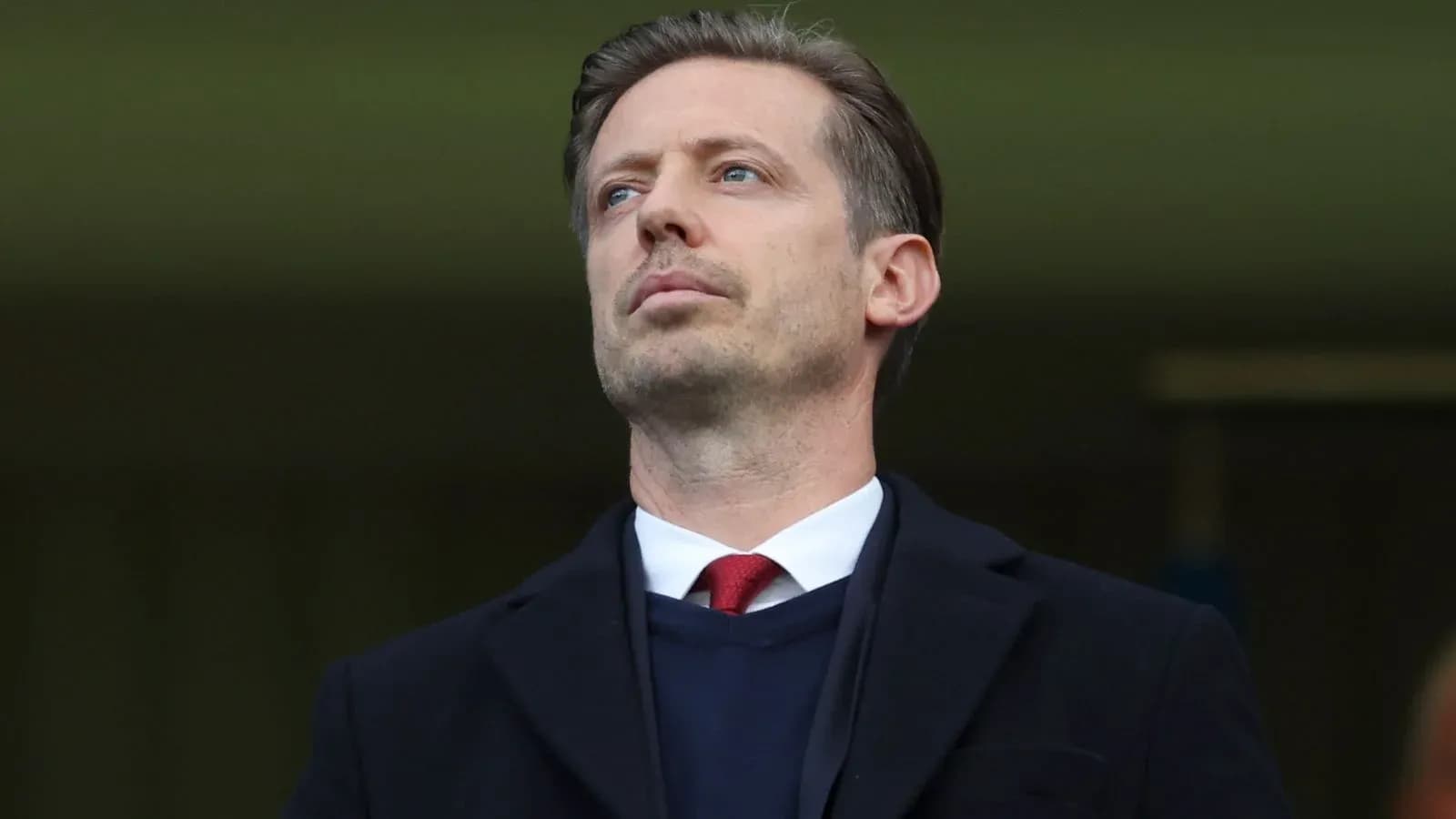
Michael Edwards Departs Liverpool: A New Era Begins
Michael Edwards has stepped away from Fenway Sports Group for a second – and surely final – time, walking out of the role of CEO of football and leaving Liverpool on the brink of another era of upheaval.
FSG insist this is no rupture. Their statement called it a “planned transition”, the closing act of a carefully drawn‑up handover. It still feels like the end of a chapter.
The architect walks away
Edwards’ name is stitched into Liverpool’s modern history. He arrived in 2011 as performance director, rose to sporting director in 2016 and, from that vantage point, helped assemble the side that ended a 30-year title drought with the 2019/20 Premier League crown.
From the data room to the boardroom, he became the reference point for how Liverpool did their business. Smart, decisive, relentless in the market. The spine of that title-winning team bore his fingerprints.
He left in 2022, took his distance, then was lured back in March 2024 in a new guise – CEO of football for FSG, charged with overseeing all football operations just as Jurgen Klopp was preparing to walk away. It was a huge brief: guide Liverpool through the emotional exit of a transformational manager and help shape FSG’s wider football ambitions beyond Anfield.
In that sense, he delivered. FSG’s statement underlined his role in “the implementation of a new football leadership structure and the appointment of a new head coach,” as well as steering the club through a period in which Liverpool claimed a historic 20th English league title in 2025.
That 20th title, secured under Arne Slot after his arrival in June 2024, restored Liverpool to the top of the domestic honours list. The club had its landmark number. The project appeared aligned.
Then the ground shifted.
Slot out, Iraola in, and another reset
Slot’s second season did not match the first. Performances dipped, standards slipped, and patience thinned. Early June brought another jolt: Slot out, Andoni Iraola in. Another new voice in the dressing room, another tactical reset, another transition to manage.
Edwards had been the steady hand through all of this, the figure tasked with ensuring the club’s football operation continued to evolve rather than unravel. FSG framed his exit as the “culmination” of that process, a point at which key strategic priorities had been completed and the next phase could begin without him.
He leaves convinced the house is in order. In his own statement, Edwards called it “a privilege to return to Fenway Sports Group and Liverpool Football Club at such an important moment,” and said he walks away believing the club is “in a strong position, with outstanding people, a clear direction and the foundations in place for continued success.”
His words carried a hint of what might have been. He spoke of returning not only to guide Liverpool through transition, but to help shape FSG’s broader football ambitions – a multi-club vision that “ultimately evolved differently to how we had originally envisaged.” The options were drawn up, the scenarios mapped, but the ownership chose another route.
So Edwards goes, grateful, as he put it, to Mike Gordon, John W. Henry, Tom C. Werner and the supporters “whose passion makes this club so special”. Grateful, but gone.
A summer of questions
The timing is delicate. Edwards departs ahead of the 2026/27 campaign, on the cusp of a summer that could redefine Liverpool’s attack and their internal power map.
Replacing Mohamed Salah looms over everything. The Egyptian has been the face, the finisher, the guarantee of goals and moments when games tighten and nerves fray. Finding the next version – not of Salah the personality, but of Salah the output – is one of the biggest recruitment challenges Liverpool have faced in the FSG era.
The man who built so many of their most successful squads will not be in the room when those calls are made.
There is also noise around Richard Hughes, the sporting director brought in as part of the revamped structure. Speculation that he could move on would, if it materialises, rip out another key pillar of the hierarchy Edwards helped design.
For a club that has prided itself on joined-up thinking, the possibility of losing both the CEO of football and the sporting director in quick succession is stark. Structures can be replaced. Philosophies can be maintained. But personalities, relationships and the quiet, daily decision‑making that holds a football operation together are harder to replicate.
Liverpool, under Iraola, still have a squad capable of contending. They still have the glow of that 20th title, the pull of Anfield, the backing of an ownership group that has repeatedly shown it will invest when the project demands it.
Yet as another influential architect leaves the building, with a new head coach bedding in and a talismanic forward to replace, the question hangs in the air: is this simply the end of a planned transition, or the start of a far more unpredictable rebuild?