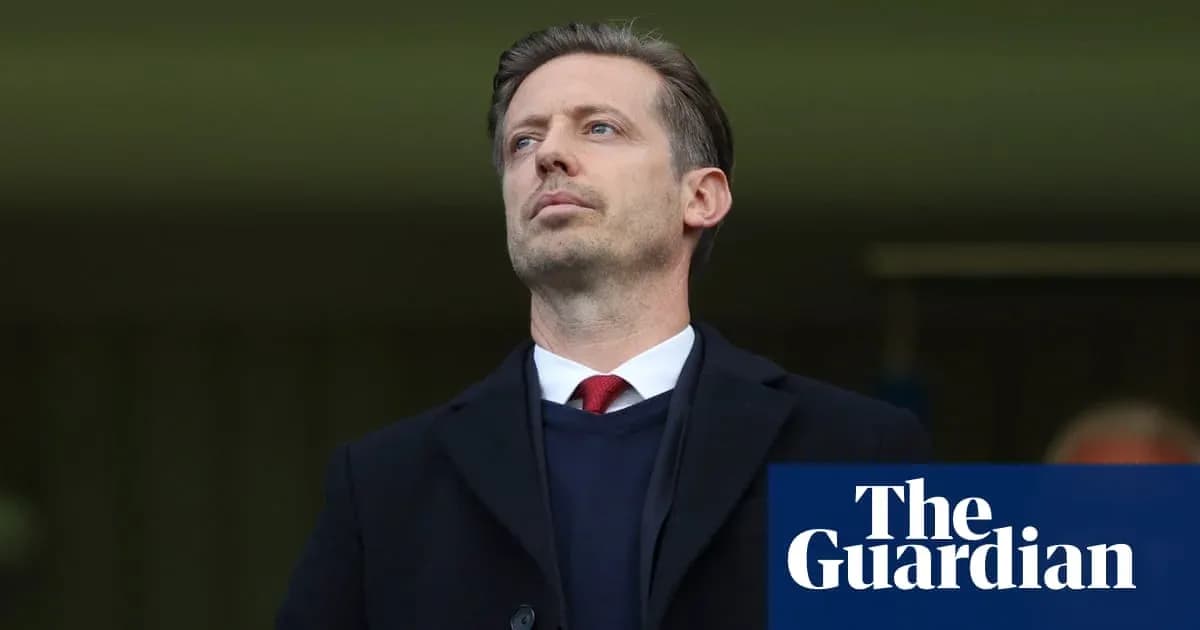
Michael Edwards Resigns from Fenway Sports Group: A New Chapter for Liverpool
Michael Edwards has stepped away from Fenway Sports Group for a second – and surely final – time, leaving Liverpool’s owners without the architect they twice turned to at moments of upheaval.
FSG confirmed on Friday that Edwards has resigned as chief executive of football, a role created specifically for him when he was lured back in March 2024 to oversee the club’s transition from the Jürgen Klopp era. He informed ownership in the autumn of 2025 that he would go once he felt Liverpool’s future was mapped out. They wanted him to stay. He chose to go.
A project that never fully materialised
The decision is rooted not in Anfield, but in Boston. Edwards returned on the promise of something bigger than a rebooted Liverpool: a broadened FSG football empire. His title reflected it. He was not Liverpool’s sporting director this time, but FSG’s chief executive of football, tasked with building a multi-club structure and striking strategic partnerships across Europe.
He did the groundwork. FSG explored options, assessing clubs including Getafe and Bordeaux as potential additions to their portfolio. The idea was clear: Liverpool as the flagship, supported by a network of aligned teams feeding talent, ideas and value back into the main operation.
The plan stalled. No suitable club emerged, the search was shelved last year and the grander project that tempted Edwards back began to recede. With that, his role – created specifically to drive that expansion – started to look increasingly out of step with FSG’s direction. He leaves with a year remaining on his contract and is not expected to receive a payoff, given the departure is his decision. FSG may not even seek a like-for-like replacement.
Edwards walks away on his terms
For Liverpool supporters, Edwards’ name is synonymous with the club’s modern rise. As sporting director from 2016 to 2022, he built the framework that underpinned the Klopp era: smart recruitment, clear succession planning, a data-led approach that still felt rooted in football sense. When he left the first time, it felt like the end of a chapter. His return, with wider powers, suggested an even grander sequel.
In a statement, Edwards framed his exit as the conclusion of a job he believes is largely done.
“It has been a privilege to return to Fenway Sports Group and Liverpool Football Club at such an important moment,” he said. “I leave believing Liverpool is in a strong position, with outstanding people, a clear direction and the foundations in place for continued success.
“When I returned, I was excited not only by the opportunity to help guide Liverpool through an important period of transition, but also by the chance to help shape FSG’s wider football ambitions. While that broader project ultimately evolved differently to how we had originally envisaged, I am proud of the work our team undertook in presenting ownership with a broad range of thoughtful and well-developed options for the future.”
The broader project faded. His sense of completion did not.
Transfers steady, hierarchy anything but
On the pitch and in the market, Liverpool are not expected to feel an immediate jolt. The club’s transfer operations sit firmly with sporting director Richard Hughes, whose plans for this summer window are already well advanced. Edwards’ exit does not alter that blueprint.
The bigger question lies above the dugout. Hughes himself has become a story. His contract runs to 2027, but he has been heavily linked with a lucrative move to Al-Hilal in the Saudi Pro League. The former Bournemouth executive, who sacked Arne Slot and appointed Andoni Iraola in a key call made alongside Edwards, could yet follow him out of the door once the window closes.
If that happens, Liverpool’s carefully constructed leadership structure will look very different to the one FSG envisaged when Edwards was reinstalled at the heart of it.
Gordon steps back into the spotlight
Into the vacuum steps a familiar figure. Mike Gordon, FSG’s president and the man long regarded as the key bridge between Boston and Liverpool, is expected to resume a more hands-on role in the absence of Edwards. This is not new ground for Gordon; he has been central to the club’s strategic decisions for more than a decade. But his re-emergence underlines how quickly the picture at the top has shifted.
Gordon paid warm tribute to the man who helped reshape Liverpool twice.
“Throughout both periods he has consistently demonstrated exceptional judgment, integrity and an unwavering commitment to building a strong football organisation for the long term,” Gordon said. “His return to the organisation saw Liverpool successfully navigate a significant period of transition before securing the club’s historic 20th English league title, an achievement to which Michael made an important contribution. While we are naturally disappointed to see him leave, we will always be grateful for everything he has given.”
The words speak to legacy. The timing speaks to uncertainty.
Liverpool, newly crowned as 20-time champions of England, stand at another crossroads. The man who once turned their recruitment department into a competitive weapon, then came back to guide them through life after Klopp and into a supposed multi-club future, has walked away because that future never quite arrived.
The squad looks strong. The direction on the pitch appears set. The question now hangs over the boardroom: who shapes Liverpool’s next era if the strategist-in-chief has decided the project he signed up for no longer exists?