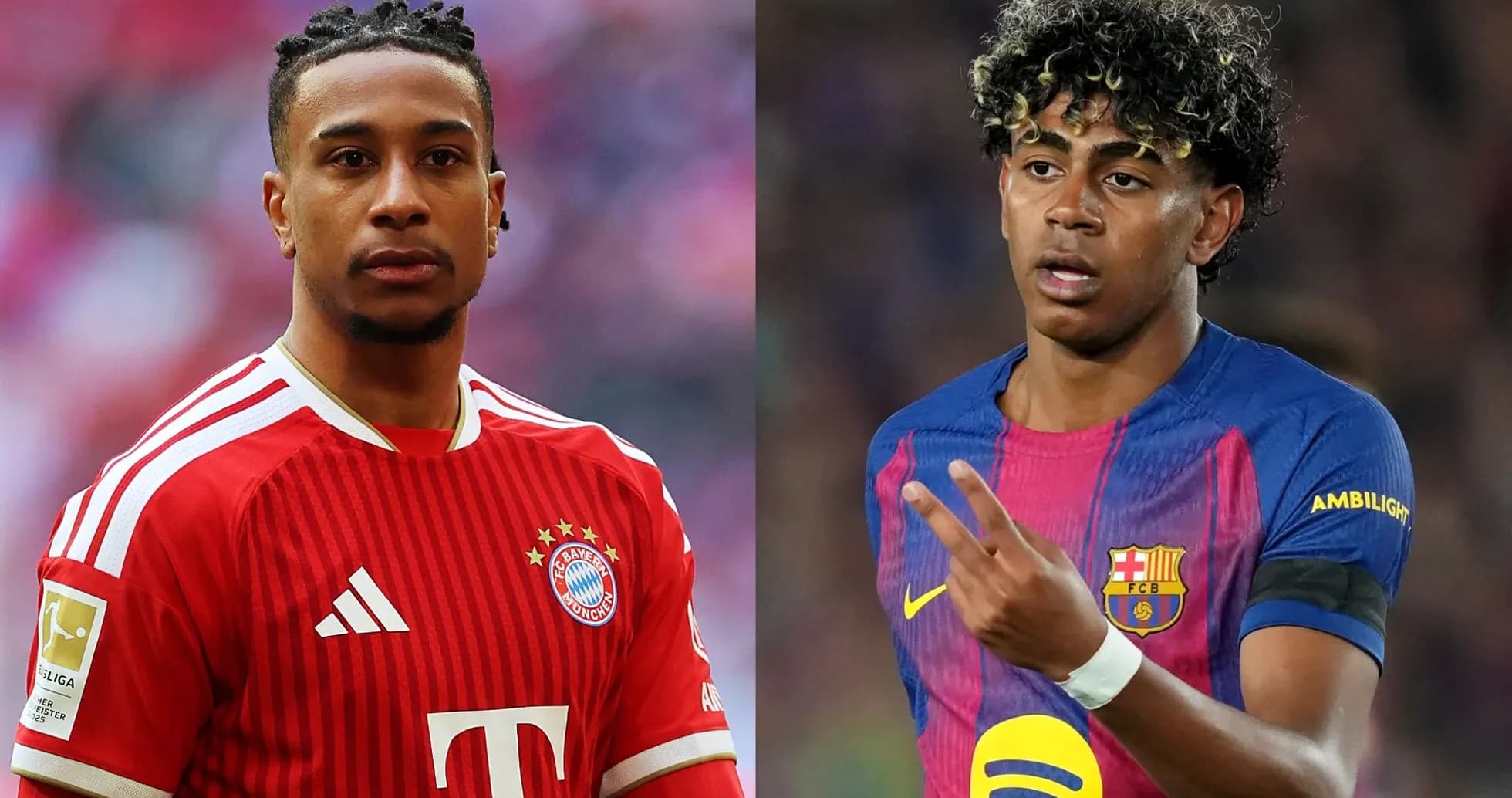
Michael Olise vs Lamine Yamal: Future of Flank in Football
Michael Olise will be in North America with France. Lamine Yamal is expected to be there with Spain, injury permitting. Two wide men, two heavyweights of international football, and one looming question: who really owns the future of the flank?
Les Bleus and La Roja will travel as leading contenders for the world title, and they know exactly where a modern World Cup is so often decided. Out wide. In the one‑v‑one duels, in the half-spaces, in the split-second choices when the full-back is isolated and the stadium holds its breath.
On that stage, Didier Deschamps and Luis de la Fuente have the luxury most coaches can only dream of. Two elite creators, both already decisive at club level, both carrying the weight of a nation without blinking.
Olise has just completed his second season at Bayern, and the numbers are outrageous. Twenty goals, twenty-six assists, in a single 2025-26 campaign for the Bundesliga champions. That is not promise; that is production. That is a player who has gone beyond the “talent” label and planted himself firmly among the most dangerous wide forwards in Europe.
Across the border, Yamal has been just as ruthless. The Barcelona prodigy drove his club to the Liga title, scoring 24 times and laying on 18 more. He is still only 18. The rise has been dizzying, the output almost absurd for someone at an age when most are still fighting for minutes, not trophies.
Their paths could hardly be more different. Olise, 24, has taken the long way round, a scenic route to the summit of the game for the London-born France international. Yamal has sprinted up the mountain, skipping stages that usually shape a young player, landing straight into the glare and surviving it.
On the raw statistics, it feels almost impossible to separate them. Goals, assists, influence. Whichever column you scan, the gap is minimal. Yet for Marcel Desailly, a man who knows what it takes to win a World Cup with France, the distinction lies somewhere else entirely.
Speaking to GOAL, the 1998 champion drew a clear line. In the intensity of the very highest level, he argued, Olise is “still a step below” Yamal. Not in talent, not in technique, but in how he copes when the temperature rises and the game becomes a series of traps.
Desailly pointed to the clash between Paris Saint-Germain and Bayern Munich as the clearest evidence. On that night, under that pressure, Olise struggled to handle the ferocity of the opposition. The patterns that come so easily in the Bundesliga suddenly jammed. The Frenchman’s influence faded, his performance level dropped, and the game exposed the work still ahead of him.
Yamal, in Desailly’s eyes, already lives in that environment. The teenager reads danger earlier, senses where the ambush is coming from, understands what the “repetition of effort” really means at the top end. He is, as Desailly put it, slightly ahead in understanding the traps laid for him and the intensity required to escape them.
That is the twist that makes this comparison so striking. The younger man, Yamal, appears more attuned to the rhythm and cruelty of elite football. The older one, Olise, is still stretching towards that level, still learning how to impose himself when the game refuses to give him a moment’s peace.
Desailly did not question Olise’s quality. Far from it. His criticism came wrapped in respect: a recognition that the Bayern winger’s ceiling remains high, but that the margin of progression is larger. For Olise to stand in the same light as Yamal in the global conversation, he must close that gap in big-game temperament, not just in numbers.
France and Spain will both lean heavily on their wide creators when the tournament begins. One arrives as the more mature mind in a teenager’s body. The other, already devastating for his club, is still being hardened by the furnace of knockout nights.
Soon enough, the world will see which one bends the biggest stage to his will.