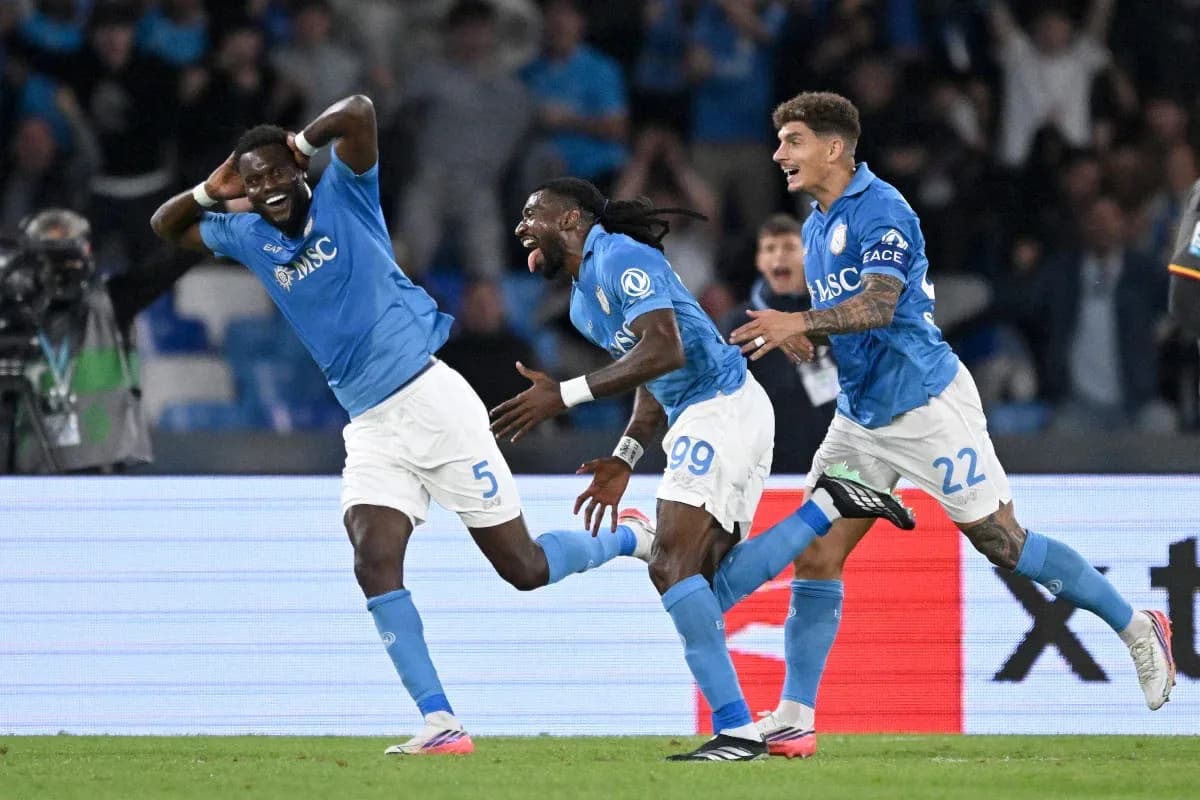
Monza vs Napoli: Serie A Clash Highlights
Under the lights of Stadio Brianteo, this Regular Season - 9 clash in Serie A brought together two sides heading into the game with very different trajectories. Monza arrived in 16th place with 7 points and a goal difference of -6, still trying to define their identity under I. Juric. Napoli, seventh with 14 points and a goal difference of +6, travelled north as a side that had already found a clear attacking blueprint. The 4-1 away win for Napoli did not just underline that gap; it illuminated the structural contrasts between these squads.
Monza's Structure
Juric stayed loyal to Monza’s seasonal DNA: a 3-4-2-1 that has been used in 8 of their 9 league matches. N. Törnqvist anchored a back three of S. Birindelli, S. Goglichidze and L. Lucchesi, with a broad midfield band of A. Bakoune, M. Ondoa, L. Colombo and Ricardo Mangas. Ahead of them, the twin creators C. Ngonge and Jay Robinson floated behind the league’s standout finisher so far, Gustavo Varela.
That front reference is Monza’s great strength and their great dependency. Heading into this game, Varela had scored 8 of Monza’s 16 total league goals, adding 1 assist and averaging a strong 7.5 rating. He had taken 18 shots, 11 on target, and converted 1 penalty from 1 attempt. Everything about Monza’s attacking threat funnels through his movement between the lines and his willingness to work as both target and runner. The 3-4-2-1 is built to isolate him against centre-backs, with Ngonge and Robinson tasked with dragging markers away and creating the half-spaces he thrives in.
Yet the same structure leaves Monza exposed. Overall this campaign they have conceded 22 goals in 9 matches, an average of 2.4 per game. At home they have been marginally tighter, with 8 conceded in 4 fixtures (2.0 per game), but the back three remains fragile under pressure. Lucchesi embodies that duality. He is statistically one of the league’s most active defenders: 9 tackles, 7 successful blocks and 20 interceptions in 8 appearances, with a passing accuracy of 93%. But his aggression comes at a cost: 13 fouls committed, 2 yellow cards and 1 red card already this season. He is both Monza’s primary shield and a disciplinary risk.
The card profile of the team underscores the tactical tension. Monza’s yellow cards peak between 76-90 minutes, with 26.67% of their cautions arriving in that window. The red card they have seen this season came between 31-45 minutes. This is a side that, when stretched, starts to foul late and hard. Against a Napoli team that tends to turn the screw as matches progress, that volatility was always going to be a danger.
Napoli's Approach
Napoli arrived in Brianza with a far more settled platform. M. Allegri’s 4-3-3 has been his most-used shape this season, and he trusted it again: V. Milinković-Savić in goal; a back four of G. Di Lorenzo, Amir Rrahmani, Rafa Marín and M. Olivera; a midfield trio of A. Zambo Anguissa, S. Lobotka and S. McTominay; and a front line of M. Politano, R. Højlund and N. Lang.
The structure is classic Allegri: Lobotka as the metronome, Zambo Anguissa providing vertical ball-carrying and counter-pressing, McTominay arriving late into the box. Politano, one of Serie A’s top assist providers so far with 3 assists and 2 goals, drifts inside from the right to combine with the central midfielders and Højlund, while Lang stretches the pitch on the opposite flank.
Heading into this game, Napoli’s numbers told the story of a balanced machine. They had scored 17 goals in 9 matches (1.9 per game overall), with 9 of those on their travels (1.8 away per game). Defensively, they had conceded 11 overall (1.2 per match), only 6 away (1.2 per away game). Three clean sheets underline a defensive line that, even without injured figures like B. Badiashile and A. Buongiorno, holds its shape well. Their biggest away win in Serie A so far, a 4-1 result, hinted at their capacity to ruthlessly exploit open games – a script that repeated itself at Monza.
Impact of Injuries
The absences added extra texture. Monza were without M. Pessina, a key two-way midfielder whose knee injury stripped Juric of leadership and ball progression in central areas. Y. Maye and J. Ziolkowski were also missing, trimming depth. For Napoli, the injury list was longer: Alisson Santos, Badiashile, Buongiorno, David Neres, C. Favasuli and L. Spinazzola all sidelined. Yet Allegri could still field an experienced defensive core and, crucially, keep K. De Bruyne in reserve on the bench.
De Bruyne’s season profile is a tactical weapon in itself. With 4 goals, 1 assist and 20 key passes in 495 minutes, he offers Napoli a second phase of control and chance creation when introduced. He has already taken 1 penalty and missed 1, so he does not represent a flawless option from the spot, but his presence changes how opponents defend the central corridor late on. Against a Monza side that tends to accumulate cards in the final quarter of matches, De Bruyne’s late entrances are designed to exploit tired legs and hesitant challenges around the box.
Key Duels and Tactical Analysis
The “Hunter vs Shield” duel in this fixture was thus Varela against Napoli’s central pairing of Rrahmani and Rafa Marín, protected by Lobotka. Varela’s 82 duels contested this season show how often he is targeted as an outlet; his 27 duels won underline his capacity to hold his own. But Napoli’s defensive metrics – only 6 goals conceded away, and just one away match in which they have failed to score – suggested that, even if Varela struck, Monza would struggle to keep the visitors quiet for 90 minutes.
In the “Engine Room”, the contrast was equally stark. Ondoa and Colombo had to shoulder creative and defensive burdens without Pessina, while Zambo Anguissa and Lobotka could divide roles more cleanly: one destroyer-carrier, one pure organiser. McTominay’s presence as a third runner tilted the midfield battle in Napoli’s favour, giving them extra bodies between the lines against Monza’s back three.
From a statistical prognosis, the outcome aligned with the trends. Monza’s home attack – 9 goals in 4 home matches, an average of 2.3 per game – is vibrant, but their home defence, conceding 2.0 per match, is porous. Napoli’s away attack, at 1.8 goals per game, met a defence that has already suffered a 1-4 home defeat this season. Combine that with Napoli’s away defensive average of 1.2 goals conceded and their habit of controlling late-game phases, and a high-scoring away win sat firmly within expectation.
Following this result, the narrative is clear. Monza remain an entertaining, front-foot side whose season will rise and fall with Gustavo Varela’s form and Lucchesi’s ability to defend on the edge without tipping over it. Napoli, even amid injuries, look like a squad with depth, structure and multiple match-winners – from Politano’s service to De Bruyne’s orchestration – capable of turning promising numbers into ruthless scorelines on their travels.