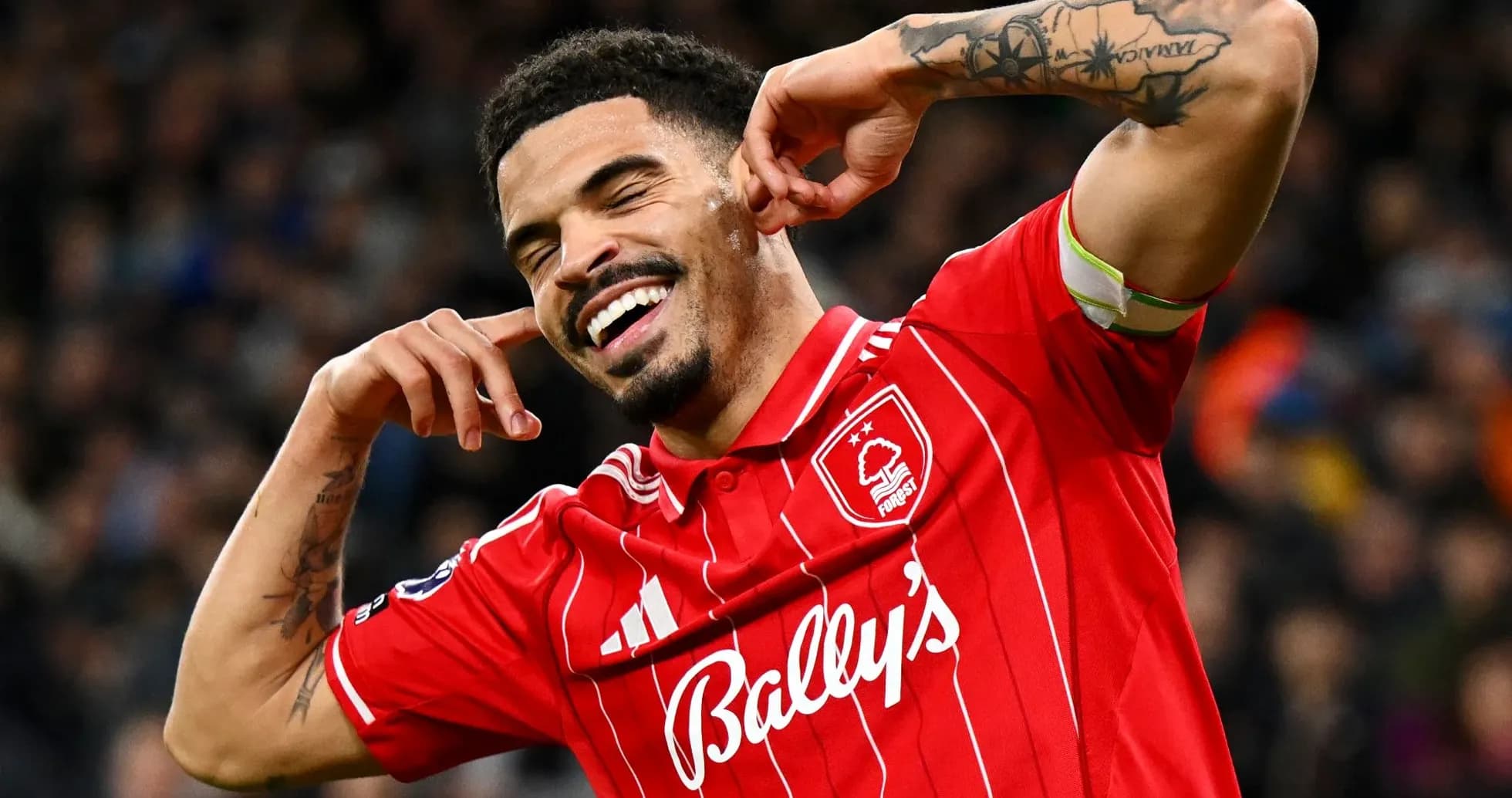
Morgan Gibbs-White: Nottingham Forest's Creative Heartbeat
On the banks of the Trent, Morgan Gibbs-White has become more than a marquee signing. He is the face, the risk that paid off, the £42 million bet that turned into Nottingham Forest’s heartbeat.
Since arriving in 2022 in a deal stacked with add-ons, Forest have watched those clauses trigger one by one as their mercurial No.10 has grown into the role. Goals. Assists. Responsibility. Even the captain’s armband at times when Ryan Yates has been missing. The club’s investment has not just been financial; they have built a team and a mood around him.
Last season was the clearest evidence yet of his rise. Gibbs-White posted personal bests, hitting 18 goals in all competitions. Fifteen of those came in the Premier League, the rest sprinkled across a Europa League run that carried Forest all the way to the semi-finals. When the games got bigger, he didn’t fade into the background. He leaned into the spotlight.
That spotlight could easily have moved south. A switch to Tottenham was on the table before Forest owner Evangelos Marinakis stepped in and shut the door. The message was blunt: the club would not be a stepping stone. Gibbs-White stayed, signed a new contract and doubled down on his role as the club’s creative reference point.
The reward he craved most, though, never arrived. His name was missing when England’s 2026 World Cup squad dropped. No seat on the plane. No late call. Nothing.
That omission has reopened a familiar debate around the City Ground. Can Forest match the ambition of their star turn, or will his ceiling eventually sit somewhere else? Transfer talk lingers in the background, as it tends to when a player’s numbers spike and his international prospects stall. Yet inside the stadium, there is no ambiguity. MGW is not just another player. He is the one the crowd lean towards when the ball finds his feet.
Former Forest defender Des Walker understands the dilemma, and the ego that comes with such a role. Speaking to GOAL in association with World Cup betting, he cut through the romance and went straight to the core.
“It depends on the individual people's egos, doesn't it really?” Walker said. “And once you go to the big clubs, you have to have enough confidence to go into squads and really walk in there and think, ‘I'm the man’. And if you have that, then it works.
“He's got ability, he's got very good ability and at Forest they love him. And some of his games where he's not as consistent get overlooked. When you go to the big clubs, they don't overlook them, you're under constant scrutiny.
“So, it depends on how far he thinks he can go. Because these number 10s in this world, they're superstars and they like to be the centre of attention. He does.
“So, sometimes people look at Forest, he's got all the centre of attention he needs. But sometimes people want that big move and that gives them centre of attention as well. But it becomes a bit of a noose around your neck as well at times.”
That is the tension now. At Forest, Gibbs-White starts. He leads. He is indulged when the tricks don’t quite come off because everyone knows he can decide a game with one that does. At a so-called “big club”, the margin for off-days shrinks. The adoration narrows. The scrutiny multiplies.
For now, he remains one of the first names on the team sheet as Forest prepare to walk into yet another new chapter, this time under Austrian head coach Oliver Glasner. The system will change, the pressing patterns will shift, but one thing is likely to stay the same: Gibbs-White as the creative axis.
His dominance in that role comes at a cost for others. Creative players queue behind him, waiting for minutes that rarely arrive.
James McAtee knows that reality better than most.
Forest spent around £30m to prise the former England U21 captain away from Manchester City in the summer of 2025. On paper, it looked a statement signing: a gifted playmaker leaving the comfort of the Etihad for a club willing to build around youth and invention.
The reality of his first year in the East Midlands was much harsher. One goal, from the penalty spot in continental competition. Only 289 minutes of Premier League football. Cameos instead of starts. Promise instead of impact.
Walker recognises why the transition has been so jarring.
“Any move is difficult,” he said. “It's always easier when you're Manchester City, primarily they've got the ball for 70% of the time. So, if you're getting your lines, it's easier to look more comfortable than when you've got to work to get it and the ball's missing you out. Sometimes the ball's at 50-50 and you're getting kicked up in the air, and Forest are just trying to stay in the game.
“So, it is difficult, but the following year you've got to find a way of stamping your authority on a game of football. You've got to make a difference to a football match. And so far, he hasn't made a big enough difference to warrant his place.”
That is the blunt reality McAtee walks into this season. Forest did not spend £30m on a squad player; they invested in someone they believed could share, or eventually shoulder, some of the creative burden. To do that, he has to wrestle his way into games that do not naturally revolve around him, in a team where Gibbs-White already occupies centre stage.
Glasner’s arrival might just crack that door open. New managers often bring new hierarchies, fresh combinations, different ideas about how many playmakers a side can carry. McAtee needs that shift. Gibbs-White needs to show he can thrive inside it.
Because for Forest, the question is no longer whether they have a star. They do. The real question is how long they can keep him, and who will rise high enough around him to convince him that his future still runs along the Trent.