A Nation's Story: Morocco's Historic World Cup Journey
The anthem comes first. No commentary, no context. Just the sound that carried a nation into a World Cup semi-final it was never supposed to reach.
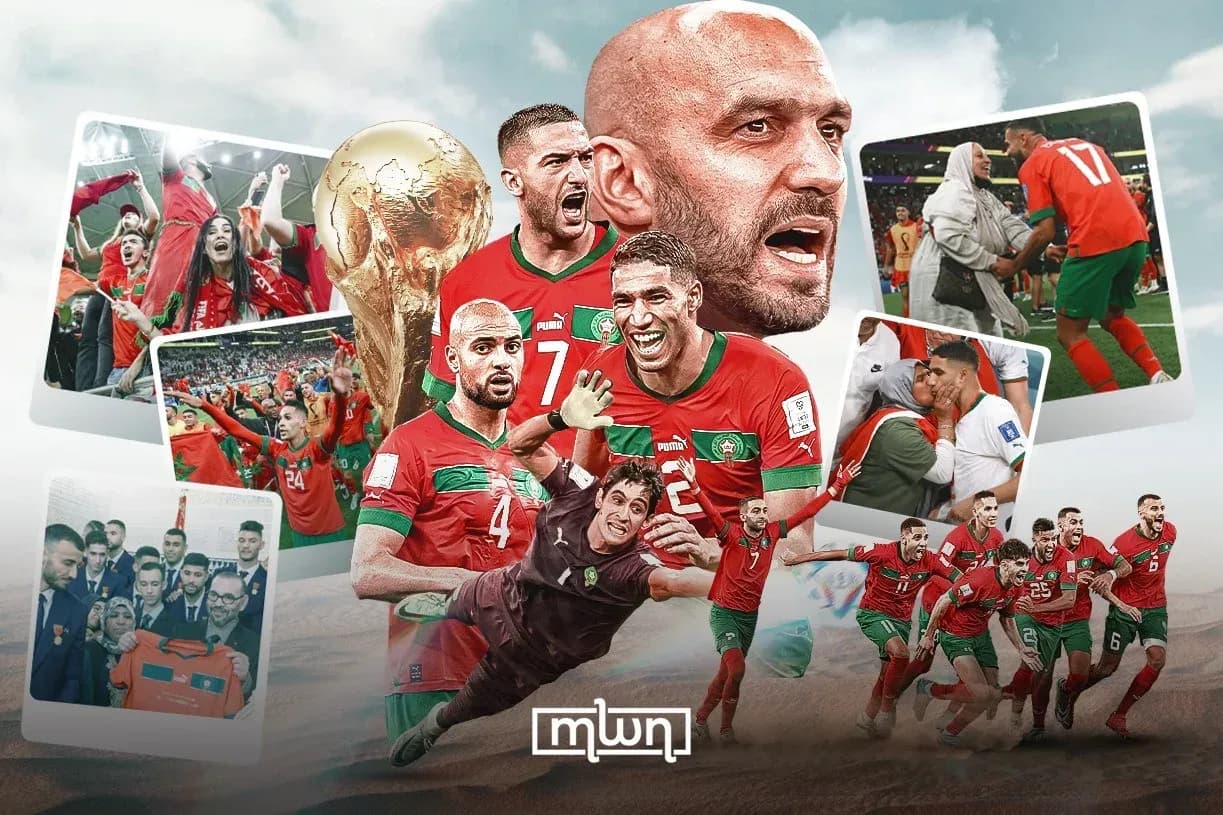
FIFA+’s 25-minute documentary, A Nation’s Story, doesn’t retell Morocco’s 2022 World Cup as a tactical masterclass. It tells it as a psychological revolution. It hands the microphone to those who lived it – Romain Saïss, Walid Regragui, Yassine Bounou – and lets belief, doubt, and defiance do the talking.
“We weren’t there just to play three matches. We were there to truly make history,” Saïss says early on. That line becomes the compass for everything that follows.
From cautious draw to conviction
The film walks through Qatar chronologically, but the opening act against Croatia is stripped of the usual clichés. A 0-0 draw with the 2018 finalists could easily be filed under “solid start.” The documentary refuses that label.
“It allowed us to enter the competition well,” Regragui says. “It gave us a lot of confidence, because entering the tournament with a defeat is never good.”
That confidence is not presented as a natural state. It is constructed. Regragui’s arrival is painted as the hinge point, the moment an inferiority complex was dragged out into the light and dismantled.
“The coach managed to remove the inferiority complex we felt,” Bounou explains.
Regragui’s message is stripped to its core. No slogans, just a demand.
“There were players playing at big clubs. There was no excuse not to be at the same level as the opponent.”
From there, the film keeps returning to the same idea: Morocco as a family, not a collection of stars. A group that accepts sacrifice as the price of ambition.
“We are first a family, first a team, and we will win together,” Regragui says. It doesn’t sound like a line for the cameras. It sounds like a rule.
Spain, suffering, and a turning point
The round-of-16 tie with Spain becomes the documentary’s first emotional peak. On the pitch, it was a familiar story: Spain with the ball, Morocco without it. Endless passing against a low block that refused to break.
“They made us run a lot,” Regragui admits. “It’s an extraordinary team in terms of play.”
But the film refuses to portray Morocco as clinging on. The suffering is framed as chosen, not imposed.
“The most important thing is that they accepted they were going to suffer,” Regragui says. “They stayed concentrated. They didn’t give up.”
By the time the match reached penalties, the mood inside the squad had shifted. Nerves give way to something harder, more stubborn.
“We are lucky to have one of the best goalkeepers in the world,” a voice says over images of Bounou, calm and still before the shootout. “I think he will go down in the history of Moroccan football.”
The camera pulls away from the penalty spot and into the stands. Red shirts. Drums. Tears. Qatar, for a few nights, feels like Casablanca, Rabat, Fez.
“At every minute, it felt like we were playing in Morocco,” the film notes.
“We are passionate people,” Regragui says. “Many people made sacrifices to support us.” The support is not background noise. It is part of the story, part of the pressure, part of the fuel.
Portugal and the shattering of a ceiling
By the time Portugal appear, the narrative has shifted. Morocco are no longer the surprise package trying to survive. They are chasing something unprecedented.
“The ultimate goal for us was to become the first African nation to qualify for a semi-final.”
The documentary dips briefly into history to show how deep this rivalry runs. Mexico 1986: Morocco beat Portugal 3-1, becoming the first African and Arab nation to reach the Round of 16. Russia 2018: Portugal win 1-0, Morocco play well, but go home early. The scars are there.
In Qatar, the defining image is Youssef En-Nesyri suspended in the air, 2.78 meters off the ground, towering above the Portuguese defence to head in the only goal in the 42nd minute. It is a leap that seems to defy physics and, symbolically, the old limits placed on African teams.
Injuries pile up. Saïss, already struggling, is forced off. The back line bends but never breaks. Morocco drop deeper, then deeper still, and finish with 10 men in stoppage time. Cristiano Ronaldo comes on in the 51st minute, hunts for a moment, and leaves the pitch in tears after the final whistle. His exit becomes one of the tournament’s enduring images, but the documentary keeps its lens on the team that changed the conversation.
By beating Portugal, Morocco do more than win a quarter-final. They dismantle the lazy idea that African sides are there to entertain, to surprise, but not to endure. When the final whistle goes and the semi-final is secured, A Nation’s Story treats it not as a miracle, but as the smashing of a psychological barrier that had hung over generations.
France, the body breaks, the belief doesn’t
The semi-final against France feels different from the first frame. The energy is heavier, more fragile. The dream is alive, but the bodies carrying it are fraying.
“He is our captain. He is our leader,” Regragui says of Saïss. “If he could be ready, even at 80%, I would take the risk.”
France score early. In many World Cup stories, that would be the cue for the underdog to fade. Morocco do the opposite. They step higher, keep the ball, push the defending champions back. The documentary lingers on the moment the physical bill comes due.
“On a simple pass, the thigh gives way again,” Regragui recalls of Saïss. “That’s it. It stops.”
Nayef Aguerd is also lost to injury. Still, Morocco keep playing, not just surviving. Jawad El Yamiq produces an overhead kick that seems destined for history, only to crash against the post. For a second, the stadium holds its breath.
France, with all their pedigree and depth, find the decisive punch. Kylian Mbappé slaloms through a crowded box, the ball breaks to Randal Kolo Muani, and in the 79th minute the holders secure their place in the final.
“At the end of the match, we were disappointed because we truly believed,” Bounou says. “We wanted to play in that final.”
The documentary resists the easy narrative of tragedy. It labels this moment as the “end of the miracle” but, more importantly, the “start of a new reality” for African football. A semi-final is no longer a fantasy. It is a benchmark. The loss, in that framing, becomes a victory of a different kind.
Croatia, the last push
The third-place match against Croatia is stripped of glamour. There is no grand rhetoric here, only fatigue. Bounou captures it in four words: “You’re at the end.”
Morocco chase a bronze medal that would have crowned the run, but their legs are heavy and their squad patched together. They still push. They still chase. En-Nesyri almost drags them level in the 95th minute with another header, but the match ends 2-1 and Morocco finish fourth.
The closing images refuse to indulge in sorrow. Players laugh. They hug. They salute the fans who followed them across a continent. Two defeats close the campaign, yet the film has long since stopped measuring success by scorelines.
A Nation’s Story leaves Morocco not as a one-off sensation, but as a new reference point. The question is no longer whether an African team can go that far.
It’s who will dare to go further.