Mourinho's Missed Opportunity at Manchester United
“Sliding doors.”
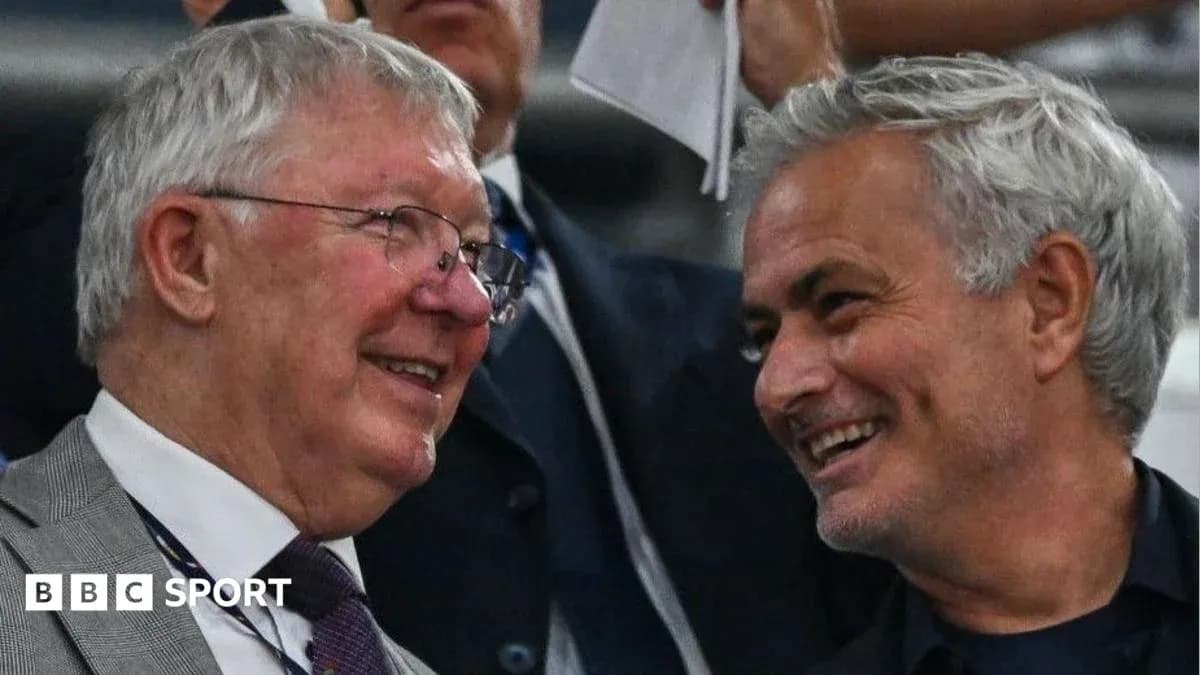
Inside Manchester United, that’s how some still describe the moment in 2013 when Jose Mourinho slipped from their grasp and back into Chelsea blue. A tiny twist in the story, a phone call, a change of heart – and the club’s modern history veered off in a very different direction.
The confirmation of what many around Old Trafford had whispered for years arrives in a new Netflix documentary on Mourinho’s career, released on 11 August. The rumours were true. United thought they had him. For a few days, they did.
The courtship
This wasn’t a casual flirtation. It was a full-scale pursuit.
Senior United figures held meetings with Mourinho in Madrid and London. Sir Alex Ferguson, who had long admired the Portuguese coach’s edge and charisma, stunned him by revealing he would stand down at the end of the 2012-13 season. Mourinho, then at Real Madrid, was being offered the most daunting job in English football: following Ferguson.
The talks moved quickly from possibility to detail. Terms were discussed. An agreement, insiders say, was reached. United believed the succession plan was in place.
Then it wasn’t.
“One night, he phoned me and he was crying and he says: ‘Alex, I can't take it. I've given my word to Chelsea and I'm not going to break my word’,” Ferguson recalls in the documentary.
In that moment, the deal collapsed.
A promise to Chelsea, doubts at United
Mourinho told United his decision came down to family. He had a home in London. When he was first sacked by Chelsea in 2007, he had promised his family they would return. His relationship with Chelsea’s owner Roman Abramovich remained strong. Stamford Bridge, once again, was calling.
Those close to United have never been entirely convinced by the family explanation. They accept the London base was real, the ties to Abramovich were genuine, but suspicion lingers that there was more to it.
What is not in doubt is how advanced United’s move for Mourinho had been, or how much faith key figures at the club had placed in him to handle what lay ahead.
A club on the brink of change
Ferguson was not the only pillar about to depart. Chief executive David Gill, hugely respected inside and outside Old Trafford, was also leaving that summer. The double exit created a vacuum at the top of the football operation.
United knew they were not just replacing a manager. They were dismantling a one-man empire.
Ferguson controlled almost everything from a football perspective: recruitment, development, dressing-room politics, long-term planning. The club needed a new structure, a more modern model that could survive beyond one towering personality, and they needed to build it while still winning.
Mourinho, in their eyes, had the shoulders to carry that weight. He had managed giants, handled egos, embraced pressure. He would have walked into Old Trafford believing he could not only follow Ferguson, but improve on him.
When he said no, United were left scrambling.
From Mourinho to Moyes
With Mourinho back in Chelsea’s arms and Pep Guardiola already committed to Bayern Munich, United pivoted to David Moyes.
On paper, Moyes shared some of Ferguson’s traits: hard-working, detail-driven, steeped in the culture of British football. On the pitch, his Everton sides had punched above their financial weight. Yet he had never operated at the elite level United were now entrenched in.
United unveiled him as “The Chosen One”. The banner hung in the Stretford End. The reality was harsher. He wasn’t.
The drop-off from Ferguson’s final title-winning season to seventh place the following year was brutal. Even players from that squad have struggled to explain it. They accept they had overperformed for Ferguson. What they cannot quite process is how far, and how fast, they fell.
Inside Old Trafford, the feeling persists that Mourinho would have squeezed more from that group.
The Mourinho who finally arrived
Mourinho did eventually take the United job in 2016, replacing Louis van Gaal two days after lifting the FA Cup. By then, everything had changed.
The dressing room was different. Of the 18 players who started 10 or more Premier League games in Ferguson’s final 2012-13 title season, only six – David de Gea, Phil Jones, Wayne Rooney, Chris Smalling, Michael Carrick and Antonio Valencia – did so in Mourinho’s first campaign.
Mourinho had changed too. He had returned to Chelsea and won another Premier League title, then departed under a cloud in December 2015 with the champions slumped in 16th place, one point above the relegation zone.
At United, his record still divides opinion.
He delivered the Europa League and EFL Cup in his first season and secured Champions League qualification twice. He called finishing second, 19 points behind Manchester City, one of the “best achievements” of his career. The 81 points United collected that year remain their highest tally in the league since Ferguson retired.
Yet the trophies and numbers came wrapped in conflict. Mourinho clashed with players, most notably record signing Paul Pogba. He criticised the hierarchy for what he saw as a lack of backing, particularly over Anthony Martial, whom he wanted to sell. By the time he left, the club felt fractured.
What if he’d come in 2013?
Inside United, a belief has grown with time: Mourinho would have had a far greater impact had he walked straight into Ferguson’s office in 2013.
For one, he would have attacked the transfer market.
Where Moyes hesitated, Mourinho would have pushed. Hard. Those involved insist Thiago Alcantara’s agreed move from Barcelona would have been completed. The Marouane Fellaini saga – missing a cheaper release clause, then paying £27.5m on deadline day – is held up as an example of what would not have happened under Mourinho. Fellaini, they say, simply would not have been signed.
Mourinho even offered United his assessment of potential recruits, including Italy midfielder Daniele de Rossi. The sense is that he would not only have brought in the right players, but driven more from the experienced core he inherited.
No-one disputes that Ferguson extracted everything from that final title-winning squad. They overachieved for him. Yet the subsequent collapse still feels avoidable. Those who were there believe Mourinho’s presence – his intensity, his demands, his sheer force of personality – would have kept standards higher for longer.
A phone call that still echoes
In the documentary, Ferguson recalls Mourinho’s tearful phone call with clarity and a hint of lingering regret. The Portuguese coach, overwhelmed, telling him he could not break his word to Chelsea. The door that had opened so invitingly, slamming shut.
For United, it was more than a missed appointment. It was a fork in the road.
They chose Moyes because Mourinho chose Chelsea. From that moment, the club have lurched through managers, philosophies and partial rebuilds, still searching for the stability and authority that once came from a single man in the dugout.
More than a decade on, the question hangs over Old Trafford: if Mourinho had walked through those doors in 2013, would Manchester United still be trying to recover?