From Moyes’ Influence to Arteta’s Arsenal: A Journey of Football Evolution
Mikel Arteta’s playing career and his managerial persona feel, at first glance, like two different lives. The elegant midfielder who bounced between European heavyweights doesn’t immediately line up with the meticulous, touchline-obsessed coach now driving Arsenal towards a potential quadruple.
The journeyman who needed a home
Arteta’s footballing education reads like a grand tour. Barcelona as a teenager, though he never made a senior appearance. A formative loan at Paris Saint-Germain, sharing a dressing room with Ronaldinho, Mauricio Pochettino and Jay-Jay Okocha. A move to Rangers when Scottish football still carried real European weight. Then, finally, home – or so he thought – to Real Sociedad.
San Sebastián was supposed to be the return of the prodigal son. Instead, it became a dead end.
"I am sad to be leaving Sociedad. I went there with all the hope in the world, but it is clear that the coach is not counting on me and I can't allow that situation to continue," Arteta admitted when he left La Real midway through the 2004-05 season. "I didn't play well at the start of the season, but since then I have not been given a chance. I don't feel good picking up money and not playing football, and I hope moving to Everton will give me this chance."
Real Sociedad’s loss turned into one of Everton’s smartest pieces of business. Arteta arrived on loan with an option to buy. He left, years later, as a cult hero and captain. In between, Moyes reshaped him – and, in many ways, the manager he would become.
Moyes’ demanding classroom
By 2025, Moyes could look back on that period with a smile and a bit of mischief.
"Mikel was clever in his football thinking [as a player]. He knew how he wanted to play as well," Moyes said. "He had a really good upbringing if you look at the clubs where he started, periods at PSG, periods at Barcelona, Real Sociedad. He had a real chance before he came and went to Glasgow Rangers and then came here [to Everton].
"He'd actually been around and seen a lot of clubs, a lot of really good clubs, with good setups. He was a wee bit of a moaner at times, Mikel. And that sometimes is a good sign as well. He wanted things to be done right, wanted it to be done good, wanted the team to play better.
"But he was a good player for us. Great captain, great player. Great signing, really, at that time."
That “wee bit of a moaner” line says as much about their bond as any glowing tribute. Moyes saw a player who demanded standards. Arteta found a manager who demanded even more.
"I think he made me a better person, made me mature in the earlier stages of my career," Arteta reflected in 2021. "He was really demanding and challenging, but at the same time really, really supportive. I really liked how he managed the group as well as the individuals. He really installed a real belief around the club to be together all the time, to look after each other, and nobody was more important than the team. He really created a special atmosphere when we were together."
This wasn’t just a good working relationship. It was something that stuck deep.
"I suffered when he had a difficult time because I didn’t think it was very fair on him that he was given no time in some places," Arteta added. "I know about his qualities and I’m glad to see that now he is enjoying it and doing what he is really good at. I can see his team being what he is and what he likes to do."
‘I would have gone through a brick wall for him’
Ask Arteta to put a label on his feelings for Moyes and he doesn’t reach for clichés.
"I think that's the word I’d use, gratitude and admiration," he said recently. "I think he taught me the love that he's got for the game and then the integrity that the game requires at any cost. I think he's a remarkable man, I think the way he manages the club, the people, his players, he's outstanding and I'm very grateful for everything that he did for me, for Everton as well.
"But I think in general for English football as well, because he's been an example of how to behave in good moments and in difficult ones. It doesn’t matter when you see how people are, and I think David’s done that, it’s something extraordinary."
In 2023, he went even further, placing Moyes among his favourite people in the sport.
"It's more than respect, I think it's admiration. I loved playing under him. I would have gone through a brick wall for him when he was my manager, as everybody would in that squad," Arteta said.
"[He's] a really good coach, exceptional at managing the group and dealing with individuals, and he's a very special person, very trustworthy, and a man who honours his word. He always did it and he's someone I learnt a lot from.
"He asked me to play in positions that I've never played in my life. The way he challenged me, but at the same time the way he gave me support, love and care - it was the right balance and it's what I needed, and he got the best out of me. So, he was really, really helpful."
The picture is clear: Moyes didn’t just polish Arteta’s game. He dragged him out of his comfort zone, showed him how to lead, and made him feel the weight of responsibility for a group.
When paths crossed again in San Sebastián
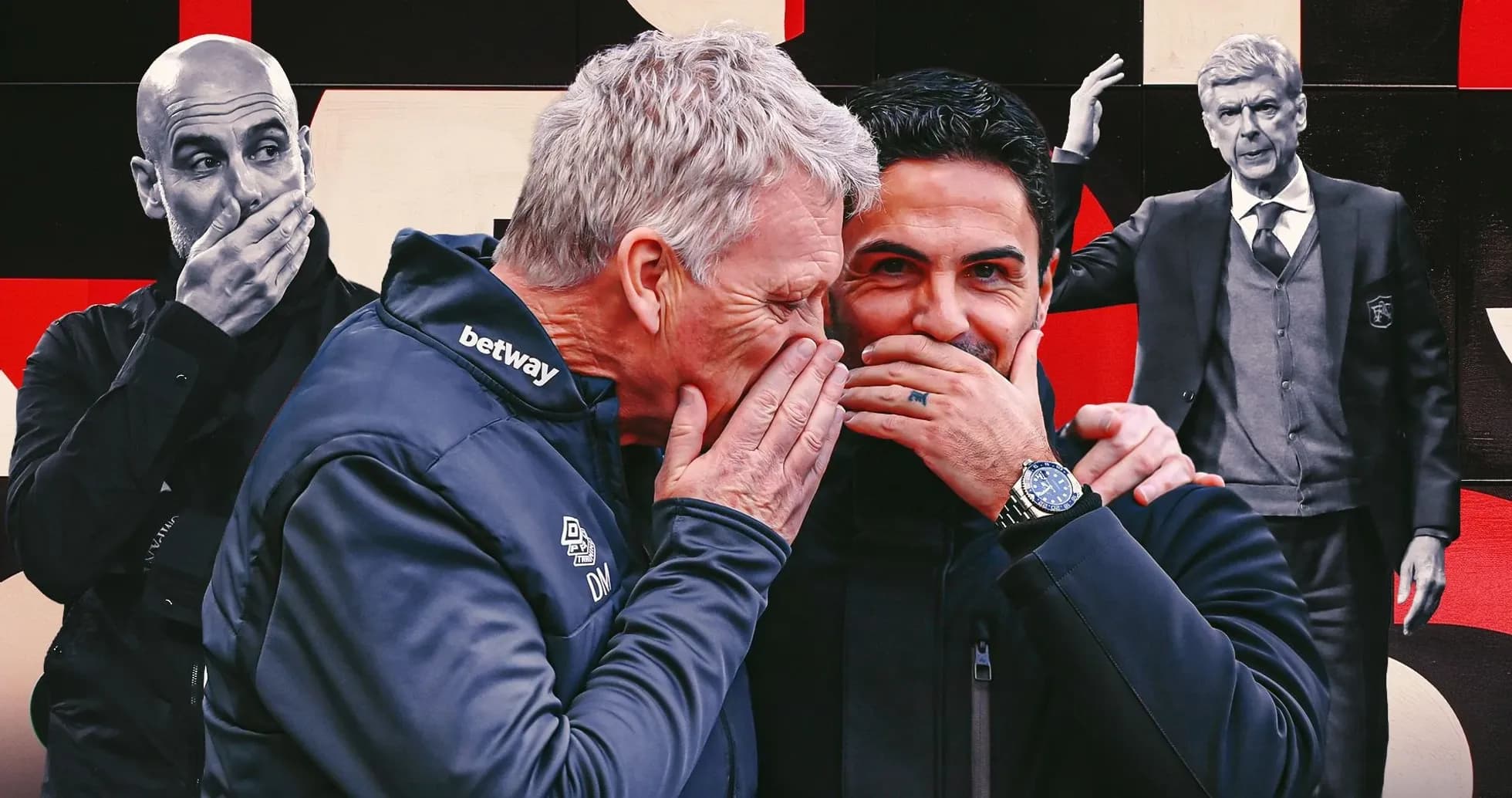
Their story didn’t end at Goodison Park. In 2014, months after his bruising exit from Manchester United, Moyes was offered the chance to take over at Real Sociedad – the club that had once shut the door on Arteta.
Arteta, by then an Arsenal midfielder, urged him to go.
"I gave him my opinion about La Real," he told the Spanish press. "He's a coach that likes to tighten the reigns, he'll do well with the group. He demands a lot and works hard, he's not what you'd call a 'typical' English manager that sits on the bench.
"He analyses a lot and he has a clear idea of how he wants his team to play. There are things that could have an adverse effect, but when he made the decision to come to Real Sociedad over the other offers he had, it's because he sees their potential moving forward.
"If he's not able to get the team moving forward from the start, it's going to hurt him. I wish him the best, he's a coach that can light a fire under a player and the player will fight to the death for him. He's a coach that deserves it."
Moyes lasted 364 days in San Sebastián, undone in part by the language barrier and the difficulty of turning around poor runs. The fit wasn’t right. But the trust between the two men, and Arteta’s understanding of how Moyes works, only deepened.
From Wenger’s captain to Guardiola’s apprentice
Arteta’s own coaching path began to take shape in north London. He spent five years under Arsene Wenger at Arsenal, captained the club, and left with a reputation as a manager-in-waiting.
When he retired in 2016, he chose to learn under Pep Guardiola at Manchester City. As assistant, he played a key role in the development of Raheem Sterling and Leroy Sané, both of whom went on to win the PFA Young Player of the Year award within three years of working with him.
So when Wenger finally stepped down in 2018, Arsenal’s hierarchy looked long and hard at their former midfielder. In the end, they swerved the risk. Unai Emery, with his experience and trophies, got the nod. It didn’t last. After a little over a season, Emery was gone and the club returned to the man they had first deemed too green.
This time, they jumped.
Wenger in his head, Pep on the training ground
In those early Arsenal years, you could see the two biggest tactical ghosts at his shoulder: Wenger and Guardiola. The Gunners tried to marry their traditional on-ball swagger with Pep’s positional precision. One and two-touch combinations, choreographed build-up, a side that wanted to dominate the ball and the story.
When Arsenal surged into the 2022-23 title race, they became the most entertaining side in the country.
"He's there. He's constantly living with me in the present," Arteta said of Wenger this season. "I wouldn't be here if it wasn't for him, what he lived and what he installed in me that allowed me to live in this football club.
"Arsene as a person has such an aura and a personality that he lives with you. He's constantly here. When I have to reflect and think about certain things, I always go back to that period: what is the way that he would do it? What are the things he would analyse and then make that decision?
"And then also what Pep taught me. And what my father taught me, and my mother as well. And we are all made from these experiences and these references in life. The same with my wife. I would like to be in your seat as well, I would like to treat you and make you feel like if we changed chairs, it would be in the same way.
"When I'm thinking about a player, I would think: let me sit in his chair, see what he thinks. And probably you'd have a better idea of the situation."
He often cites four main coaching influences: Guardiola, Wenger, Pochettino and Moyes. On paper, that sounds like a recipe for pure positional play and attacking idealism.
Yet look at Arsenal in 2025-26 and it’s the Moyes imprint that jumps off the page.
The Premier League catches up with Moyes-ball
The modern Premier League is bigger, faster, and more brutal than ever. It’s more dependent on set pieces, more obsessed with duels. The kind of league, in other words, that Moyes’ early Everton sides were built for.
Arteta saw the direction of travel early. In 2021, he brought in Nicolas Jover from Manchester City as set-piece coach, initially to squeeze out marginal gains. It has become far more than that. In a competition where control is harder to sustain for 90 minutes, dead balls have turned into one of Arsenal’s primary weapons – perhaps the main one.
Bar City, who still try to play the purest football but sometimes at the cost of defensive solidity, most of the league looks like a scaled-up version of 15-20 years ago. Physically imposing, direct when needed, ruthless from restarts.
Arsenal have adapted better than most. Like Moyes’ first Everton, they are packed with tall, aggressive players who relish duels. The difference is obvious: Arteta is doing it with an elite, expensively assembled squad, not a mid-table overachiever. The principles, though, feel familiar.
It works. Arsenal have lost only three times in all competitions this season, each defeat by a single goal. They don’t always blow teams away, but they suffocate them. They hold games in a vice-like grip, minimise chaos, and squeeze out results. Talk of a quadruple is not fanciful; it’s rooted in the way they control almost every variable they can.
That is Guardiola’s control, Wenger’s belief in technical quality – but wrapped in Moyes’ steel.
Master and apprentice, again
Moyes has checked Arteta’s momentum before. In 2022-23, his West Ham side came from two goals down to draw 2-2, a result that fed into Arsenal’s spring collapse in the title race.
Now, as Arteta chases the Premier League crown once more, he faces what amounts to a modern-day Everton in Moyes’ image. The Scot’s influence is everywhere in the way Arsenal defend their box, attack set pieces and embrace the physical side of a league that has grown more unforgiving by the year.
Arteta has never hidden how much he owes him. The question now is whether the apprentice has refined the master’s methods enough to finally overpower a team built in that same uncompromising mould.
On Saturday, as Arsenal go after the title again, we’ll find out if Moyes’ greatest legacy to English football is the man trying to beat him.