Mukesh Kumar's Quiet Rebellion in T20 Cricket
Mukesh Kumar’s quiet rebellion against T20 stereotypes is unfolding one hard length at a time.
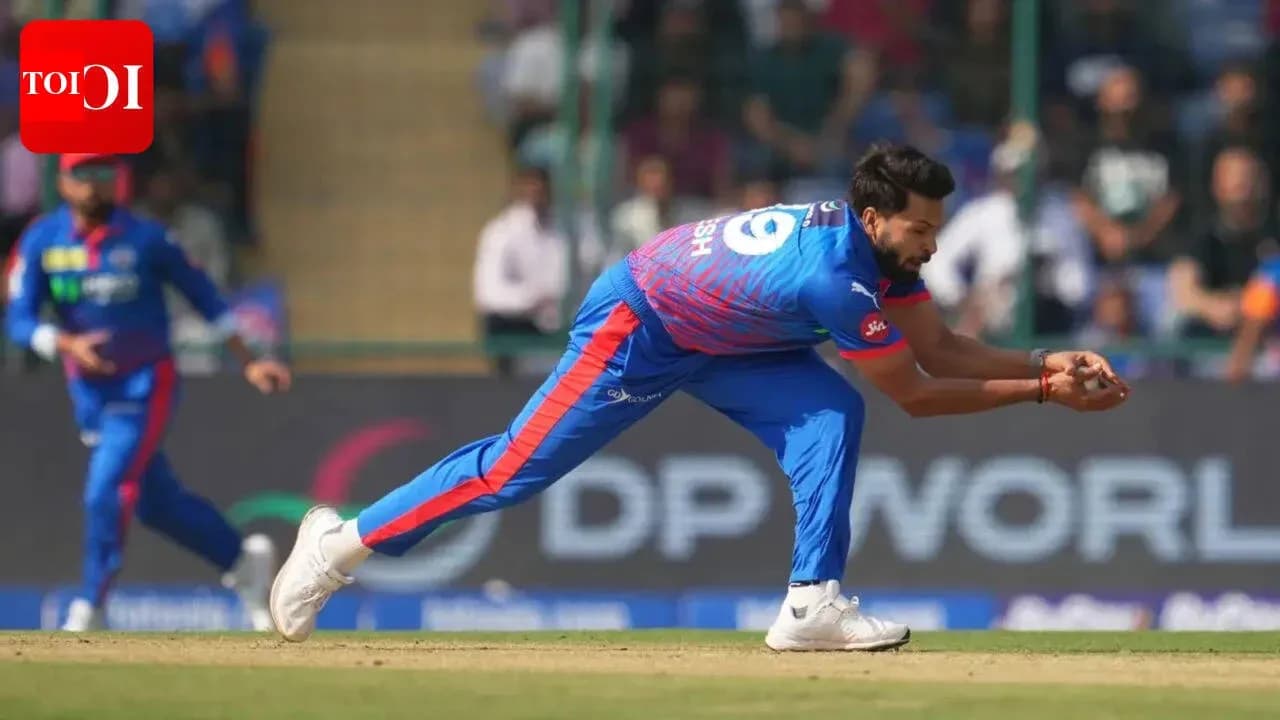
In a league obsessed with mystery balls and 150kph sizzle, Delhi Capitals have doubled down on something far less glamorous: discipline. Control. Six overs, 36 balls, 20 dots. That’s Mukesh’s imprint on IPL 2026 so far. Small sample size, big statement.
Eyebrows at the toss, answers with the ball
At the toss in Delhi Capitals’ opener against Lucknow Super Giants, the noise wasn’t about tactics. It was about selection.
Aquib Nabi, the big domestic story of the season and an Rs 8.40 crore signing, stayed on the bench. Mukesh Kumar, bought for Rs 5.50 crore in 2023 and a familiar, unfussy presence in the DC set-up, walked out as part of the XI.
Fans questioned it. Pundits did too. Inside the dressing room, though, the message was clear: trust the man who has already done the hard yards for this franchise.
Mukesh has been more than just another squad seamer. Since joining DC in 2023, he has grown into a reliable option across phases, his rise capped by an India debut and appearances in all three formats on the 2023 tour of the Caribbean. That experience, that grind, is what the management banked on.
“This isn’t just one or two matches. It’s a 14-match tournament. If the team doesn’t back you, it becomes difficult,” he said after Delhi’s six-wicket win over Mumbai Indians at the Arun Jaitley Stadium. The words were simple. The implication wasn’t. Back me, and I’ll pay you back.
Hard lengths, harder questions for batters
Against Lucknow, Mukesh’s impact wasn’t just in the wickets column. It was in the scoreboard’s silence. Eleven dot balls in his three overs, probing at Test-match lengths, forcing even a batter of Rishabh Pant’s range into hesitation.
T20 is supposed to be the batters’ format. Mukesh bowled like it was day one of a Ranji Trophy game.
The pattern continued against Mumbai. Under a harsh Delhi afternoon sun, he started searching for swing with a fuller length. Ryan Rickelton cashed in immediately: boundary. Two balls later, Mukesh went full again. Another boundary.
Many bowlers would have retreated into safety. Mukesh recalibrated.
He dragged his length back, tightened his line, and suddenly Rickelton was playing a different game — one that looked a lot like a Test match. The reward came quickly: a dismissal earned by persistence, not deception.
Tilak Varma saw the other side of Mukesh’s craft. Having been tied down by that nagging length, he was undone by a change of pace and a sharp caught-and-bowled. No theatrics. Just a smart, well-set trap.
Jasprit Bumrah, watching from the other side, appreciated what he saw. In a light moment after the game, he dubbed him “Mukesh McGrath”. It was tongue-in-cheek, but the compliment carried weight. You don’t get compared to Glenn McGrath unless you’re doing something right with that corridor outside off.
Built on scars, not shortcuts
The last year hasn’t been kind to Mukesh. A hamstring injury, then a calf strain, cut into his domestic season and stalled his India momentum. For a 32-year-old seamer who had fought his way up the hard way, those setbacks could easily have become a full stop.
He refused to let them.
The workhorse from Gopalganj in Bihar has never had it easy. He played cricket against his father’s wishes, then moved to Kolkata in 2012 to help with a struggling taxi business. The romance of the game was replaced by long, draining days in the transport trade. Eventually, frustration pushed him back towards the maidans.
There, he played second-division matches for Rs 400 or 500 a game. No cameras. No hype. Just overs, spells, and the slow accumulation of trust from those who watched him toil.
Former Bengal head coach Arun Lal quickly spotted something different. He loved Mukesh for his willingness to bowl long spells, to keep hammering away at a length without complaint. Lal called him a captain’s dream, a nightmare for batters because he simply refused to offer them an inch.
Those traits didn’t go unnoticed outside Bengal either. During the Cricket Association of Bengal’s Vision 2020 programme in 2014, names like VVS Laxman, Waqar Younis and Muttiah Muralitharan saw the same thing: a seamer obsessed with learning, improving, repeating.
That obsession still drives him.
The art in his hand
Before this IPL season, Mukesh sat down with DC bowling coach Munaf Patel. It wasn’t a technical masterclass. It was a reminder.
“He always talks about my skills. He keeps telling me that tere haath mey jo kala hai wo kisi aur ke pass nahi hai (The art you have is very unique). He keeps saying that I am the best bowler,” Mukesh recalled in a pre-season interaction.
For a bowler coming off injuries and patchy rhythm, that kind of belief can be transformative. It showed in how he approached his craft over the last year.
Mukesh spent time studying Josh Hazlewood’s methods during the Australian quick’s stint as Royal Challengers Bengaluru’s spearhead last season. What caught his eye wasn’t pace or swing, but stubbornness.
“Last year, I observed how Hazlewood bowled. He consistently hit Test-match lengths. Our coach advised me to focus on my strengths and target that area. It’s a difficult length to score off, especially if the ball is moving. If someone hits you on a good day, that’s fine, but generally it’s a safe and effective option,” Mukesh said after the Mumbai game.
That philosophy now underpins his IPL 2026. No panic if he gets hit. No frantic search for magic balls. Just relentless, unforgiving lengths that squeeze the game from the batter’s end.
India dreams, still burning
Mukesh last played for India in 2024, but the door hasn’t shut. Not in his mind, and not in the selectors’ either.
On India A’s tour of Australia near the end of 2024, he finished as the highest wicket-taker. It wasn’t enough to force his way into the Border-Gavaskar Test squad — that group had already been picked — but it did put him back in the conversation.
“I spoke to the selectors,” he said of that period. “The team had already been selected by then, but it was a good thing to be around the group. I spoke to the selectors and they said if I perform in domestic cricket and in the IPL, I will make a comeback.”
The message is clear. The path is narrow but visible: dominate domestically, own your role in the IPL, and the India cap can return.
Even MS Dhoni has taken note of the journey. During Mukesh’s first IPL season, the former India captain acknowledged how far he had come — from Gopalganj and second-division games in Kolkata to bowling at the best in the world. For a bowler built on resilience, that nod would have meant plenty.
One dot ball at a time
Now, as Delhi Capitals search for early-season momentum, Mukesh Kumar isn’t just occupying a slot in the XI. He’s shaping contests.
His spell against Lucknow tightened the screws. His performance against Mumbai turned a tricky afternoon into a controlled defence. In a format dominated by towering sixes and glittering reputations, he’s proving that a bowler can still dictate terms with nothing more than an unerring length and an unshakable mind.
He doesn’t roar. He doesn’t play to the gallery. He just walks back to his mark, again and again, trusting the art Munaf Patel spoke about and the hunger that first took him from a taxi stand in Kolkata to the IPL.
One hard length. One dot ball. One spell.
For Mukesh Kumar, that might yet be the route not just to Delhi’s resurgence, but to an India comeback that would complete one of the more quietly remarkable stories in this league.